
Last updated September 20, 2026
Free on-site gate assessment - hinges, posts, and your LiftMaster or Nice gate operator checked before anything is quoted
The assessment is free and the quote is the invoice.

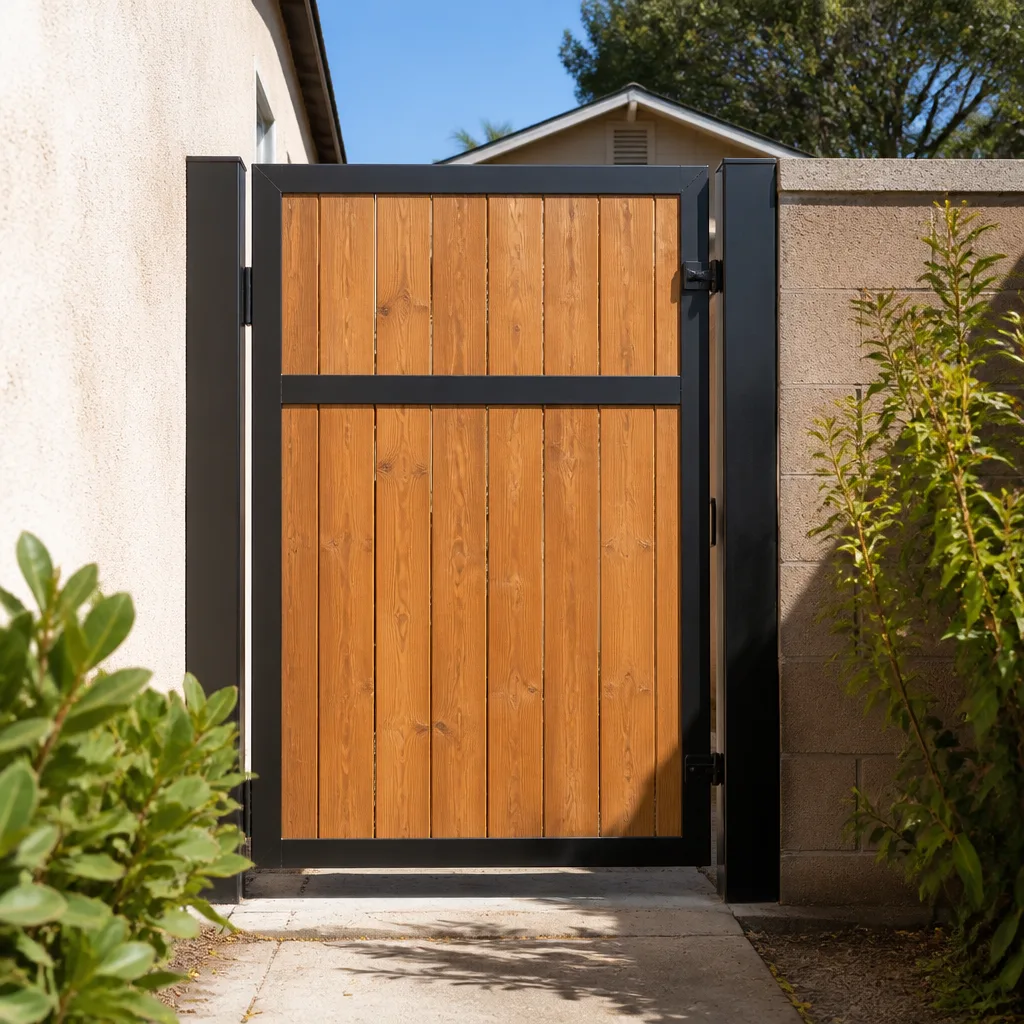
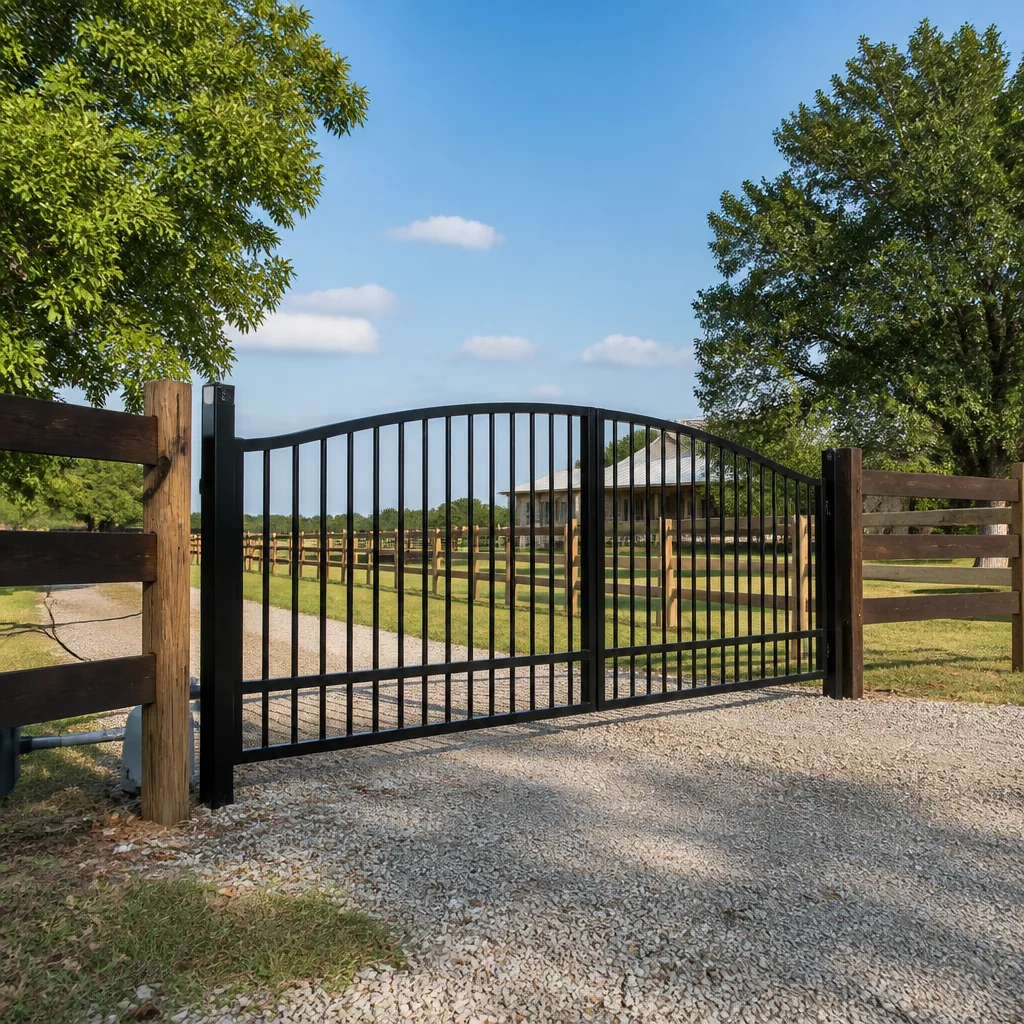
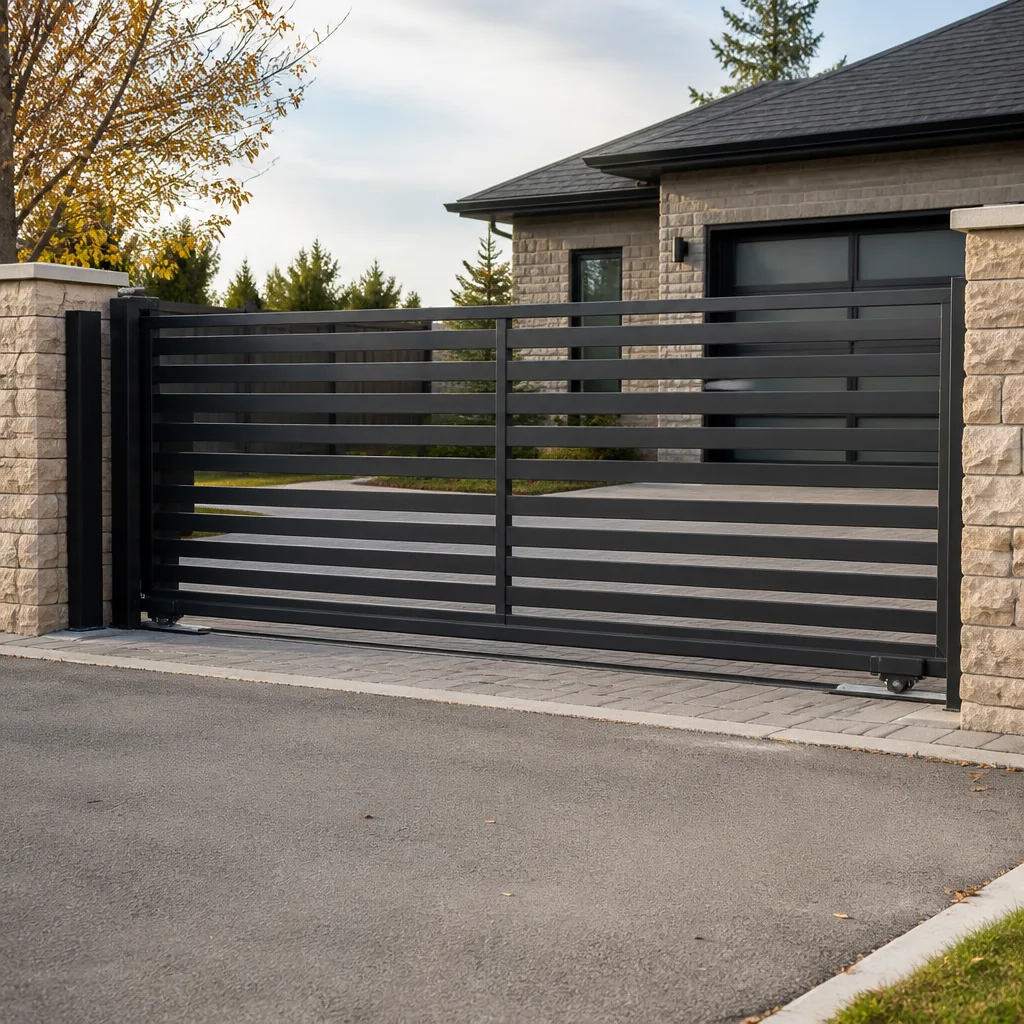
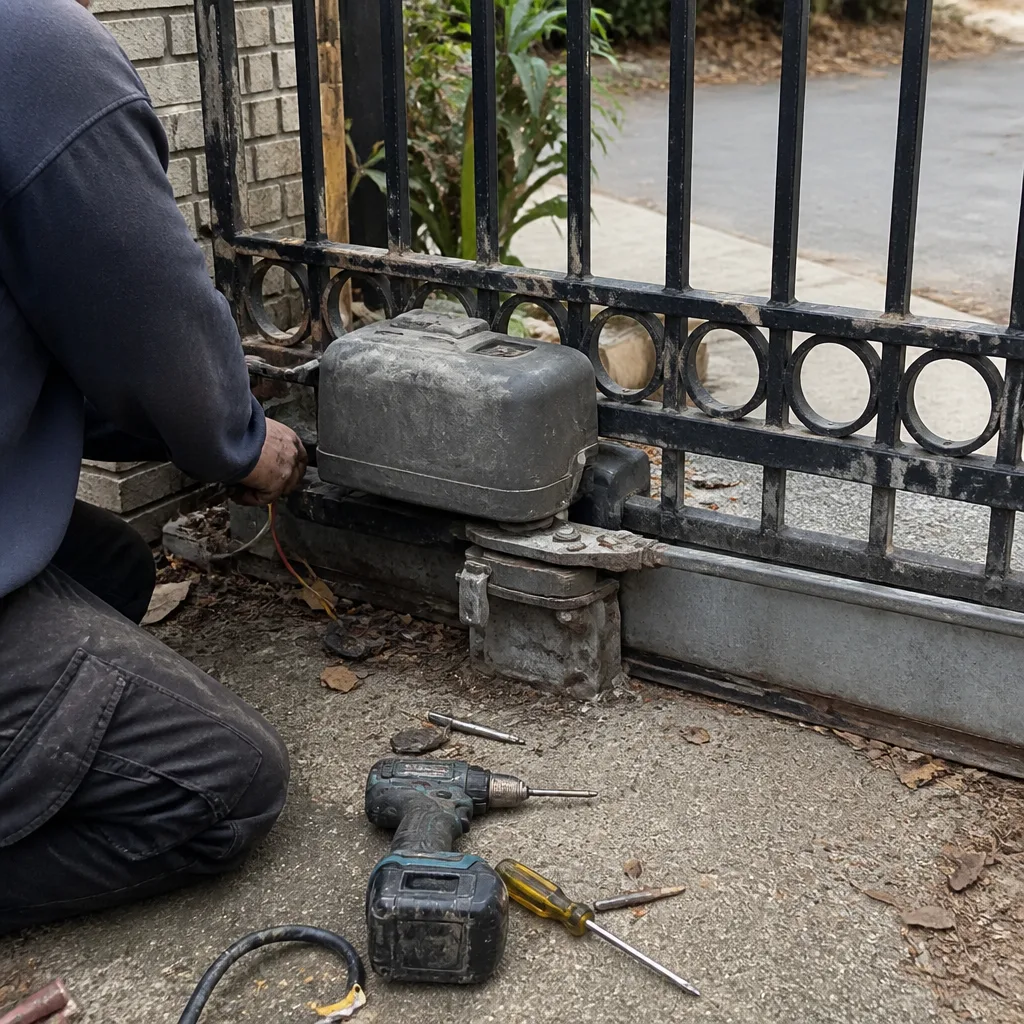 Before
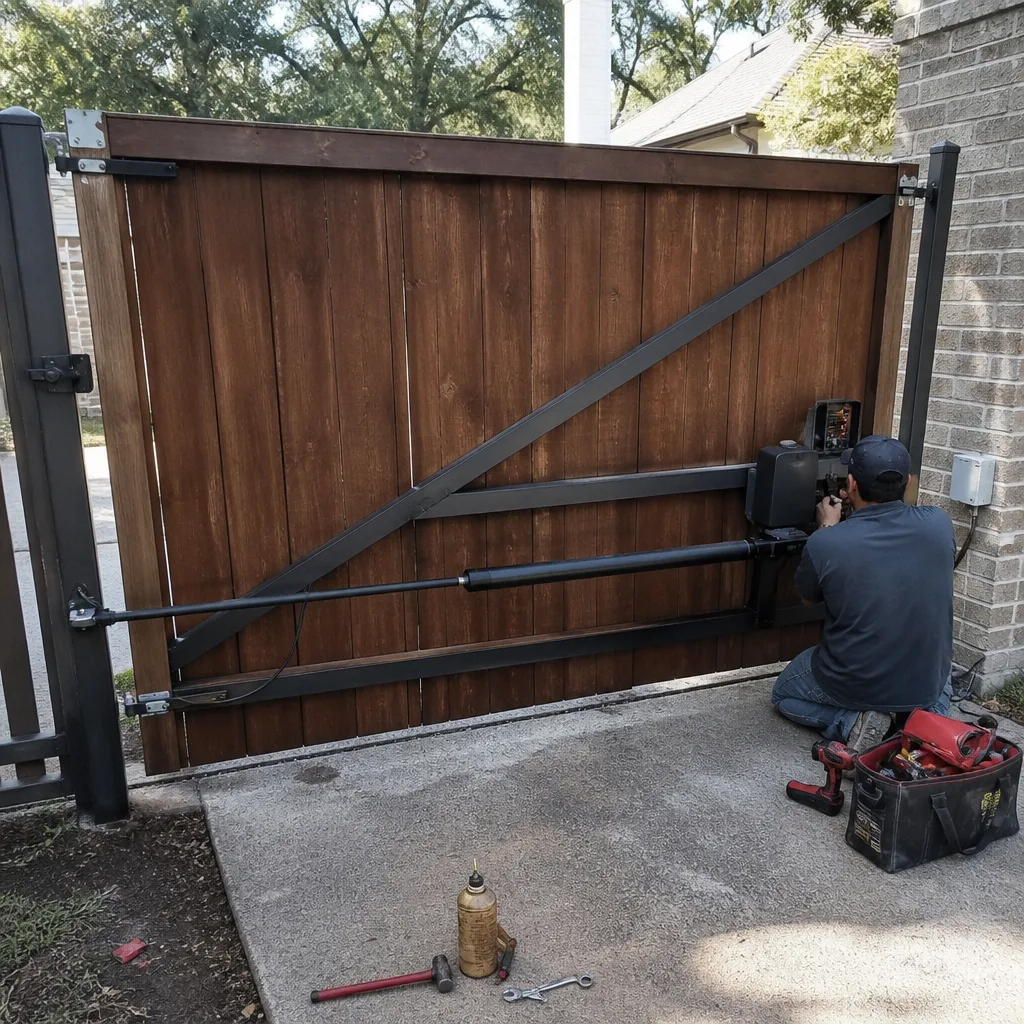 After
After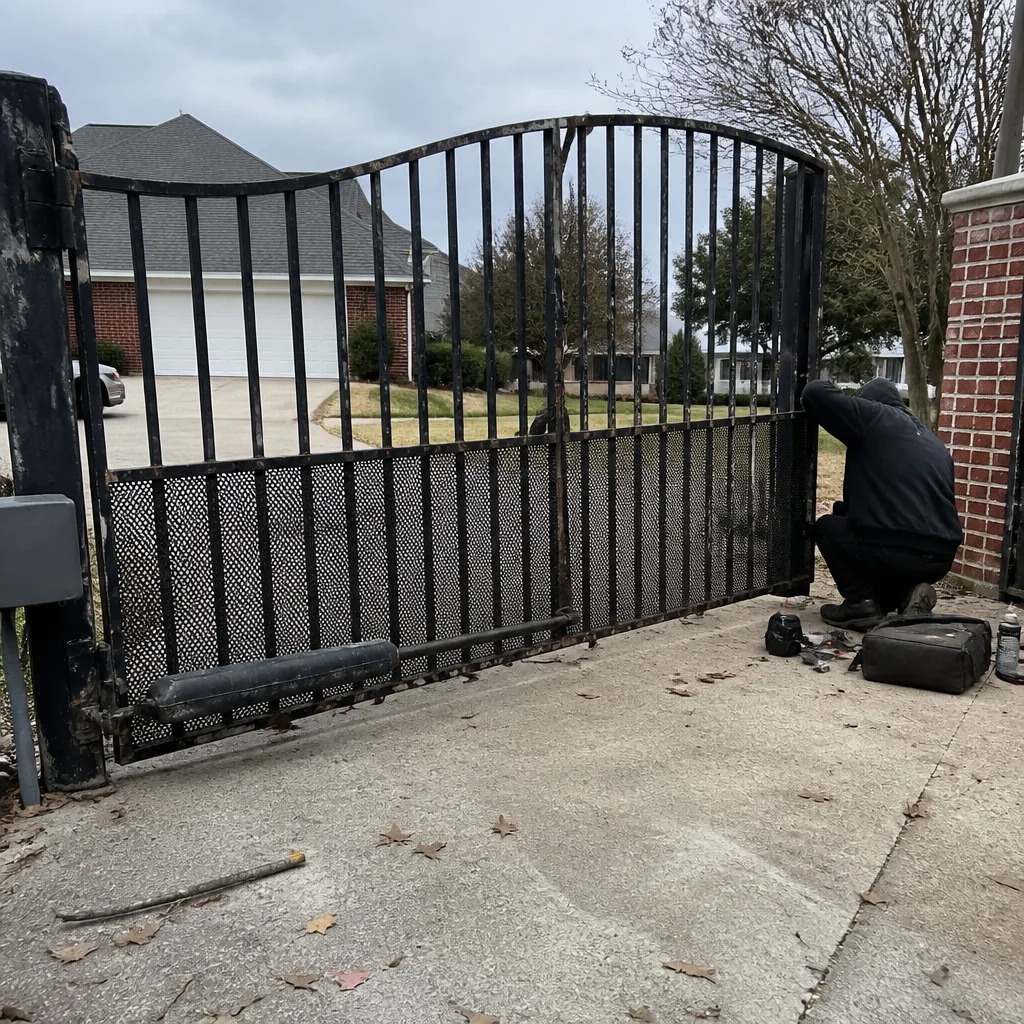 Before
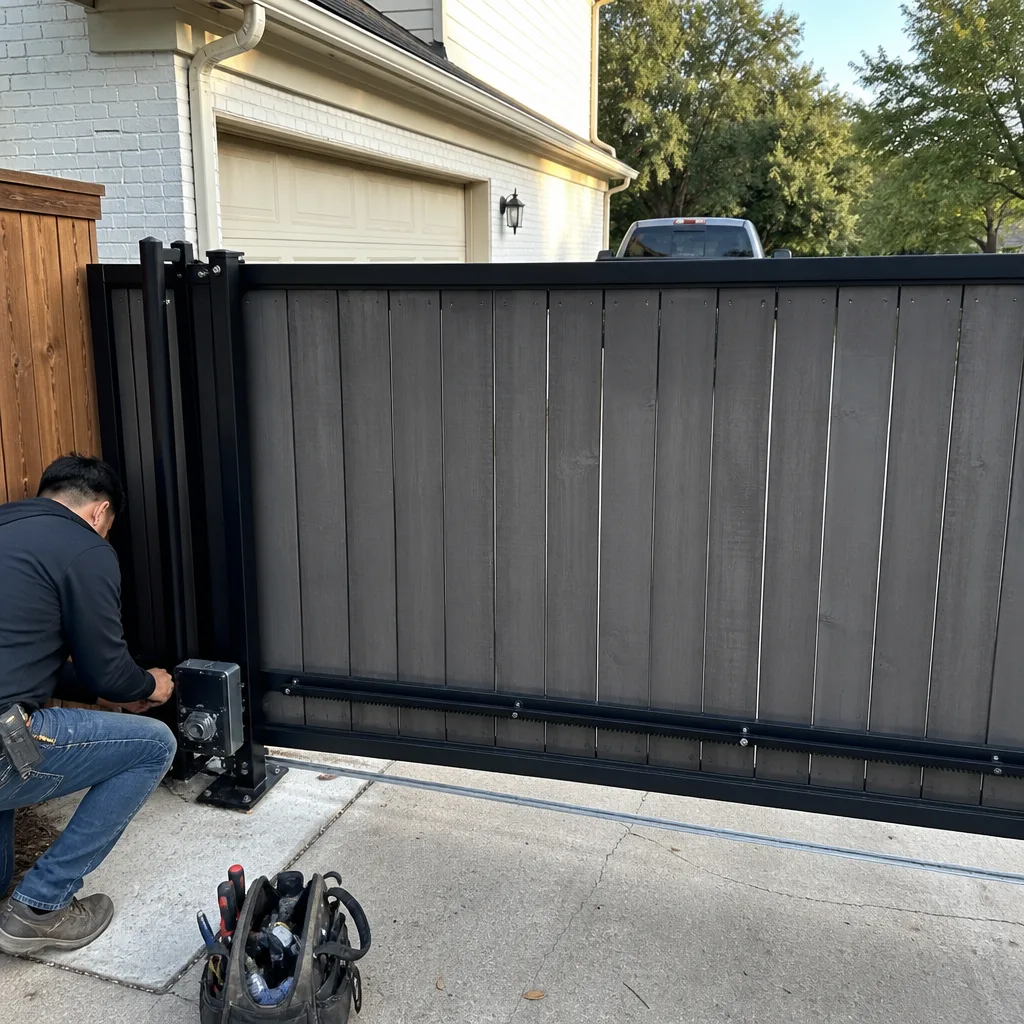 After
After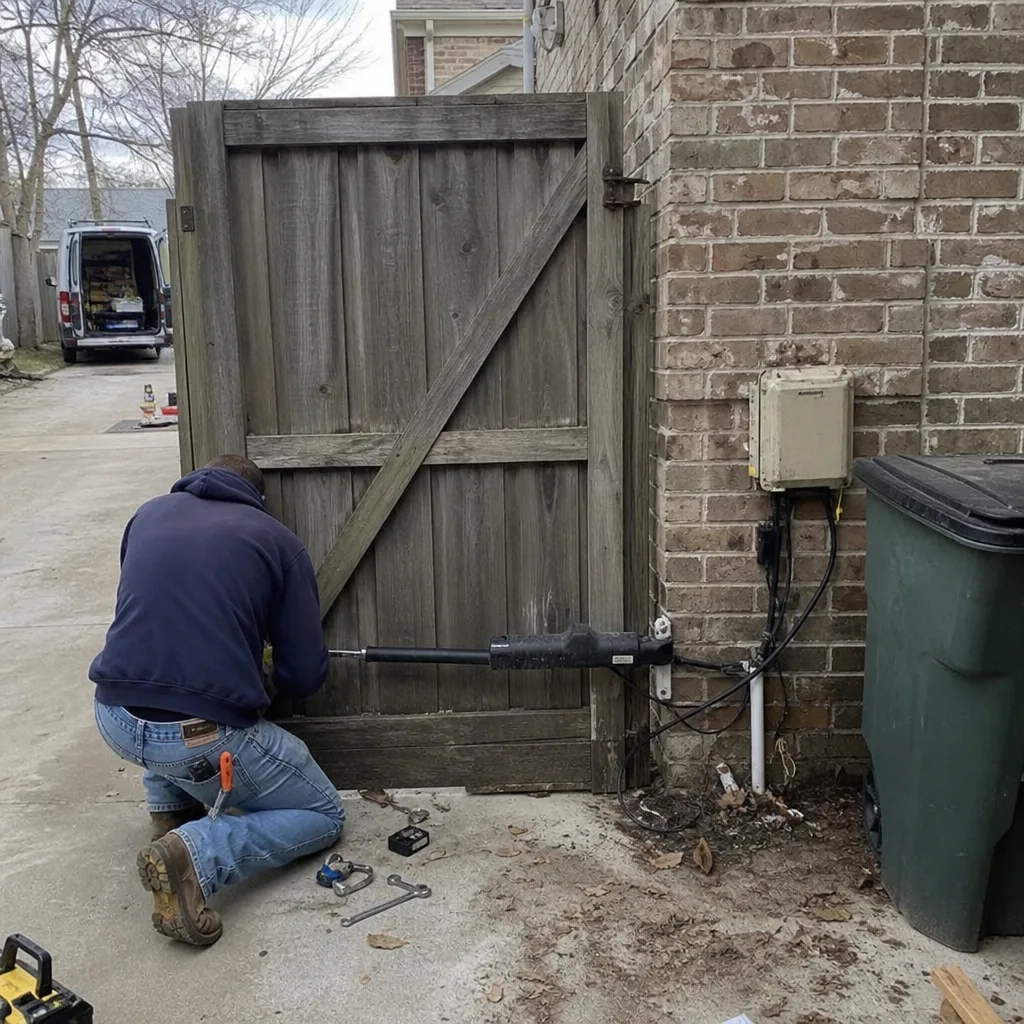 Before
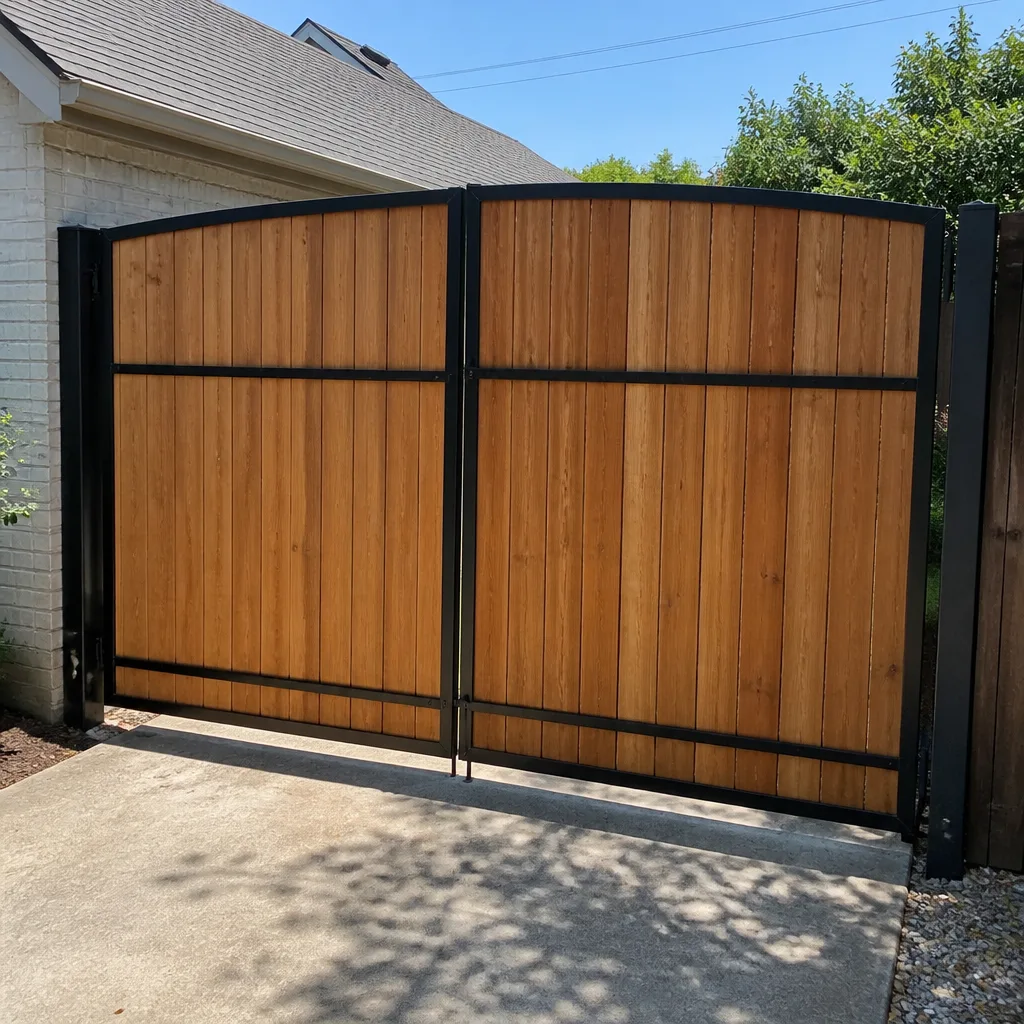 After
AfterThe Complete Guide to Gate Repair in Plano
A swing gate operator and a slide gate operator share almost no components, yet most guides hand you one troubleshooting list and call it done. That’s why homeowners describe the wrong symptom and get the wrong quote. This guide separates gate repair by gate type, drive system, and age, using the failure patterns we see across Plano’s subdivisions every week in our Gate Repair services. By the time you finish reading, you’ll be able to identify your gate’s exact problem, understand what it should cost to fix, and know what documentation to demand from any repair company that shows up at your Plano property.
Quick Answer
Gate repair in Plano TX typically costs between $185 and $780 depending on the gate type, drive system, and the specific component that failed. Most swing gate repairs are mechanical and can be done same-day; slide gate and access control repairs often require parts ordering that takes 2 to 5 business days. The fastest way to get an accurate diagnosis is to read your operator’s fault-code blink pattern before calling anyone.
Table of Contents
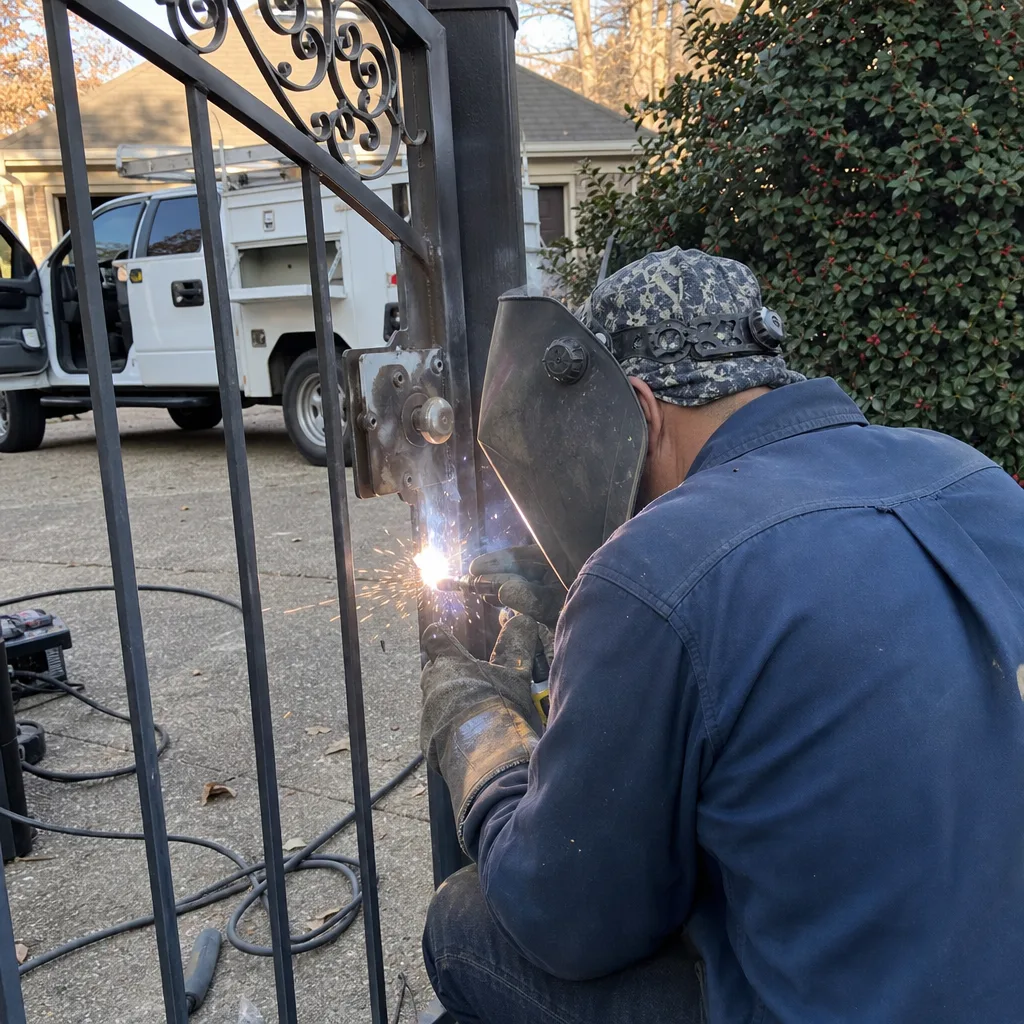
- Swing Gate Failure Patterns in Plano
- Slide Gate Failure Patterns in Plano
- Vertical-Pivot Gate Problems to Recognize
- Reading Your Operator’s Fault-Code Blink Pattern
- Which Repairs Need a Licensed Electrician in Texas
- Why Plano’s Clay Soil Causes Gate Post Lean
- What Documentation to Collect After Any Repair
- What Gate Repair Costs in Plano
- Common Mistakes to Avoid
- When to Call a Professional
- Frequently Asked Questions
BeforeAfterSwing Gate Failure Patterns in Plano
Swing gates are the most common gate type in Plano’s older subdivisions like Glen Heather and Preston Meadows, and they fail differently depending on whether the operator is an arm-type, ram-type, or underground system. Understanding which drive system you have is the first diagnostic step, because each has its own failure signature.
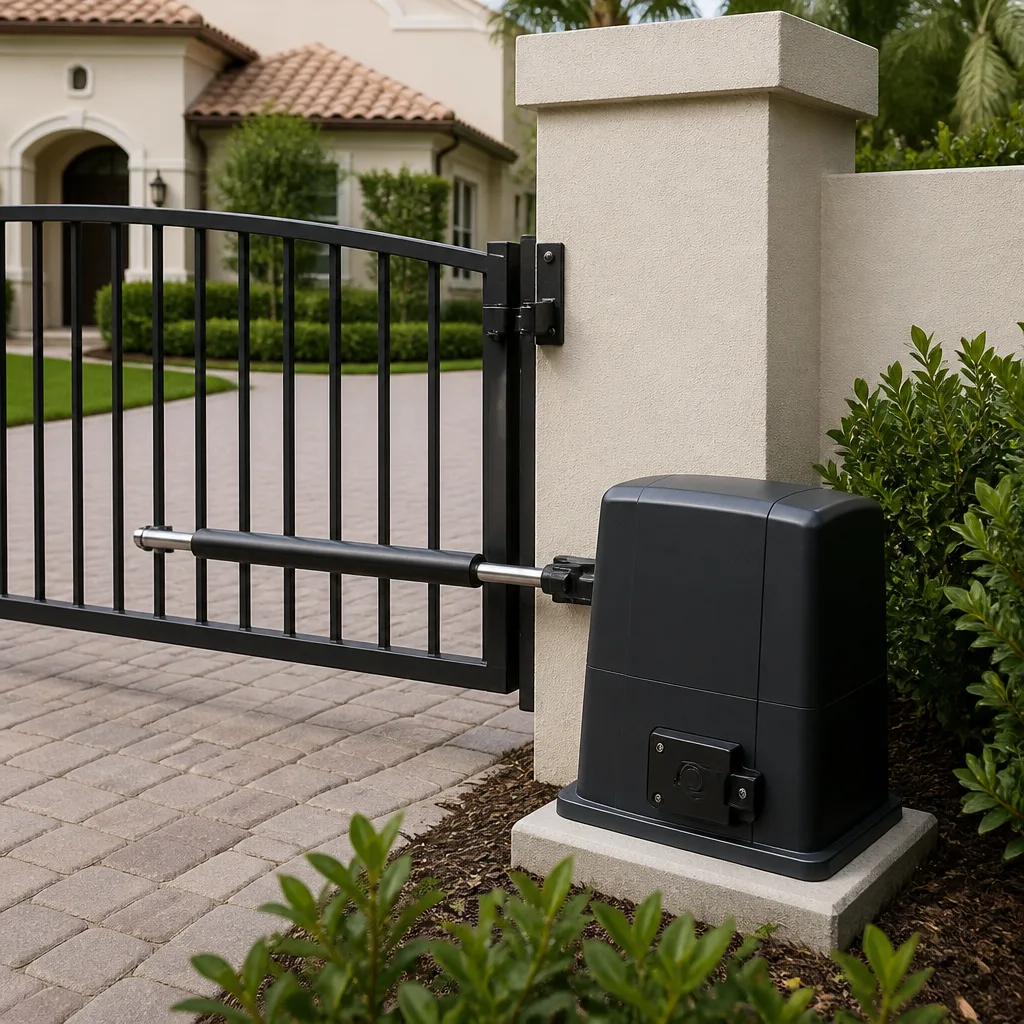
Arm-type operators, such as LiftMaster and Mighty Mule units, use a mechanical arm that extends and retracts to push or pull the gate leaf. When these fail in Plano, we most often find one of three things: a stripped plastic gear inside the operator housing, a bent arm bracket where the arm connects to the gate frame, or a limit switch that has drifted out of adjustment. The limit switch issue is particularly common after Plano’s hot summers, when thermal expansion of the metal gate leaf changes the travel distance by as much as a half inch. The symptom is usually a gate that closes fully but then reverses, or one that stops an inch shy of the close position and beeps.
Ram-type operators, which use a hydraulic or mechanical piston mounted on the gate post, fail more slowly. The most common issue is a leaking hydraulic seal, which produces a gate that moves sluggishly in cold weather but seems fine on warm afternoons. The second most common is a bent piston rod, usually caused by wind catching a gate leaf during one of Plano’s spring storm fronts. If your gate leaf has ever been blown hard enough to strain against the operator, have the piston rod checked for runout.
Underground swing gate operators are the least common but most expensive to repair in Plano because they require excavation to access the mechanism. In our experience doing gate repair in Plano, we’ve found that underground operators fail most often from water intrusion, as covered in our DIY vs Professional Gate Repair: The Plano Homeowner’s Decision Guide. After a heavy North Texas rain event, the vault below the gate hinge fills with runoff, and the motor sits in moisture until the windings short. If you have an underground operator and you notice the gate moving slower than it did a year ago, that’s the early sign of bearing wear and seal compromise. The fix is preventive, not reactive, and it’s much cheaper to address before the motor fails entirely.
For all swing gate types, the single most useful diagnostic fact is this: if the operator hums but the gate doesn’t move, it’s the capacitor or the gear train. If the operator is completely silent, it’s the control board or the power supply. If the gate moves but doesn’t fully open or close, it’s almost always the limit switch or a mechanical obstruction on the hinge side.
Slide Gate Failure Patterns in Plano
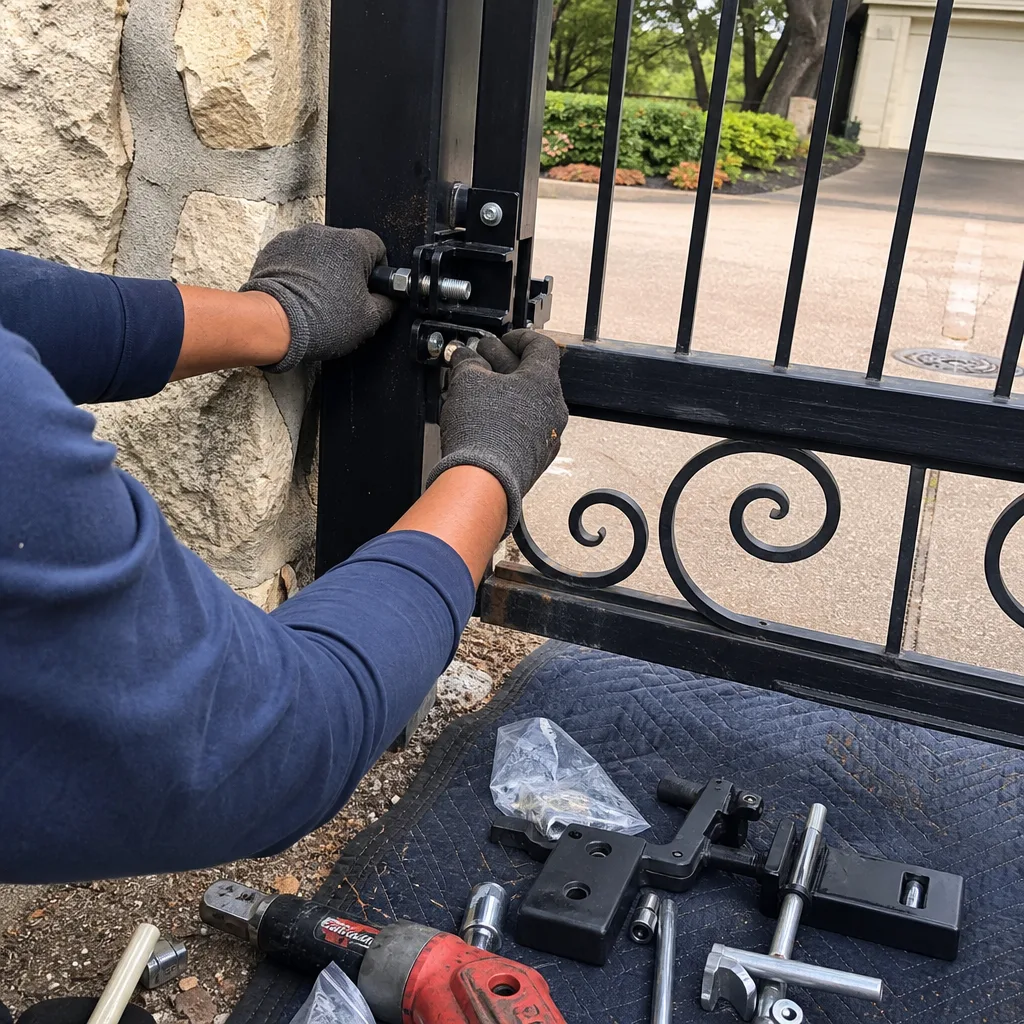
Slide gates are more common in Plano’s newer subdivisions and along properties with wider driveways where a swing gate would intrude into the yard. They use a completely different set of components than swing gates, which is why a one-size-fits-all troubleshooting list causes so much confusion. The three things that fail most often on Plano slide gates are the V-track wheels, the rack and pinion gear, and the photo-eye alignment.
V-track wheels are the load-bearing components that ride along the steel track bolted to the driveway. In Plano, where clay soil expands and contracts with moisture content, the concrete track pad shifts slightly over time. That movement throws the wheels out of parallel with the gate frame, and the gate starts to drag or bind at a specific point in its travel. You can spot this yourself by watching the gate from the end while it opens and closes. If it shudders at the same spot every time, the wheels and track are the first thing to check. This is a purely mechanical repair that doesn’t require a licensed electrician.
The rack and pinion system, by contrast, involves a steel gear on the operator shaft meshing with a toothed steel rail along the bottom of the gate. When a gear tooth chips or the rack segment loosens, the gate produces a rhythmic clunk as it moves. Left alone, a chipped gear tooth will chew up the rack over the course of several months in normal use. It’s a repair we recommend addressing promptly in Plano because the cost delta between replacing a single gear and replacing an entire rack section is meaningful.
Photo-eye misalignment is the third frequent slide gate issue, and in Plano it often traces back to the same root cause: shifting concrete. The photo-eye is an infrared beam that runs across the gate path, and when the ground shifts even a quarter inch, the beam breaks and the gate refuses to close. The symptom is a gate that opens normally but stops halfway through closing and reverses to the full open position. This is a classic misdiagnosis point: homeowners report a “broken motor” when the motor is fine and the beam is simply out of alignment. It’s also the cheapest repair on this list.
Vertical-Pivot Gate Problems to Recognize
Vertical-pivot gates lift upward on a hinge rather than swinging outward or sliding sideways, and they show up most often in Plano where a driveway dips or where a traditional gate would swing into traffic. They’re less common than swing and slide gates, which means fewer technicians genuinely understand how they fail. When we get called to a vertical-pivot repair in Plano, it’s usually because another company already tried and couldn’t get the gate to close properly.
The defining characteristic of a vertical-pivot gate is that it stores most of its weight in torsion springs mounted at the pivot points. Those springs counterbalance the gate leaf so the operator doesn’t have to lift the full weight. When a spring breaks, you’ll hear a loud pop and then the gate either won’t lift at all or lifts a few inches and slams back down. This is the single most dangerous failure mode of any gate type, because a broken spring under tension can release without warning. If you suspect a torsion spring failure, keep people and pets away from the gate and call a technician who is trained in vertical-pivot spring replacement. This is not a job to watch from six feet away thinking it looks straightforward; the stored energy in those springs is significant.
The second most common vertical-pivot failure is a bent pivot pin. When a vertical-pivot gate gets pushed by hand too hard, or when a vehicle clips the lower edge, the hinge pins take all of the force and bend slightly. The gate then lifts unevenly, and the operator strains against the misalignment. The symptom is a gate that opens with a visible wobble and makes a grinding noise near the top hinge. Unlike the broken spring scenario, this failure is safe to diagnose from a distance: watch the gate from the side while it operates. If the corner arcs instead of moving straight up, the pin is bent.
In Plano, vertical-pivot gates have an additional failure mode that’s tied to our soil. The pivot-post footing, which is set in concrete, can crack when the surrounding clay expands and contracts across the wet-dry cycle of a typical North Texas year. A hairline crack in the footing allows the post to shift microscopically, which changes the pivot geometry enough to cause binding. We find this on roughly a third of the vertical-pivot calls we answer in Plano, and the repair involves resetting the post with a deeper footing and proper drainage around the base.
Reading Your Operator’s Fault-Code Blink Pattern
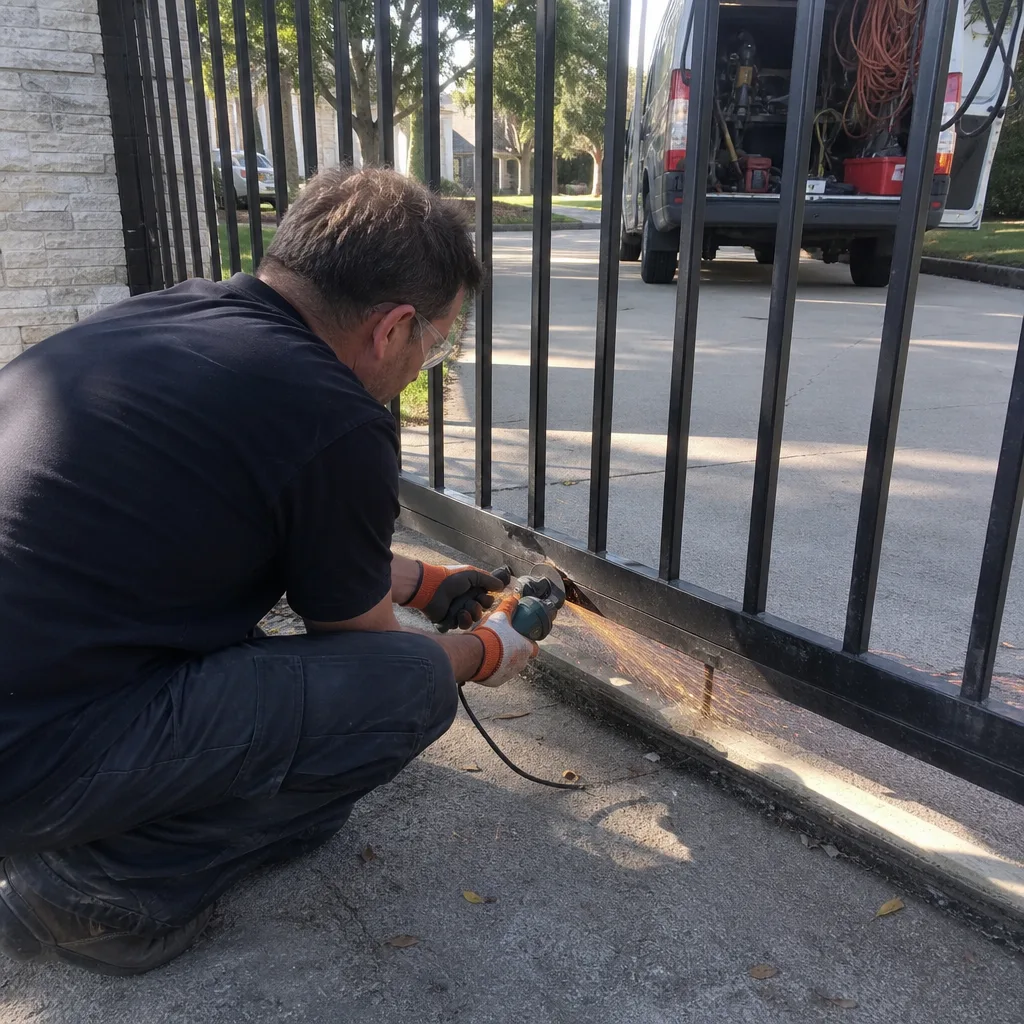
Before you pick up the phone to describe your gate problem, take two minutes to read the blink pattern on your operator’s diagnostic light. Most of the automation brands installed in Plano communicate their fault status through a sequence of short and long LED blinks. Writing down that sequence means the technician arrives already knowing what the control board thinks is wrong, which saves time and often money.
Here’s how to read the three brands most common in Plano:
- Apollo operators: Count the green LED blink pattern on the control board. Two blinks followed by a pause indicates a photo-eye obstruction. Three blinks indicates an accessory power overload, often caused by a shorted keypad wire. Four blinks indicates a stuck limit switch. Five blinks indicates a motor circuit fault. Each sequence repeats continuously until the fault is cleared.
- LiftMaster operators: The diagnostic LED flashes a series of short blinks followed by a long blink to indicate the fault code. Two short and one long typically indicates a force-reversal event: the gate met resistance and reversed direction. Three short and one long indicates a thermal overload, which we see in Plano during the peak summer months when the operator housing sits in direct afternoon sun. Four short and one long indicates a wiring fault on the safety sensor circuit.
- Viking operators: These use a numeric code on the LCD display rather than blinking lights. Error code 14 is the most common one we see in Plano, and it indicates a photo-eye circuit issue. Error code 22 indicates a motor over-current event, which typically traces back to a mechanical binding issue rather than an electrical fault. Error code 31 indicates a limit-switch synchronization problem, often after a power surge from a Plano storm knocks out the settings.
One thing to note with any blink-pattern diagnosis: the code tells you what the board thinks is wrong, not what’s actually wrong. A photo-eye fault code might mean the beam is blocked, or it might mean the photo-eye wire has been chewed through by a squirrel. A motor fault code might mean the motor has failed, or it might mean the gate is binding so severely that the motor can’t move it. The blink pattern narrows the diagnosis; it doesn’t finish it. But it’s still the single most useful piece of information you can give a technician over the phone. We use it on nearly every initial call we take at Vance Gate Repair Plano to determine whether someone can fix the issue on a first visit or whether we need to bring specific parts with us.
Which Repairs Need a Licensed Electrician in Texas
One of the most confusing aspects of gate repair for Plano homeowners is knowing when a specialized license is required and when a competent technician can handle the work without one. The short answer is that mechanical gate repairs do not require a Texas electrical license, but anything that touches the line-voltage power feed does. Here’s the practical breakdown.
Pure mechanical work includes V-track wheel replacement, hinge replacement, rack and pinion gear replacement, track realignment, post adjustment, torsion spring replacement on vertical-pivot gates, and any welding work on the gate frame. These repairs involve nuts, bolts, steel, and adjustments, not wiring. A technician can legally perform all of this work in Texas with no electrical license required. The same goes for low-voltage system work: photo-eye replacement, keypad installation, remote-control programming, and limit-switch adjustment all operate at 12 to 24 volts, which Texas law treats differently from line-voltage electrical work.
The line is crossed when the repair touches the 120-volt AC power supply feeding the operator. That includes installing a new electrical circuit from the breaker panel to the gate location, replacing a power transformer that steps down the incoming voltage, or pulling new line-voltage wiring through conduit. A licensed electrician is required for this work under Texas law. If your gate is dead and the issue is the power feed rather than the operator itself, you need an electrician, not a gate technician. At Vance Gate Repair Plano, we coordinate with licensed electricians on this work, but we don’t perform it ourselves unless we’re working on the low-voltage side where the license requirement doesn’t apply.
There’s a third category that homeowners often overlook: access control integration. If your gate is tied into an HOA-managed entry system, a call box, or a multi-tenant directory, the repair may involve low-voltage data wiring that’s separate from both the mechanical gate components and the line-voltage power feed. This work doesn’t require an electrical license in Texas, but it does require familiarity with the specific access control platform. Before you hire anyone, ask two questions: “Does this repair involve any 120-volt work?” and “Have you worked on this specific access control brand before?” The answers will tell you whether you’re looking at a gate technician’s job, an electrician’s job, or both.
Why Plano’s Clay Soil Causes Gate Post Lean
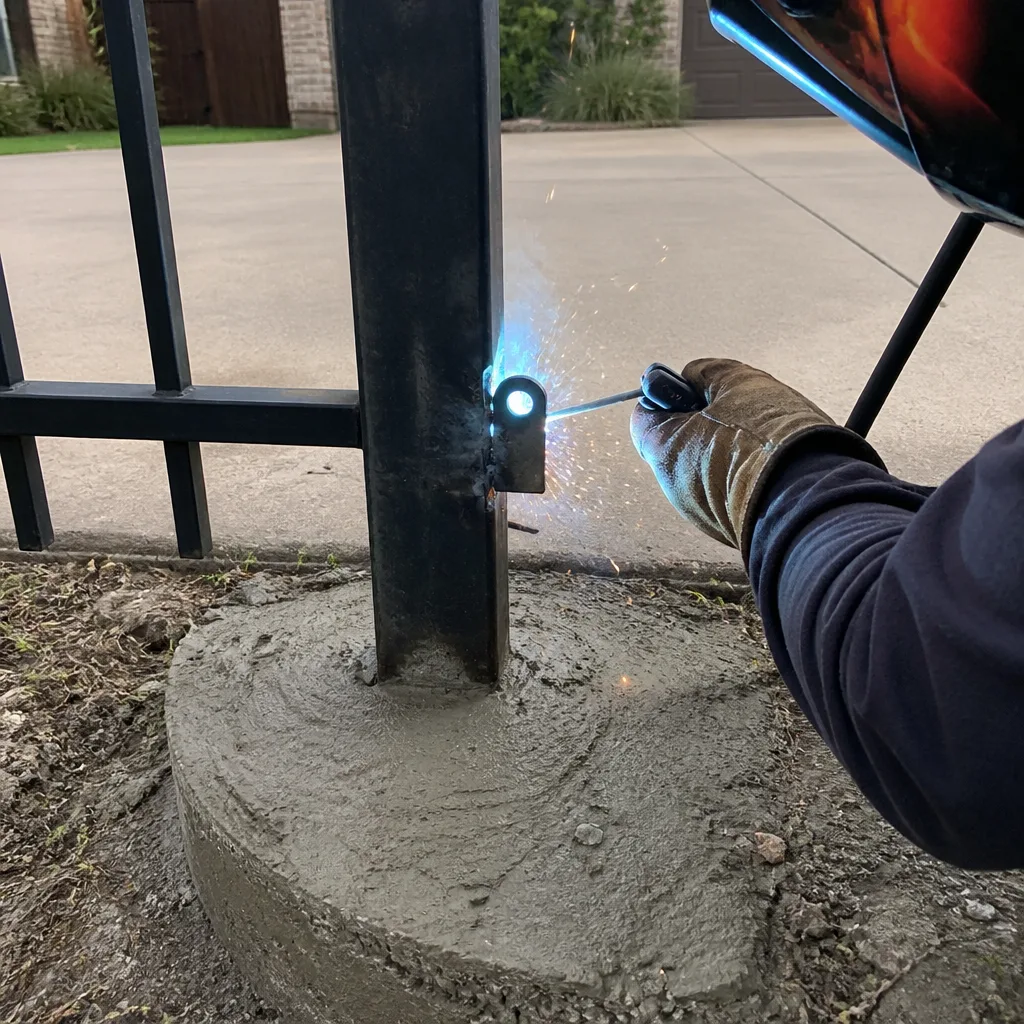
The reason gate posts lean faster in Plano than in most other DFW suburbs is geology, not workmanship. Plano sits on a belt of highly expansive clay soil, known locally as Houston Black Clay, that swells significantly when wet and shrinks when dry. The shrink-swell cycle moves the soil vertically by as much as two inches per foot in extreme conditions, and that movement applies lateral force to any concrete footing set into it. Gate posts are especially vulnerable because they’re single-point footings. Unlike a fence, which distributes force along a line, a gate post absorbs everything at one concentrated point.
We can observe the annual pattern in Plano’s climate data: heavy spring rains saturate the soil and cause expansion, followed by long, hot, dry summers that pull moisture back out and cause contraction. This cycle happens every year in Plano, and each cycle contributes a small amount of permanent post movement. Over five to seven years, even a well-installed gate post can move enough to cause binding, sagging, or a gate that won’t latch. The first visible clue is a diagonal gap between the post footing and the surrounding concrete, usually appearing on the side of the post opposite the gate leaf.
How to check for post lean yourself:
- Stand back from the gate in the full open position and sight along the top edge of the gate leaf. If it drops visibly from the hinge side to the latch side, the post has leaned.
- Look at the base of both gate posts where they meet the concrete. In Plano’s climate, a healthy post should show no more than a hairline crack between concrete and metal. A visible gap of a quarter inch or more indicates movement.
- Watch the gate as it opens and closes. If the gap between the gate and the ground changes as the gate moves, the hinge post has moved out of plumb.
- Measure the gap between the latch post and the latch plate on the gate leaf. If the latch catches but rides high or scrapes, the post has shifted toward or away from the gate.
Repairing clay-soil post lean in Plano requires more than just re-plumbing the post. The footing needs to be re-set with proper drainage or it will lean again within a few years of Plano’s seasonal cycles. We recommend a deeper footing with a gravel drainage base and, in severe cases, a helical pier installed beneath the post to reach stable soil below the active zone. That’s a more expensive repair than simply pulling the post straight, but in Plano’s soil, the shortcut version doesn’t last. Our gate repair in Plano work includes a number of post resets every year, and the difference between a properly drained footing and a quick fix is visible within two turnings of the seasons.
What Documentation to Collect After Any Repair
Most Plano homeowners pay for a gate repair, watch the gate work when the technician leaves, and never think about documentation again. Then the gate fails two years later, a different company comes out, and the new technician has no idea what was replaced, what was adjusted, or what the previous wiring configuration looked like. You pay twice to rediscover the same problem. That’s not just frustrating; it’s a predictable consequence of hiring a company that doesn’t document its work.
Here’s what a professional gate repair should leave behind, and what you should ask for if it’s not offered:
- A written scope of work, signed before the repair starts. This should name the specific components to be replaced or adjusted, not just “general gate repair.” If a company refuses to put the scope in writing before starting, choose a different company. This is the most important single document in the entire transaction.
- Written pricing, matched to that scope. In Plano, most legitimate gate companies quote a job price, not an hourly rate. You should know the exact number before tools come out of the truck. If the scope changes during the repair, expect a written change order, not a surprise on the invoice.
- A photo record of what was found, what was adjusted, and what was installed. Before-and-after photos of the replaced component, the limit switch setting, the wiring connections, and any damage found during the repair. These photos protect both you and the technician.
- The part number and manufacturer of any component that was replaced. This matters more than you might think. When the next failure happens, knowing whether the limit switch was a LiftMaster OEM part or a third-party replacement changes the diagnosis.
- The final limit-switch readings and force settings. This is a level of detail most companies never capture, and it’s the single most useful piece of data for future diagnostics. A technician who knows the gate was set to close with 45 pounds of force versus 75 pounds can diagnose a reversal issue in minutes instead of hours.
At Vance Gate Repair Plano, this documentation isn’t an upsell. It’s how we work. Every visit includes a photo log and a written record of what was done, down to the torque specs on the gate hinges. If a future technician asks what the previous repair involved, the answer is in the file, not in the homeowner’s memory.
What Gate Repair Costs in Plano
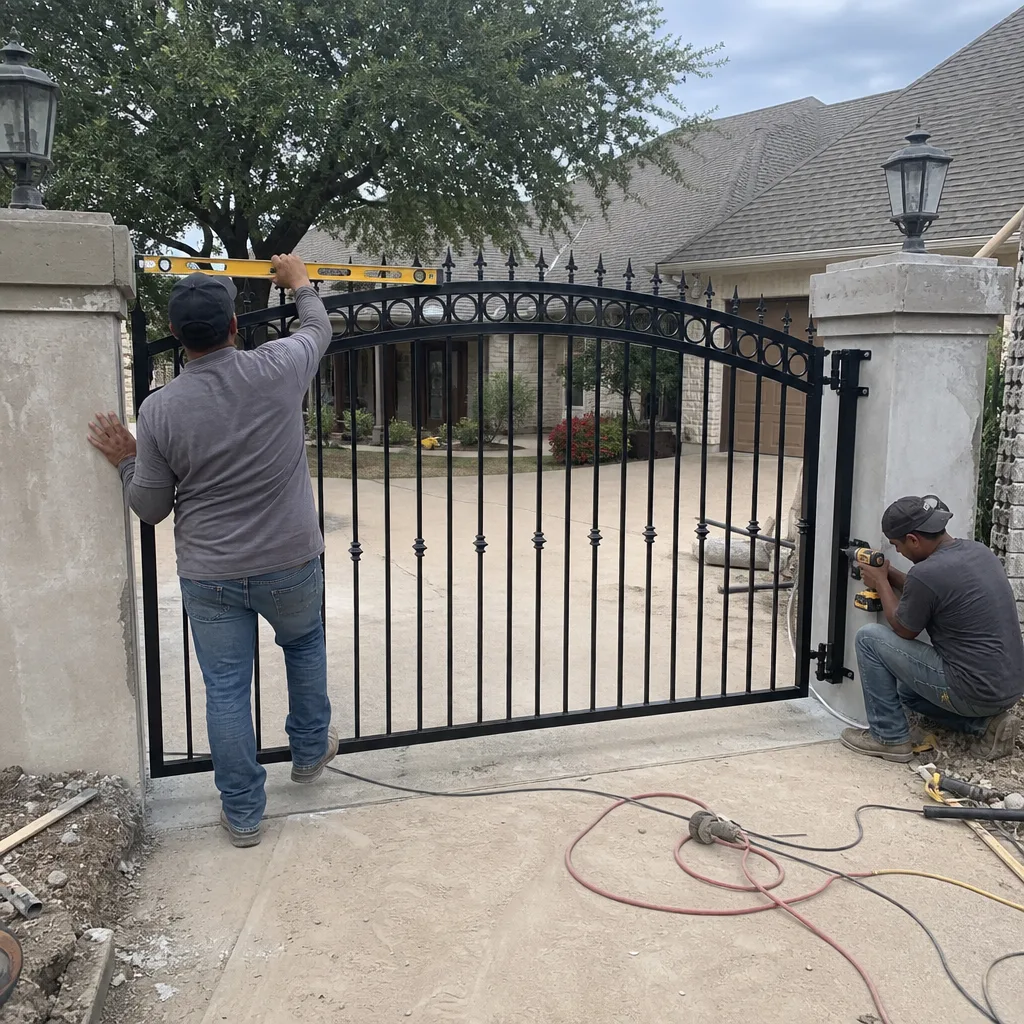
Gate repair in Plano TX is priced by the repair, not by the hour, and the biggest cost variable is the gate’s drive system and the specific component that failed. Here are the ranges we see in the Plano market for common repairs, with the understanding that a written quote after diagnosis is the only number that matters.
Flat-Rate Repair Prices We Use for Plano Gate Repair
- Photo-eye realignment or replacement: $145 to $285. Realignment alone is usually a one-trip repair, often under $200. Replacement with a new sensor pair runs higher, depending on the brand.
- Limit-switch adjustment or replacement: $155 to $310. Adjustment is cheaper than replacement, but in Plano’s climate, repeated heat-related drift often justifies replacing an aging limit switch rather than adjusting it a third time.
- Swing gate arm bracket replacement: $185 to $360. The bracket cost depends on whether it’s a standard steel bracket or a heavy-duty version for a larger gate leaf.
- V-track wheel and bearing replacement: $245 to $475. This range covers most residential slide gates in Plano. Pricing depends on wheel count and how much track adjustment is required.
- Rack and pinion gear replacement: $290 to $540. The gear itself is inexpensive, but the labor to align the new gear with the existing rack is more involved than most homeowners expect.
- Underground swing operator service or replacement: $780 to $1,850. The range is wide because water intrusion damage varies. A preventive bearing and seal service on an existing unit sits near the low end; a full operator replacement after water damage sits near the high end.
- Swing gate operator replacement (arm or ram type): $625 to $1,250. The price depends on whether the existing mounting hardware and brackets are reusable and whether the gate is single or dual leaf.
- Vertical-pivot torsion spring replacement: $350 to $680. This includes both springs on a typical Plano residential vertical-pivot gate. The upper end covers heavier gates with larger spring assemblies.
- Post reset with new footing: $350 to $875 per post. The range reflects the difference between a simple re-plumb and re-pour versus a deeper footing with drainage improvements for Plano’s clay-soil cycle.
These are flat-rate ranges, not hourly estimates, and the price is written down before work starts. If a Plano gate company gives you an hourly rate instead of a job price, ask them to commit to a not-to-exceed number in writing. The cost of gate repair in Plano should never be an open question at the end of the job.
Common Mistakes to Avoid
- Describing the symptom instead of the component. “The gate won’t close” tells a technician almost nothing. “The gate opens fully, then stops halfway and reverses, and the operator light blinks three times” tells them exactly where to look. Before you call anyone for gate repair in Plano, watch the gate through a full cycle and write down what you see.
- Assuming a newer gate can’t need repair. Plano has thousands of gates installed within the last five years, and they fail for the same reason older gates do. Clay soil doesn’t care how new your gate is. Neither does a spring storm that slams the gate against the operator.
- Replacing rather than repairing the operator. A gate operator with a bad capacitor is a $35 part. A gate operator with a bad control board is a few hundred dollars. Neither scenario necessarily requires the full operator replacement that many companies push toward. Before you authorize a replacement, ask what specific component failed and what that component costs to replace.
- Calling an electrician for a mechanical problem. If the gate is binding, sagging, or grinding, you don’t need an electrician. You need someone who understands gate mechanics. Hiring an electrician to fix a bent hinge wastes your money and delays the actual repair.
- Not asking for the price before the work starts. In Plano, a gate repair is a flat-rate job, not an hourly mystery. If a company won’t put the price in writing before they begin, find one that will. This single habit saves Plano homeowners more money than any other.
- Skimping on the post footing. We’ve already covered this, but it bears repeating: a cheap post reset in Plano’s clay soil fails within a few years. The money you save on the cheaper repair is spent again, plus interest, on the next one.
When to Call a Professional
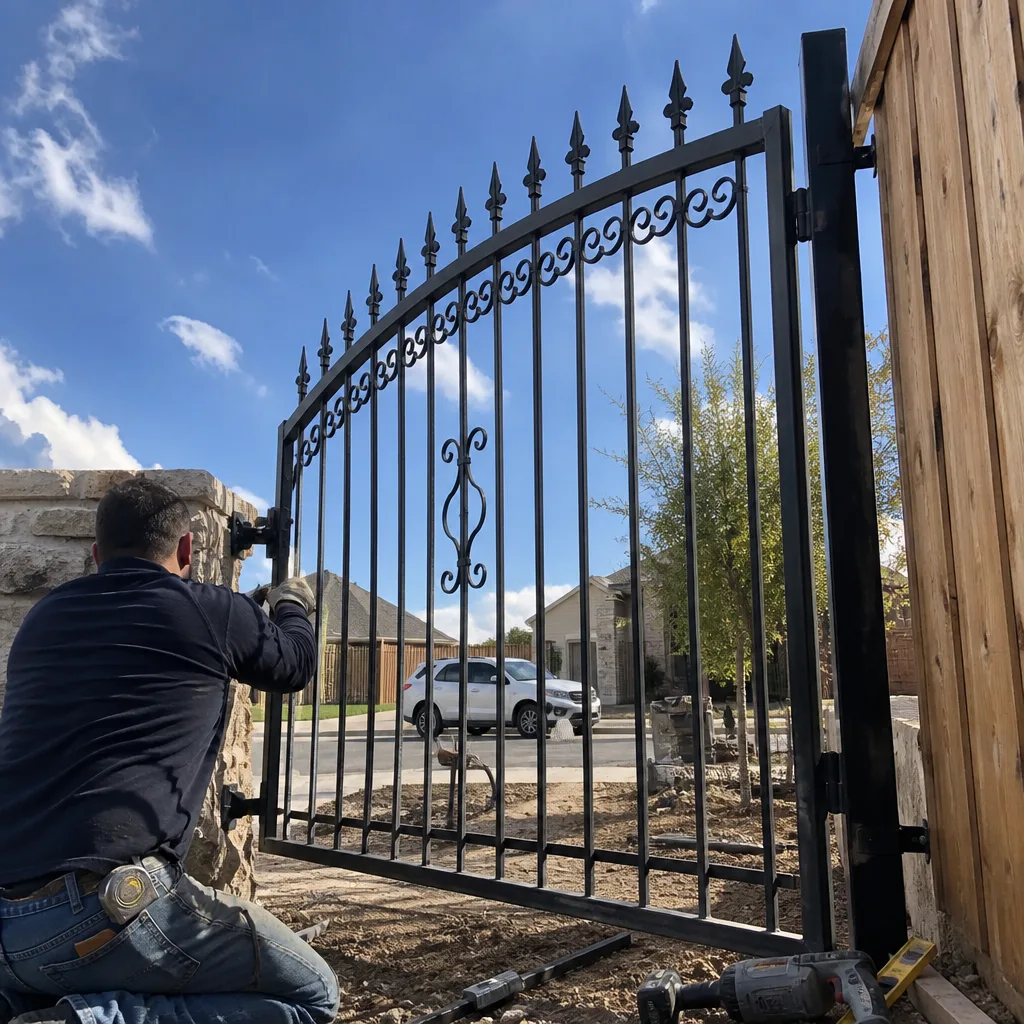
Some gate problems are safe to diagnose yourself; a few are repair candidates for a confident homeowner. Most are not. For more guides & resources, see our blog. Call a professional if any of these apply: your gate uses a torsion spring that has failed or appears under tension; the operator is connected to 120-volt power and you’re not certain where the low-voltage side begins; the gate post has visibly moved and the gate no longer closes straight; your access control system involves a call box, keypad, or intercom that’s integrated with other property systems; or you’ve already attempted a repair and the gate still doesn’t work correctly. Gate repair in Plano tends to compound when a homeowner’s first fix attempt makes the original problem harder to diagnose, so the fastest path back to a working gate is a professional from the start. Vance Gate Repair Plano offers free estimates in Plano. Call (972) 236-7089 and we’ll come look at the gate, hand you a written price, and you decide whether to move forward.
Frequently Asked Questions
Most Plano gate repairs run between $185 and $780 depending on the gate type and the failed component. A photo-eye realignment sits near the bottom of that range; a slide gate rack and pinion gear replacement sits near the top. We quote every job as a written flat rate before work starts, so the price you’re quoted is the price you pay. Call (972) 236-7089 for an exact quote, and we’ll come to you free of charge to assess the gate.
In most cases, yes. We schedule Plano gate repair calls throughout the week and respond to emergency calls every day. A live person answers the phone 24 hours a day, so when you call (972) 236-7089, you’ll speak to a human being immediately. For simple mechanical repairs like photo-eye realignment or hinge adjustment, the work is often completed on the first visit. For parts replacements that require ordering, we’ll give you a realistic timeline and written pricing before we leave.
A complete gate installation in Plano includes removal of the existing gate and posts, new post footings set to the correct depth for our soil type, installation and alignment of the gate leaf and operator, and full programming of the access control system you choose. We also leave behind the same documentation we provide on repairs, including a photo record and written record of every setting. Gate Installation in Plano includes a free measure and written quote before any work begins.
We service gate motors from LiftMaster, FAAC, BFT, Linear, Viking, Ghost Controls, DoorKing, Elite, and Mighty Mule, repairs included. Most callers we see in Plano don’t need a new motor; they need a capacitor, a limit switch, a board, or a gear replaced. We’ll always show you the failed component and explain the repair vs. replacement math before you decide. Visit our Gate Motor & Opener in Plano page for more detail.
Yes. We run the low-voltage wiring, install UL 325-compliant safety edges, and coordinate with a licensed electrician for the 120-volt power connection when one is needed. On existing gates where the edges are worn or missing, we can retrofit the current safety system to current code. The written quote covers the complete scope, power work coordination included. Call (972) 236-7089 for a free assessment.
The evidence is in the documentation. When we finish any repair in Plano, you’ll receive a photo record of what we found, adjusted, and installed, including part numbers and limit-switch readings. That record is your proof that the work happened as described and your reference point for future repairs. It also means our 365-Day Done Right Promise has a paper trail: if the repair fails within the year, we come back and fix it at no charge, using the documentation to pick up exactly where we left off.
The Bottom Line
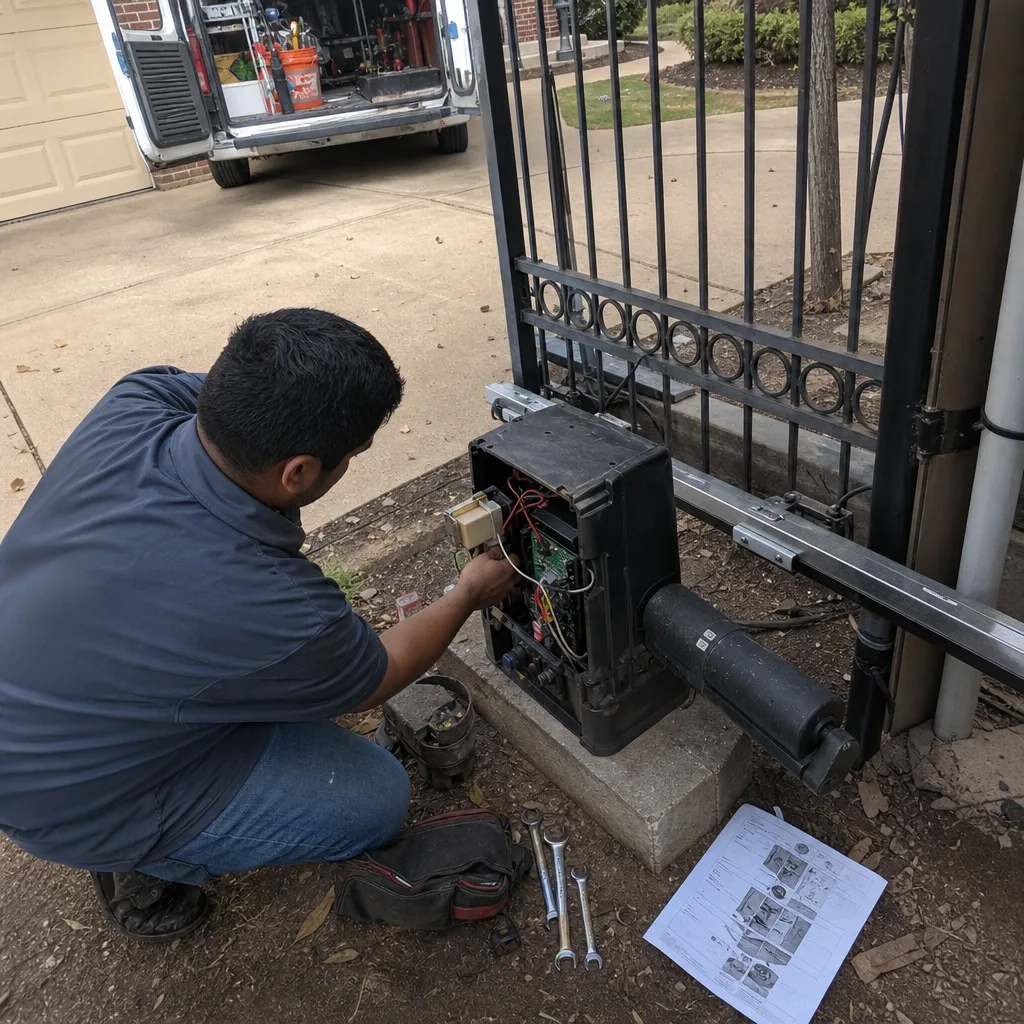
Plano gate repair goes wrong most often when homeowners get a generic answer to a specific problem. Your gate is a swing, slide, or vertical-pivot system; your operator is a specific brand with a specific fault code; your soil moves more than most. The fix is knowing enough to describe what you’re seeing, demanding a written price, and keeping the documentation that protects you into the future. That’s it. If you’d rather hand the whole thing to someone who’ll photograph everything and hand it to you in writing, we’re here. Gate Repair in Plano is what we do every day. Call (972) 236-7089 and we’ll come look at the gate.
Written by Adrian Vance, Owner at Vance Gate Repair Plano, serving Plano since 2014.