
Last updated September 20, 2026
Free on-site gate assessment - hinges, posts, and your LiftMaster or Nice gate operator checked before anything is quoted
The assessment is free and the quote is the invoice.

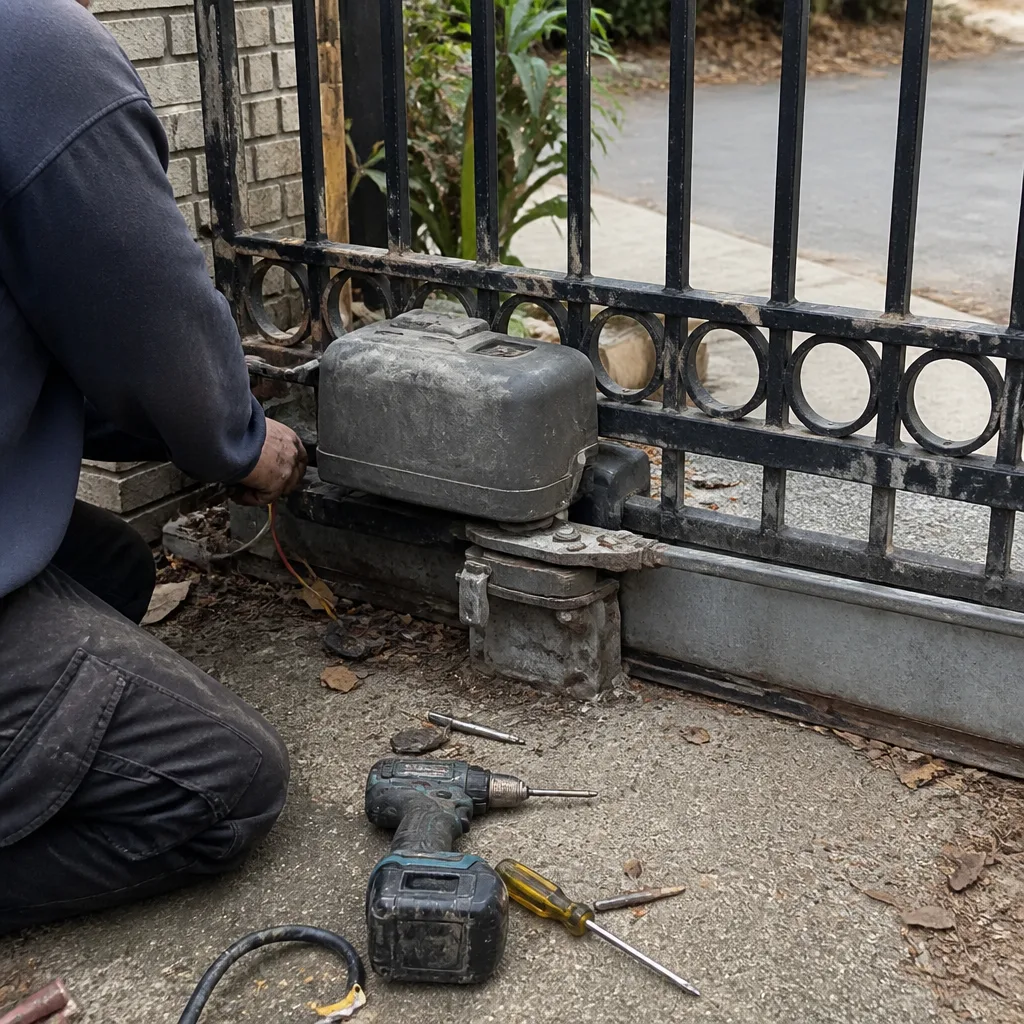 Before
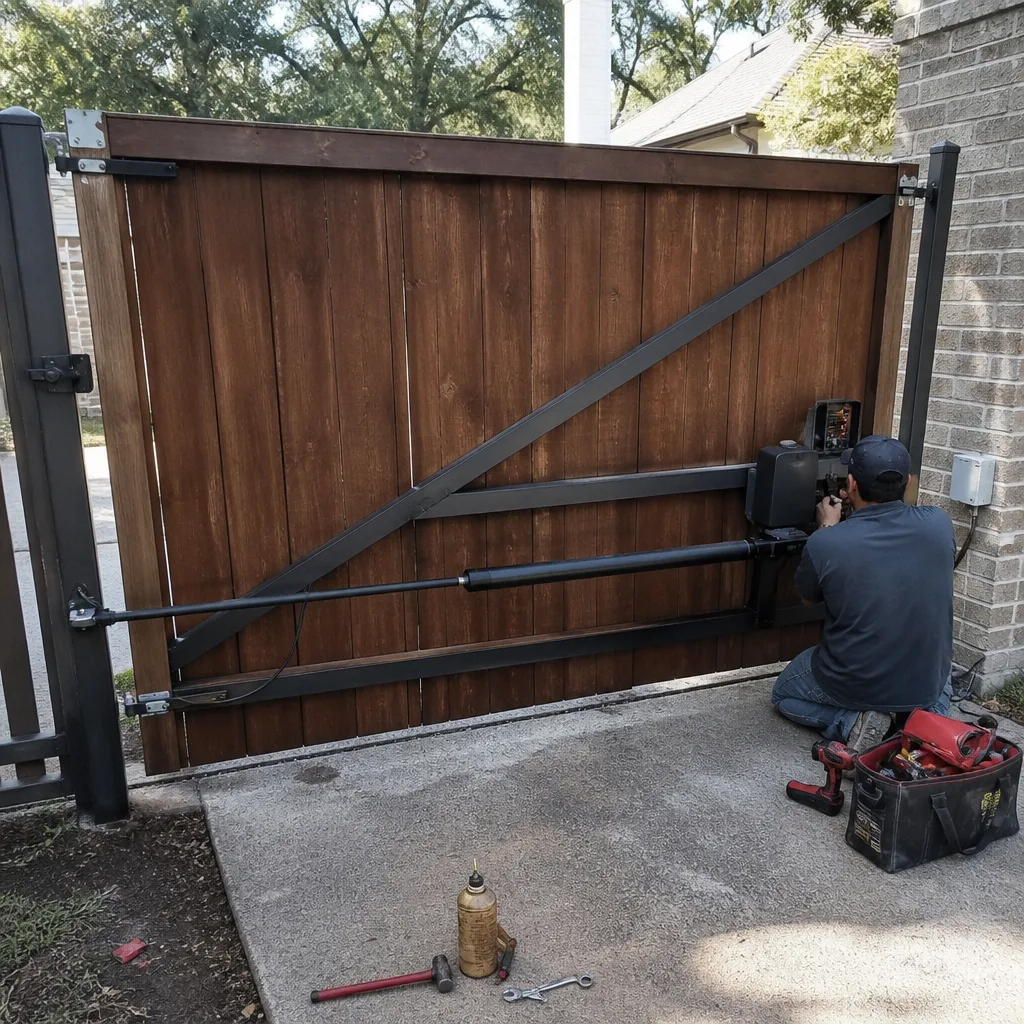 After
After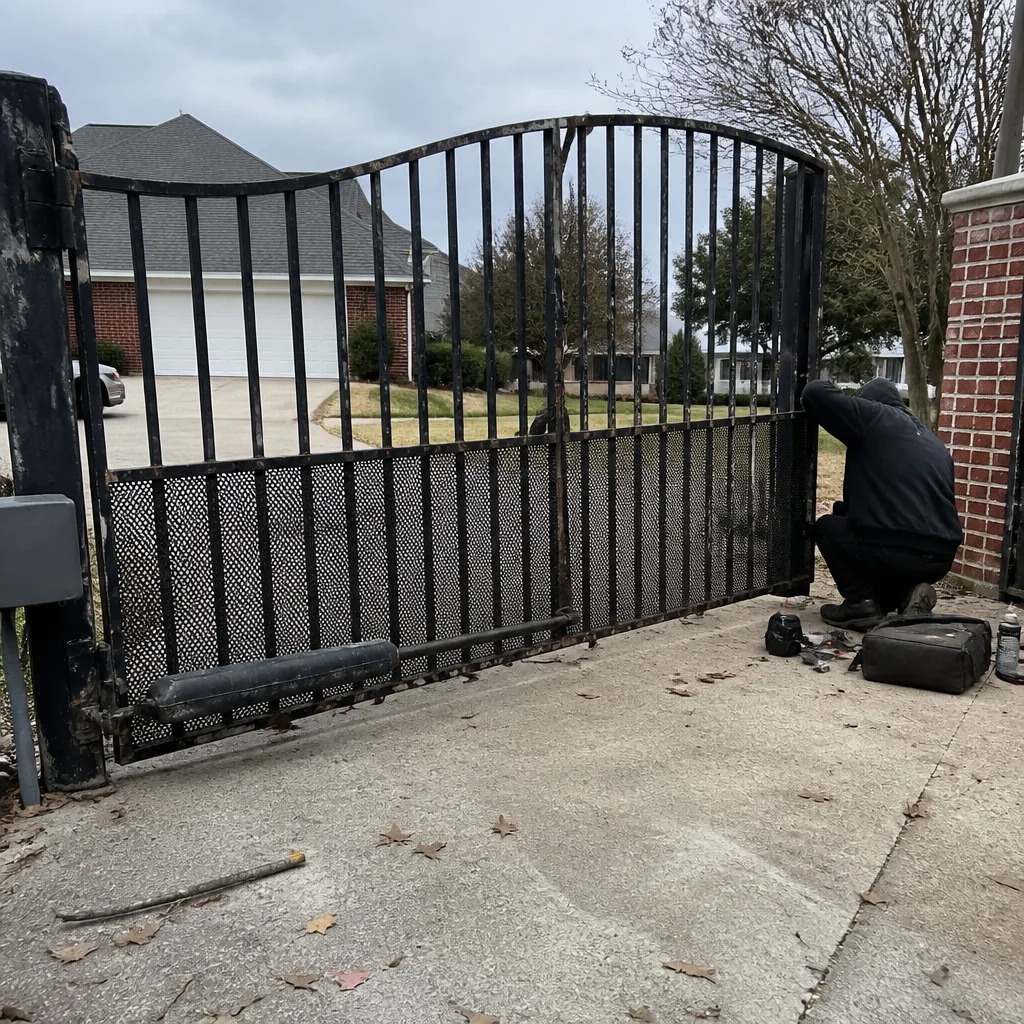 Before
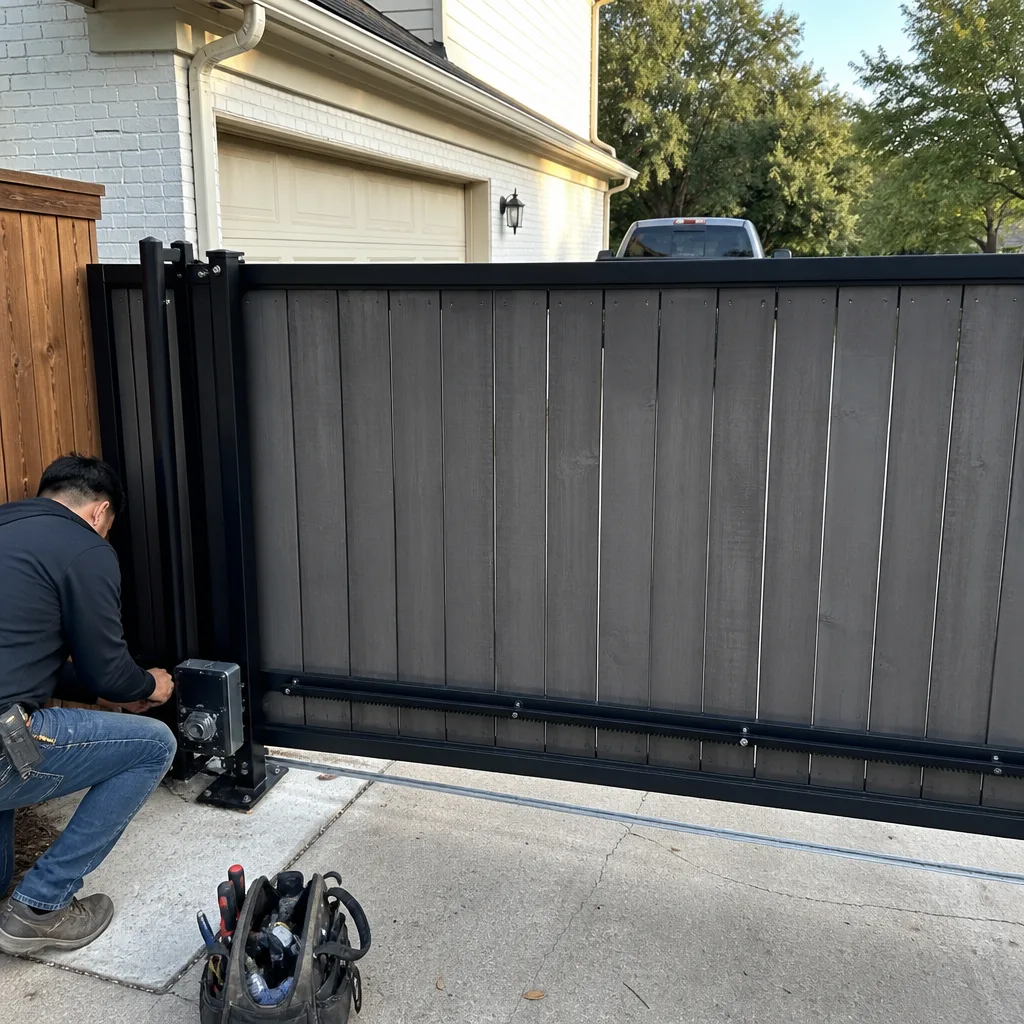 After
After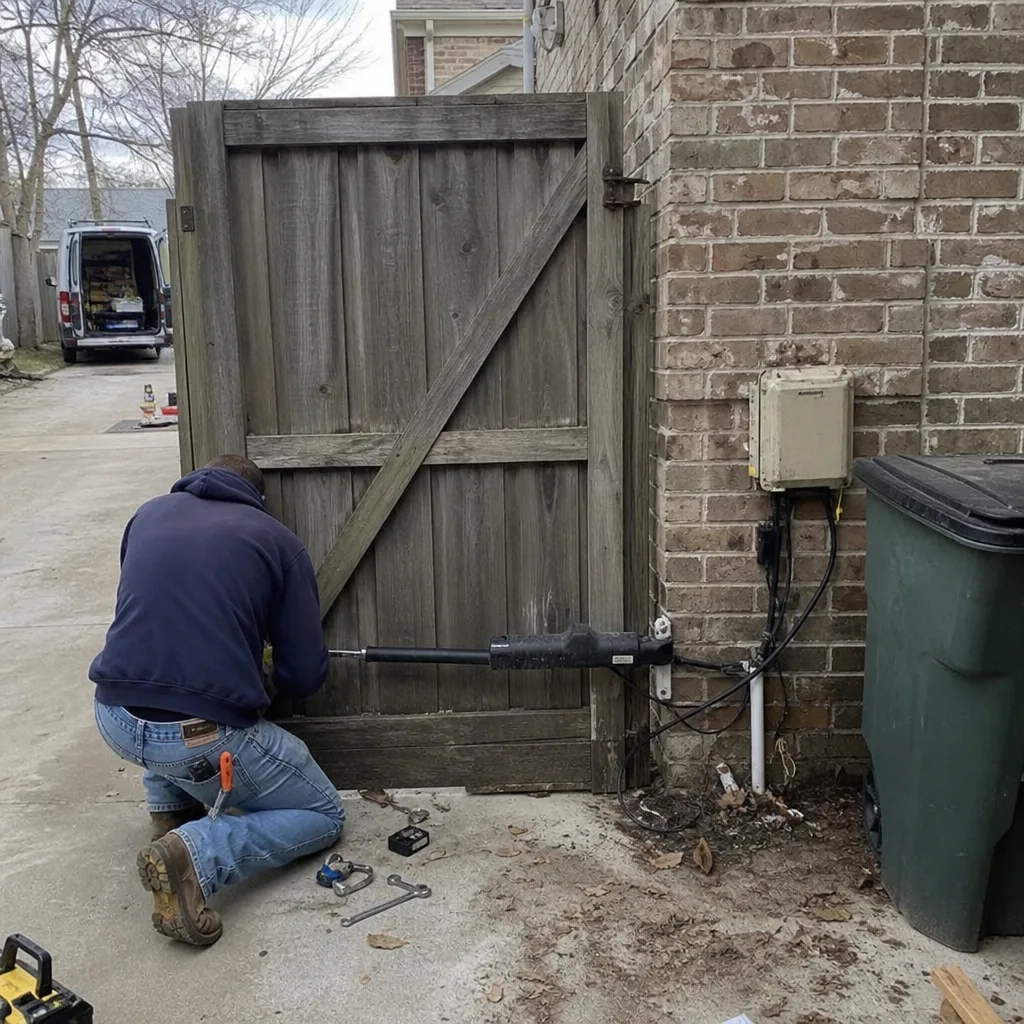 Before
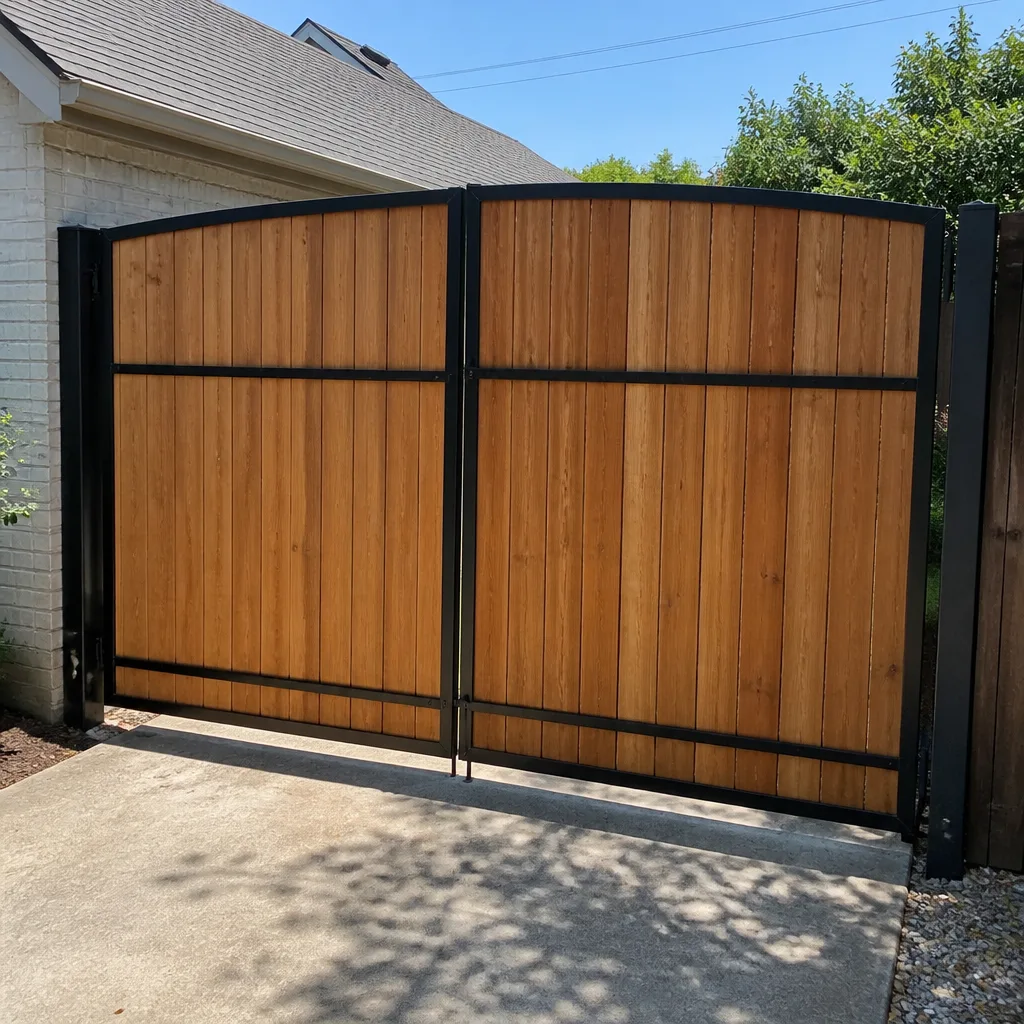 After
AfterGate Repair Maintenance Checklist for Plano Homeowners
Every gate maintenance checklist you’ll find online says “lubricate moving parts.” None of them mention that spraying WD-40 on a chain drive strips the factory lubricant film within about 30 days and accelerates wear to the point where you’re replacing a $200 chain instead of applying a $12 tube of proper chain grease. We’ve replaced more chains in Plano than we care to count because of this one mistake. This guide gives you measurable pass/fail thresholds for every gate component, a maintenance schedule calibrated to Plano’s heat and freeze cycles, and a simple photo-logging method so you can spot drift before it becomes a breakdown. For professional help, see our Gate Repair services.
Quick Answer
A Plano homeowner should inspect their gate monthly for visual wear, clean and re-lubricate the drive mechanism quarterly, and perform a full mechanical and electrical audit twice yearly. The most critical thresholds are chain slack under 25 mm, hinge gaps under 4 mm, and battery voltage above 12.6V DC. Any reading outside these ranges means the gate needs service before it fails.
Table of Contents
- How Plano’s Weather Destroys Gate Components
- Monthly Inspection Checklist: Pass/Fail Thresholds
- Quarterly Maintenance: Lubrication, Cleaning, Adjustment
- Semi-Annual Audit: Electrical, Structural, Safety Systems
- Lubricant Compatibility: What to Use and What to Avoid
- Battery Backup Voltage: Plano Winter Minimums
- How to Photo-Log Your Inspections
- Common Mistakes to Avoid
- When to Call a Professional
- Frequently Asked Questions
- The Bottom Line
BeforeAfterHow Plano’s Weather Destroys Gate Components
Plano sits in USDA Hardiness Zone 8a, but that only tells you about plants. For gate hardware, the relevant numbers are these: summer surface temperatures on a black steel gate reach 160°F in July, winter overnight lows drop into the 20s from late December through February, and the freeze-thaw cycle between day and night happens about 40 to 60 times each winter. That cycle is what kills gates. Water gets into hinge bearings and bolt threads, freezes, expands by roughly 9% in volume, and micro-fractures the material. After 10 or 15 winters, a hairline crack becomes a snapped hinge.
The second Plano-specific factor is soil movement. North Texas sits on expansive clay, and the moisture swings between wet spring and dry August cause the ground to heave and settle. Gate posts set in clay subgrade can move 3 to 5 mm vertically in a single season. That movement throws the gate out of plumb, which increases friction at the hinges, which overloads the motor, which shortens operator life. We see this pattern constantly in neighborhoods like Willow Bend, Kings Ridge, and Old Shepard Place, where gate posts have been in the ground for 15 or 20 years.
The third factor is UV exposure. Plano averages 235 sunny days a year. That solar load degrades plastic housings, keypad membranes, and the insulation on low-voltage wire runs. A photo-eye housing that’s chalky and brittle has lost most of its impact resistance. It takes one curious kid or a lawn mower bump to crack it open and let moisture into the circuit board.
Monthly Inspection Checklist: Pass/Fail Thresholds
These are the numbers we use on service calls. If you take one thing from this guide, make it this table. A measurement that passes one month and fails the next tells you exactly where the wear is happening.
Hinge Gap Check
- Pass: Gap between hinge pin and hinge barrel under 2 mm, uniform across the full swing.
- Fail: Gap over 4 mm, or a gap that changes visibly as the gate swings open.
- What it predicts: A 4 mm hinge gap at the top hinge translates to roughly 12 to 18 mm of sag at the latch end of an 8-foot gate. That sag throws off the photo-eye alignment and forces the latch to bind.
Chain Tension (for chain-driven slide gates)
- Pass: Chain deflection between 15 and 25 mm when you press with two fingers at the midpoint.
- Fail: Deflection over 35 mm, or chain links that lift visibly off the drive sprocket teeth.
- What it predicts: A loose chain skips teeth under load, which slams the gate mid-travel and eventually wrecks the sprocket. A too-tight chain destroys the gearbox output bearing. Neither is a cheap fix.
Limit Switch Travel Distance
- Pass: Gate stops within 25 mm of the closed stop and 50 mm of the open stop every single cycle.
- Fail: Stop position drifts by more than 25 mm week over week, or the operator makes a metallic “clunk” at end of travel.
- What it predicts: A drifting limit switch means the cam or magnetic actuator is wearing. When it drifts far enough, the motor runs the gate hard into the post, which bends the leaf or cracks the wheel.
Visual Sweep
- Look at every welded joint for hairline cracks, especially where the vertical pickets meet the bottom rail.
- Look at the powder coat for blisters that expose bare steel. In Plano’s humidity, bare steel rusts within 30 days.
- Check that the gate leaf has at least 50 mm of ground clearance. Less than that means post settling or a loose hinge.
Photo-Eye Alignment
- Pass: Both photo-eye indicator lights are solid, and the gate reverses within 2 seconds of an obstruction.
- Fail: Blinking or dim indicator light, or the gate stalls instead of reversing.
- What it predicts: A misaligned photo-eye is a safety hazard, not just an inconvenience. If it fails completely, the operator may default to “close anyway” mode on some models.
Quarterly Maintenance: Lubrication, Cleaning, Adjustment
Step-by-Step Quarterly Routine
- Clean the drive chain with a dry rag. Remove built-up grime. Do not use degreaser unless you plan to re-lubricate immediately and thoroughly. A degreased chain left bare in Plano humidity corrodes overnight.
- Apply white lithium grease to the chain. Use a chain-specific spray grease if possible. Apply to the inside of the chain loop so centrifugal force pushes it into the pins rather than flinging it off.
- Lubricate hinge pins with a dry PTFE or silicone spray. Avoid heavy grease here: it traps grit and forms a grinding paste in dusty Plano summers.
- Lubricate the drive rail or screw shaft on slide gates according to the operator manual. For FAAC and BFT hydraulic operators, this means the piston rod and the hinge points only.
- Clean the photo-eye lenses with a damp cloth and dry them. Dust film from construction and pollen season reduces detection range by up to 40%.
- Tighten hinge bolts to 25 to 35 ft-lbs for 3/8-inch hardware. Use a torque wrench. Over-tightening deforms the hinge plate; under-tightening lets the sag accelerate.
- Run the gate through 5 full cycles and watch for hesitation, grinding, or drift in the stop positions.
What Changes in Summer vs. Winter
In July and August, check the gate at 3 pm, not 8 am. Heat expands the steel, changing the effective chain tension and the hinge gap. A gate that passes a morning test may bind in the afternoon. In January and February, check the gate in the morning after a freeze. Frozen moisture in the track or on the hinge pins is the most common cause of winter motor strain. If the gate struggles to open on a cold morning, don’t force it: clear any ice from the track and let the sun work.
Semi-Annual Audit: Electrical, Structural, Safety Systems
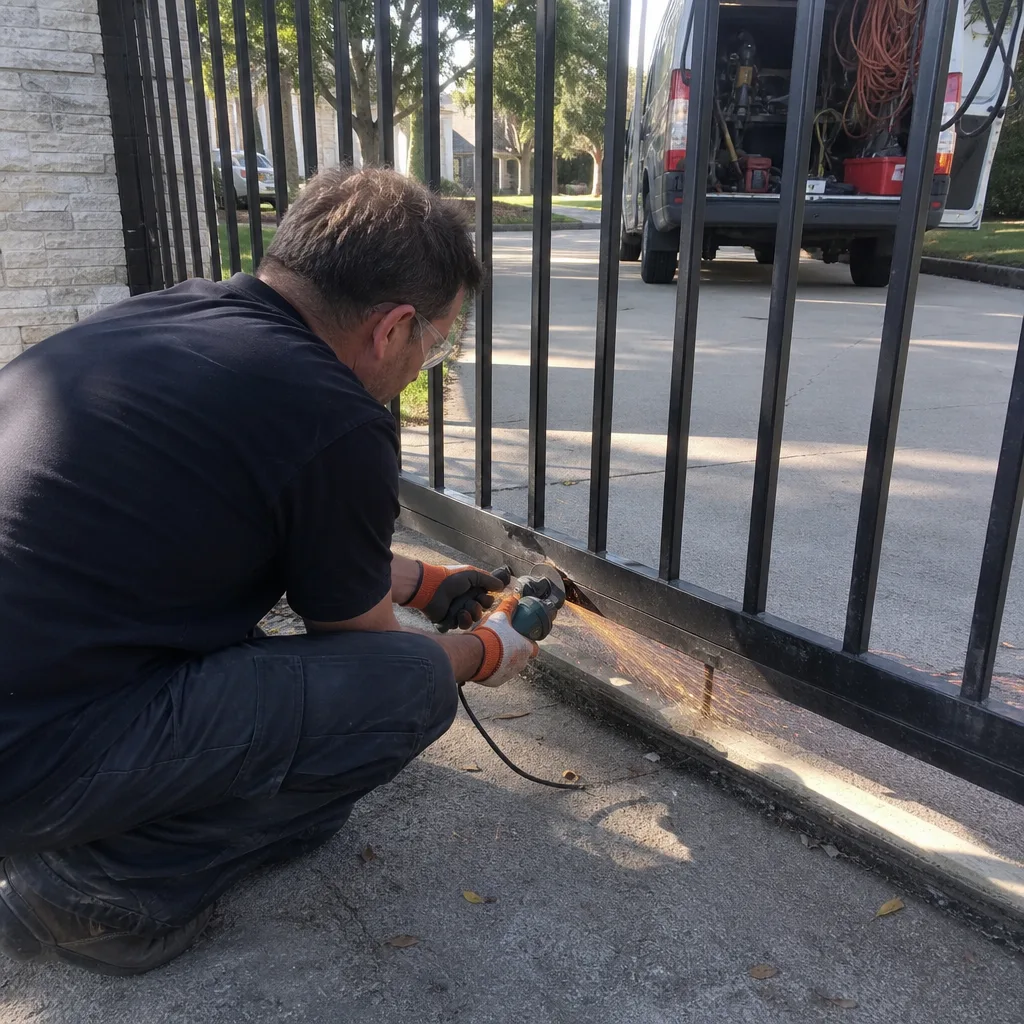
Twice a year, once in March and once in October, do a deeper audit. March catches freeze damage before it compounds. October prepares the gate for the winter power-outage season and the holiday traffic load. This is the section where we find the problems that homeowners miss for years.
Structural Check
- Plumb check: Hold a 4-foot level vertically against the gate post. More than 3 mm of gap at the top means post lean from soil movement.
- Weld inspection: Tap welds lightly with a hammer. A sharp ring means the weld is solid. A dull thud indicates a crack or internal void.
- Hardware grade: Look at the bolt heads. If you see “4.8” or “8.8” stamped on the heads, those are metric-grade bolts. Grade 8.8 minimum is required for gate hinges in this application. Anything less will shear under repeated load.
- Ground clearance and wheel track: Check that V-groove wheels sit fully in the rail. A wheel riding 3 mm off-center wears the rail edge and eventually pops off.
Electrical Check
- Battery health: Test voltage at the battery terminals with a multimeter. See the voltage table in the battery section below.
- Wiring inspection: Look for corroded wire nuts, cracked wire insulation, and any wire that rodents may have chewed. Plano has a healthy rat population in every neighborhood with mature trees.
- Control board condition: Look for burn marks, swollen capacitors, or a burnt smell inside the operator housing. A capacitor that looks like a marshmallow is about to fail.
- Ground rod connection: Verify that the ground conductor is attached and the connection is clean. A loose ground causes intermittent operator faults that are nearly impossible to diagnose without a service call.
Safety System Test
- Place a cardboard box in the gate path and close the gate.
- Pass: The gate stops and reverses within 2 seconds of contact.
- Fail: The gate crushes the box or continues closing.
- Repeat the test with the photo-eye beam blocked but no physical contact.
- Pass: The gate refuses to close or stops and reverses.
- Log both results. If either test fails, disable automatic closing until it’s repaired.
Lubricant Compatibility: What to Use and What to Avoid
Here’s the section nobody else writes, and the one that saves the most money. Lubricants are not interchangeable. Using the wrong product on a gate component causes chemical breakdown of the existing film, attracts abrasive dust, or swells rubber seals over time.
Chain Drives
- Use: White lithium spray grease, or a dedicated chain grease like Lucas Chain Lube or DuPont Teflon Chain-Saver.
- Avoid: WD-40, PB Blaster, or any penetrating oil. These are solvents, not lubricants. They break down the grease film and leave the chain running metal-on-metal within a month.
- Avoid: Motor oil. It flings off immediately and leaves a sticky residue that turns into grinding paste in Plano dust.
Hinge Pins and Bearings
- Use: Dry PTFE spray or a silicone-based lubricant. These don’t attract dust.
- Avoid: Heavy axle grease. In summer, it thins and drips. In winter, it thickens and resists movement. It also traps grit.
Screw Drives (found on some Elite and DoorKing slide operators)
- Use: The manufacturer’s specified screw drive grease. For most models, that’s a lithium-complex grease, not a spray.
- Avoid: Silicone spray. It breaks down the shear film needed for a screw drive under load.
Rubber Seals and Gaskets
- Use: 303 Aerospace Protectant or a food-grade silicone dressing.
- Avoid: Petroleum-based products. They swell rubber and cause seal failure around the operator access panel.
Battery Backup Voltage: Plano Winter Minimums
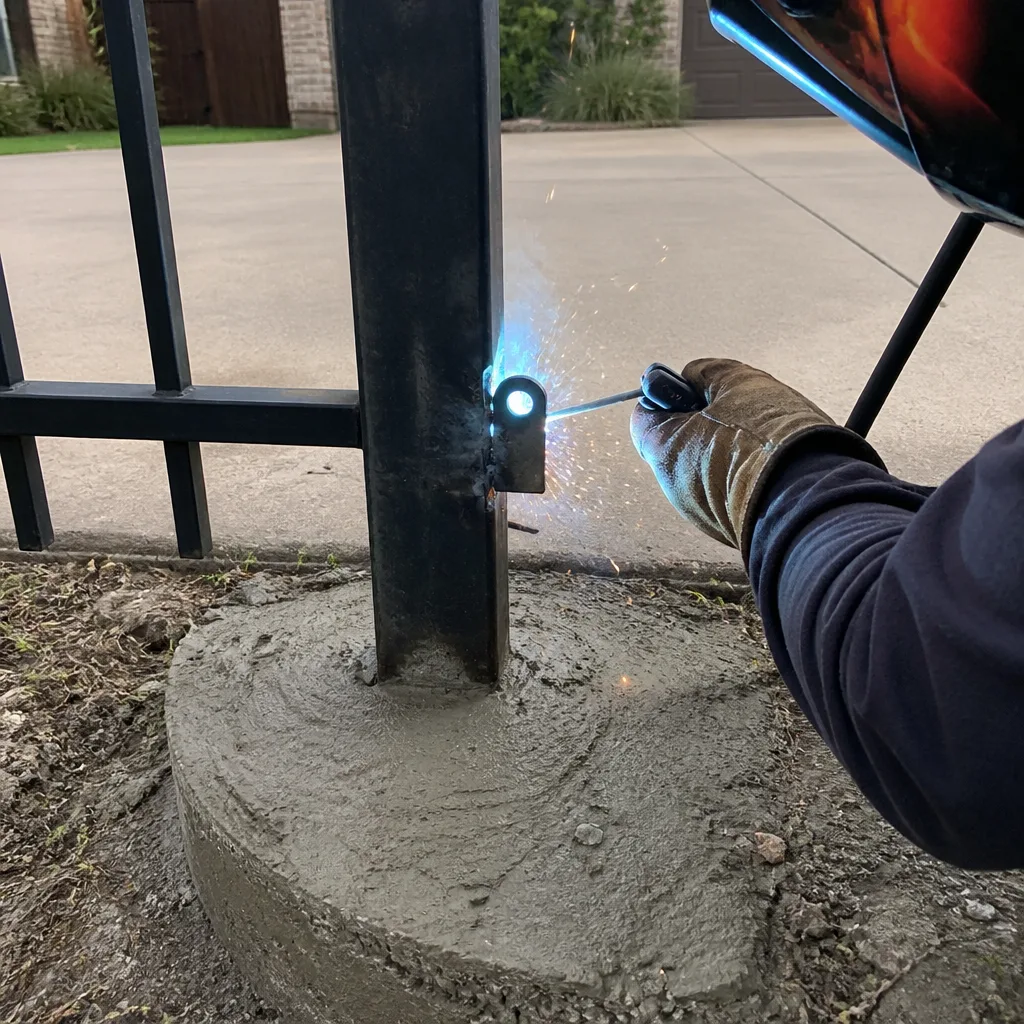
Plano gets an average of 4 to 5 overcast days per week between December and February, which means solar-charged operators run at a deficit. A battery that’s fine in July is dead by mid-January if you don’t check it. This is the most common winter service call we run.
Voltage Reference Table
- 12.6V to 12.8V DC: Fully charged. No action needed.
- 12.4V DC: 75% charged. Acceptable, but monitor monthly.
- 12.0V DC: 50% charged. Replace or recharge within 30 days.
- Below 11.8V DC: Deep discharge territory. The battery may recover, but its lifespan is already shortened. Replace.
- Below 10.5V DC: Permanent damage likely. The plate material begins sulfating at this level, and the battery will not hold a charge even after a full recharge cycle.
For AC-Powered Operators with Battery Backup
Test the battery by killing the AC breaker and running the gate through 5 full open-close cycles. A healthy battery handles 5 cycles without a drop in speed. If the gate slows noticeably by cycle 3, the battery is near end of life. Most sealed lead-acid backup batteries last 3 to 4 years in Plano heat, not the 5 to 7 years claimed by manufacturers.
For Solar-Powered Operators
Check the panel angle and cleanliness. Winter sun angle in Plano is about 35 degrees above horizon at noon. A panel covered in fall leaves or tilted wrong runs at 30% efficiency. If your battery reads 12.0V in January, you have two choices: add a second panel, or switch the panel to a steeper winter angle. We see Ghost Controls and Mighty Mule solar operators failing most often in January, almost always because the panel angle was set in summer and never changed.
How to Photo-Log Your Inspections
Here’s the documentation habit that separates homeowners who catch problems early from homeowners who pay for the same repair twice. Every time you do a monthly or quarterly inspection, take 6 photos. Same angles, same lighting if you can manage it. Store them in a folder named “gate” on your phone. The value appears 6 months later when something changes and you can scroll back to see exactly when it started.
The Six Standard Photos
- Hinge close-up from 12 inches away, showing the gap between pin and barrel.
- Chain or drive rail from the midpoint, showing slack.
- Limit switch area inside the operator housing, showing the cam or magnet position.
- Battery voltage reading on the multimeter.
- Photo-eye alignment from the side, showing both units in the same frame.
- Full gate from the street, showing plumb, ground clearance, and overall condition.
These photos create a baseline. When a technician comes out, they can see what the gate looked like a month ago versus today. That cuts diagnostic time. At Vance Gate Repair Plano, we leave our own photo log after every visit, but a homeowner’s log adds a layer of history we can’t reconstruct. Browse more guides & resources for additional maintenance tips. Under the Haven Standard, we document everything we find and set, and a customer’s own record makes that comparison even sharper.
Common Mistakes to Avoid
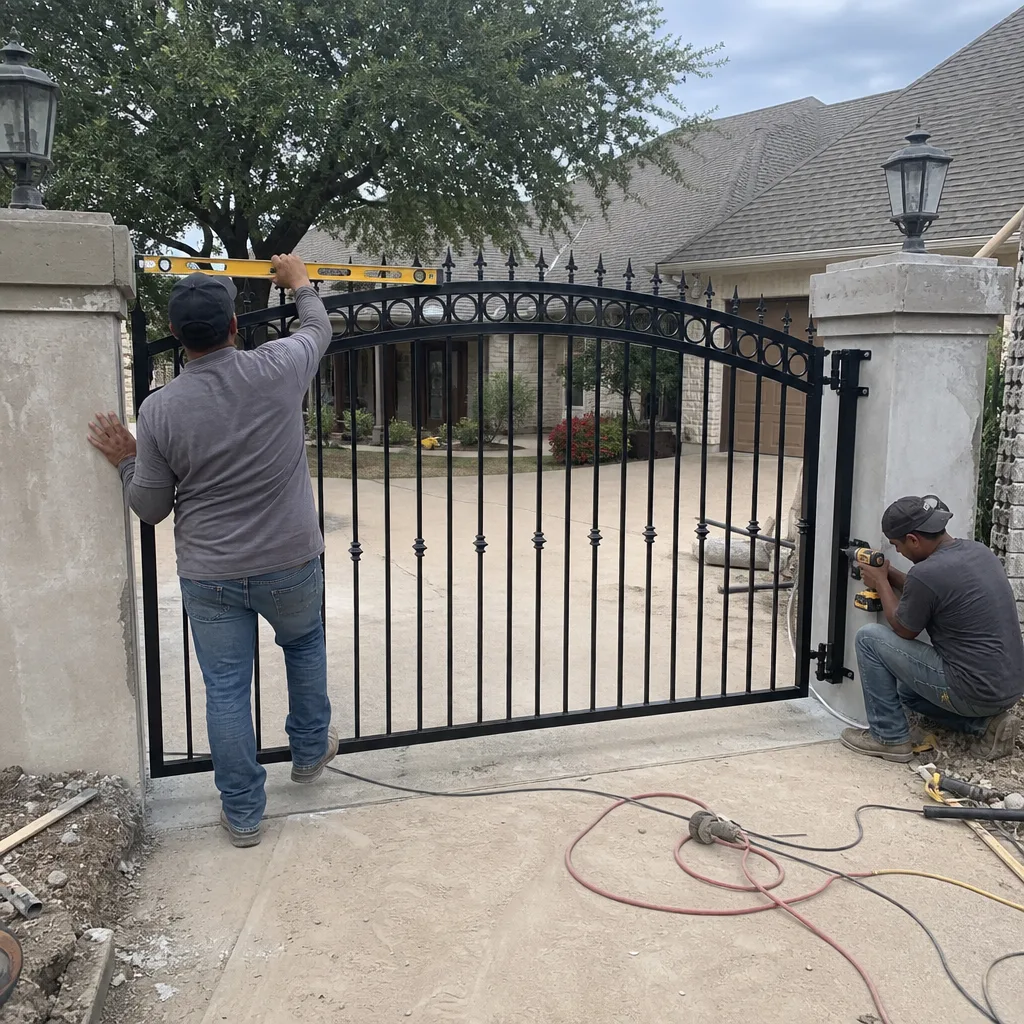
- Using WD-40 as a lubricant. It’s a solvent and water displacer, not a chain lube. It strips the protective film and leaves bare metal exposed to Plano humidity. Within a month, you’ll hear the chain clicking as it stretches.
- Ignoring hinge gap because “it still works.” By the time a sagging gate scrapes the ground or binds the latch, the hinge is usually beyond adjustment. A 4 mm gap is the threshold. Past that, the fix is replacement, not shimming.
- Testing the gate only in mild weather. A gate that passes inspection at 8 am in April may bind at 3 pm in August. Test at the extreme of the day’s temperature, not the comfortable part.
- Tightening bolts “by feel.” Under-torqued bolts back out. Over-torqued bolts stretch and fail. This is a 25 to 35 ft-lbs application, and guessing wrong goes bad either direction.
- Skipping the battery test because the gate runs on AC. The backup battery only matters during an outage, and the first thing you’ll know about a dead battery is that the gate is stuck during that outage. Plano’s spring storm season makes this a near-certainty every year.
- Cleaning photo-eye lenses with glass cleaner. Ammonia-based cleaners leave a film that scatters the infrared beam. Use water and a dry cloth.
- Deferring a safety-system test because “we never use auto-close.” The one time auto-close gets accidentally enabled is the one time the safety system should have caught something. Test it twice a year regardless.
When to Call a Professional
Call a gate professional when you find a hinge gap over 4 mm, a chain with more than 35 mm of slack, a battery reading below 12.0V, or a safety system that fails any part of the obstruction test. These are not adjustment jobs for a weekend checklist. They’re signs of mechanical wear that, left alone, become motor replacements. If your gate is making a grinding noise at end of travel, or if the operator hums but the gate doesn’t move, stop running the gate and call. Vance Gate Repair Plano offers free estimates for Plano homeowners, and our technicians bring a written price before any work starts. Call (972) 236-7089.
Frequently Asked Questions
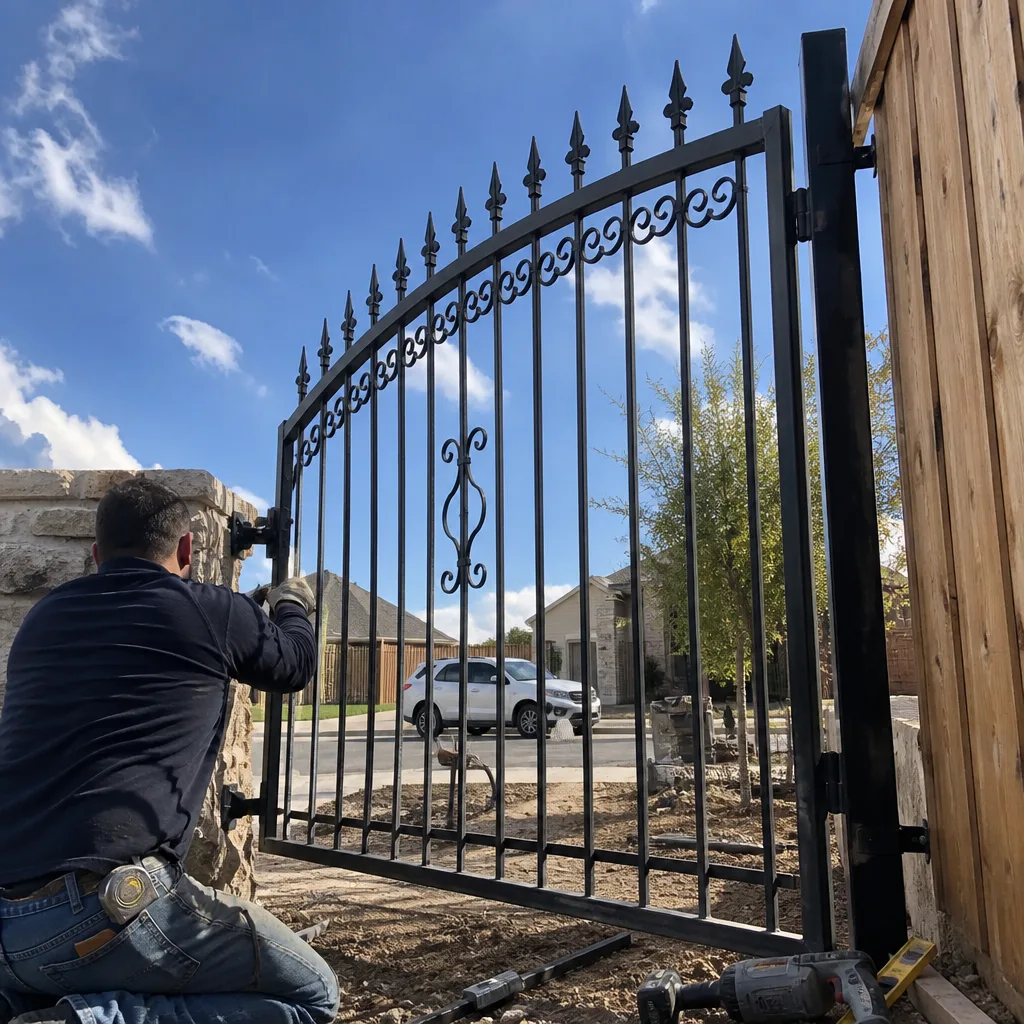
Monthly visual inspection, quarterly lubrication, and a semi-annual full audit in March and October. Plano’s temperature swings make quarterly lubrication a minimum for chain drives. A gate that’s used 10 or more cycles per day should get monthly chain checks regardless of season. Call (972) 236-7089 for a free estimate if you’d rather we handle the whole schedule.
A standard gate maintenance visit in Plano runs between $125 and $250, depending on the operator brand and the number of gate leaves. That includes lubrication, limit switch adjustment, chain tensioning, safety system testing, and a written record of everything found and set. If parts need replacing, you’ll get a written price before any work begins. Call (972) 236-7089 for an exact quote on your gate.
Yes, if you use the right product. White lithium grease for chains, dry PTFE for hinges, and the manufacturer’s specified grease for screw drives. Using the wrong lubricant causes more wear than not lubricating at all. If you’re unsure, we document the correct products and application points on every visit so you can do it confidently next time.
Cold thickens the internal gear oil and stiffens rubber seals, which increases motor load. On a healthy gate, this causes a barely noticeable slowdown. A gate that struggles or stops entirely on a cold morning usually has a weak battery, a tight chain, or an underpowered transformer. Running it in that condition shortens motor life. Call (972) 236-7089 and we’ll diagnose it.
Run the cardboard box test. If the gate stops and reverses within 2 seconds of contact, the safety system is working. If it crushes the box or stalls, the safety system has failed. This test matters most on gates with auto-close enabled. A failed test is a same-week service priority.
We service LiftMaster, FAAC, BFT, Linear, Viking, Ghost Controls, DoorKing, Elite, and Mighty Mule. All are maintainable with proper lubrication and battery care. The deciding factor is whether the operator was sized correctly for the gate’s weight and use cycle. An undersized Viking or Elite operator will wear out regardless of how well you maintain it. If you’re replacing an operator, our gate motor and opener service in Plano includes a free written assessment of what your gate actually needs.
No. We work across Plano, including Willow Bend, Kings Ridge, Old Shepard Place, Legacy, and the historic downtown area. Every visit includes a documented photo record and a written scope of work. Our Plano gate repair service covers the full city, no sub-contractors, no dispatch to a third party.
Sometimes. If the operator is in good condition and correctly sized for the new gate’s weight, reusing it is the most economical option. If the new gate is heavier, reusing an undersized operator just moves the failure date down the road. Our gate installation service in Plano starts with a written compatibility check, not a sales pitch.
The Bottom Line
A gate maintenance checklist only earns its keep if it tells you what a failing reading looks like. Hinge gap over 4 mm, chain slack over 35 mm, battery voltage under 12.0V, safety system failing the box test: these are the numbers that predict a service call before the gate fails. Lock in a monthly visual sweep, a quarterly lubrication with the correct products, and a semi-annual deep audit timed to Plano’s freeze-thaw cycle. Log everything with the six-photo method. When a reading goes past its threshold, call (972) 236-7089 and get a written price before any work starts.
Written by Adrian Vance, Owner at Vance Gate Repair Plano, serving Plano since 2014.