
Last updated September 20, 2026
Free on-site gate assessment - hinges, posts, and your LiftMaster or Nice gate operator checked before anything is quoted
The assessment is free and the quote is the invoice.

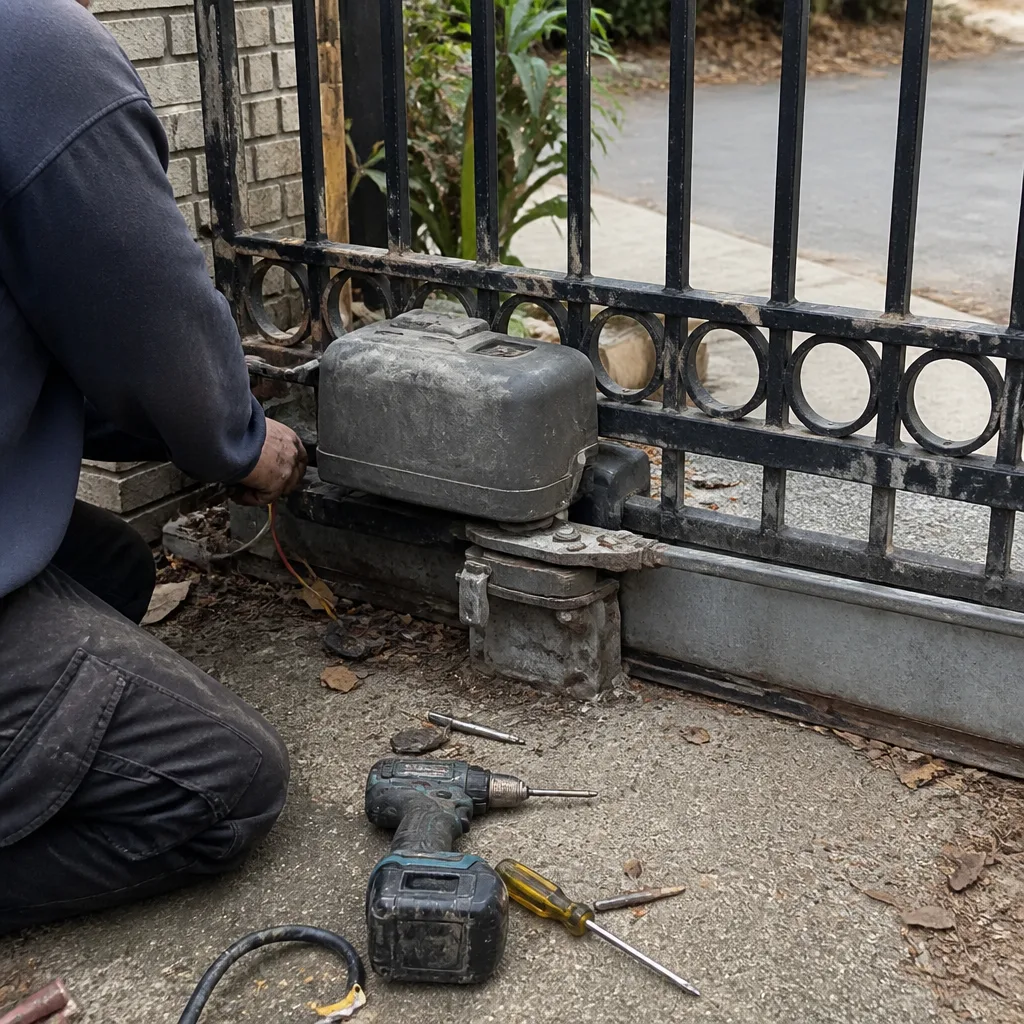 Before
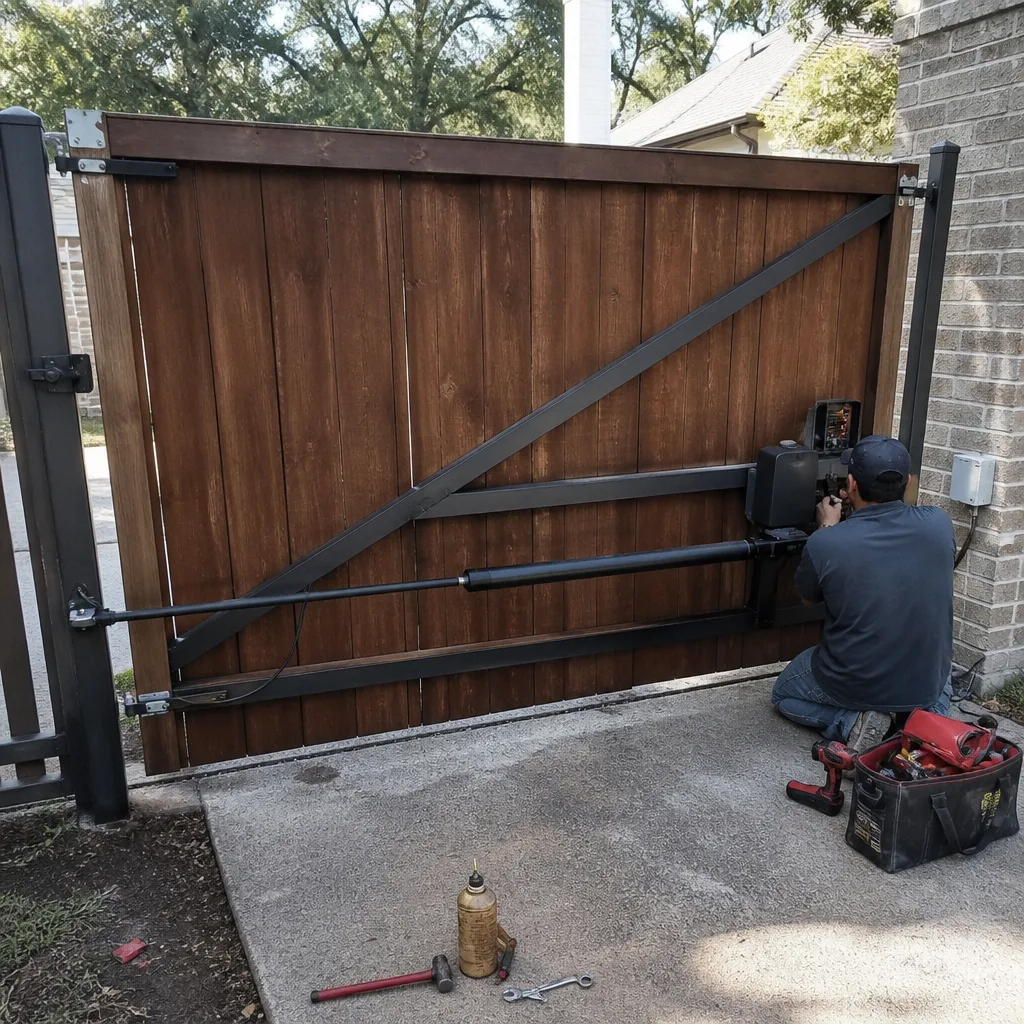 After
After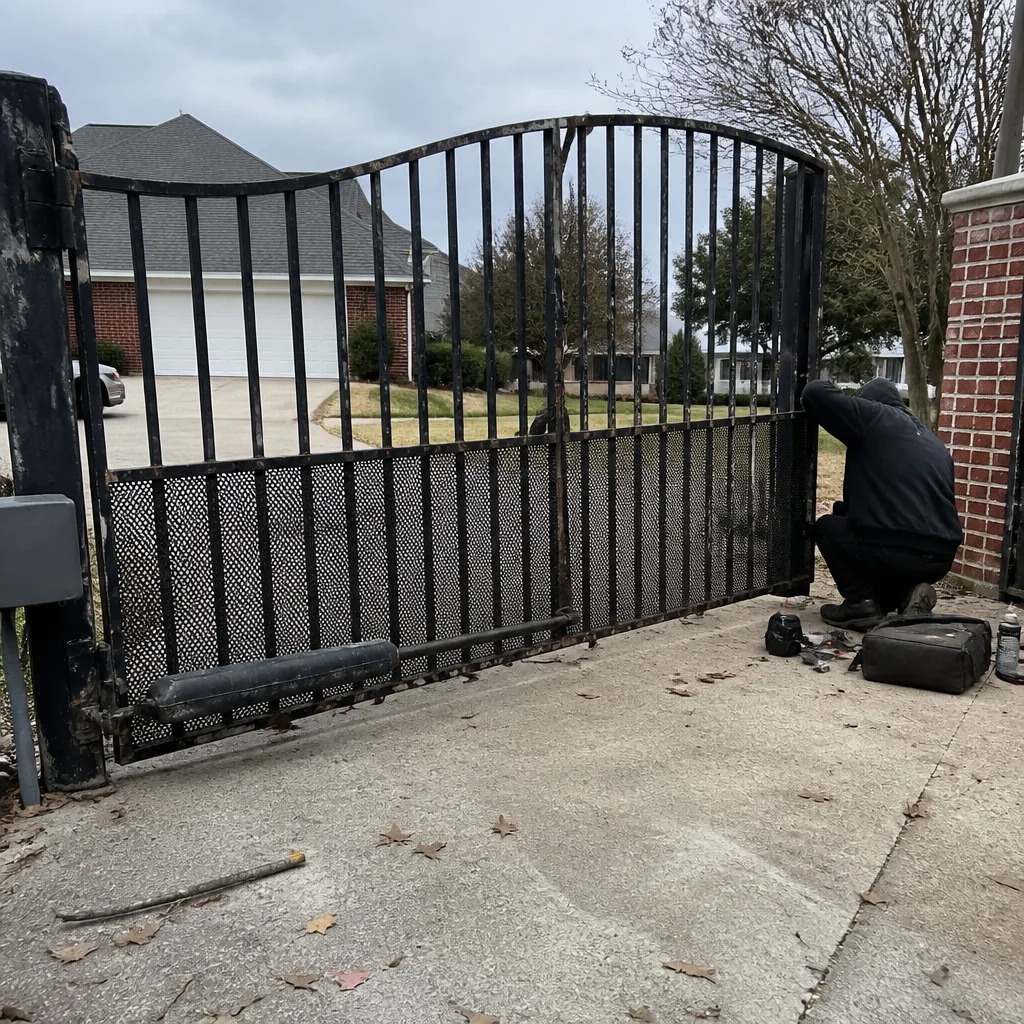 Before
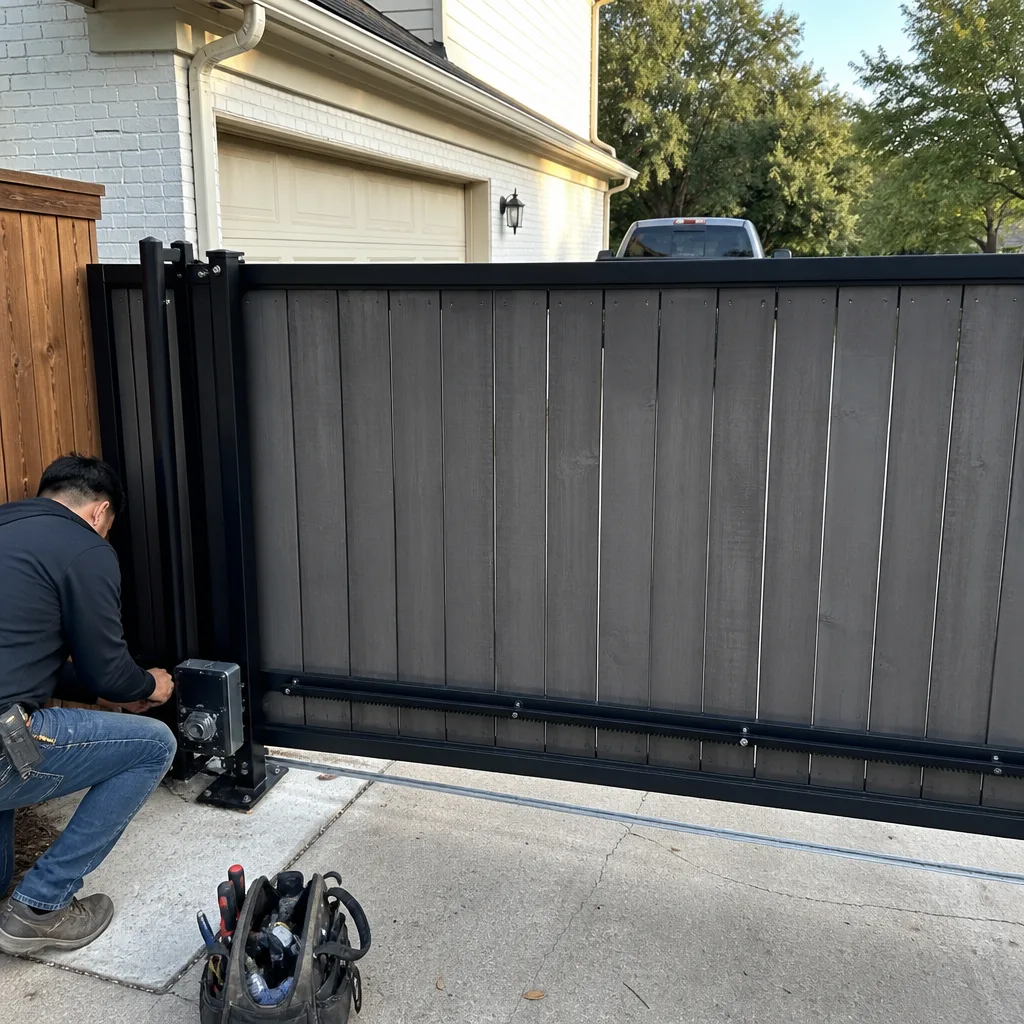 After
After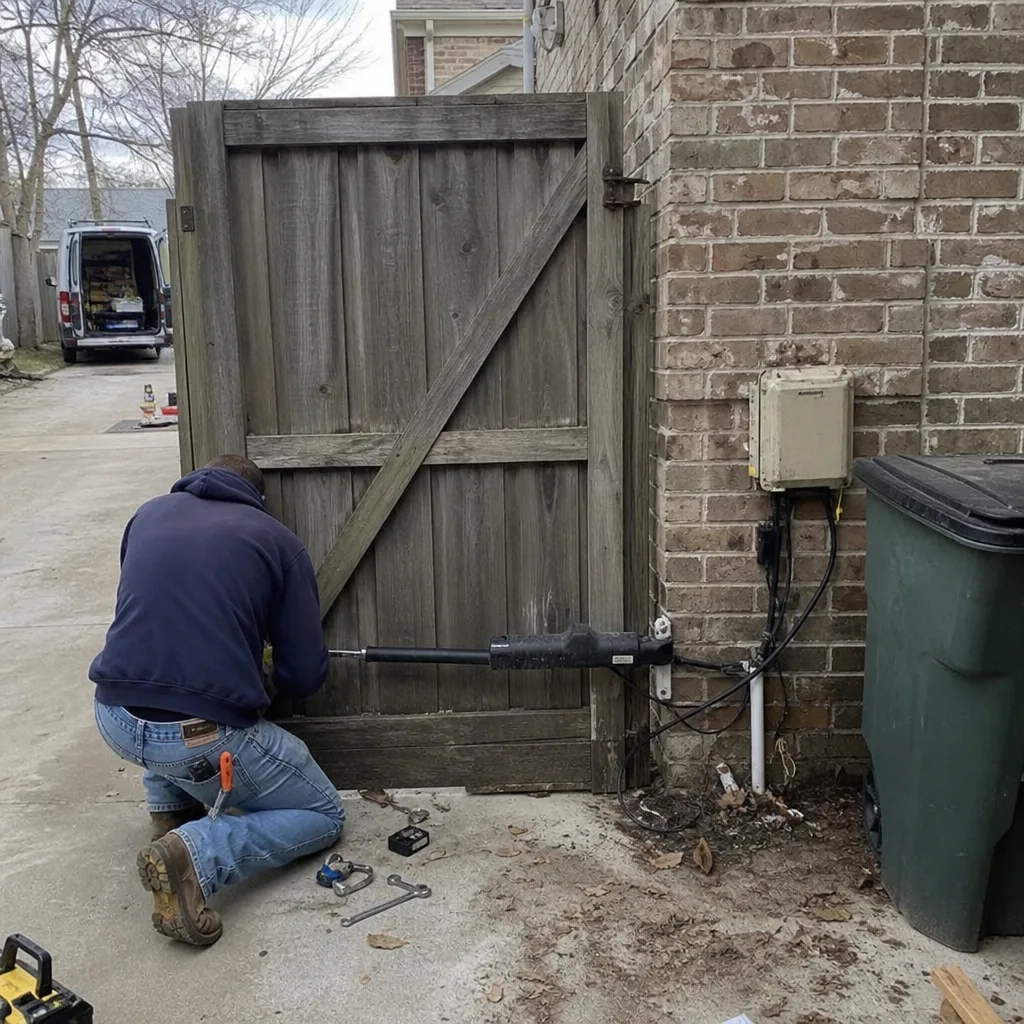 Before
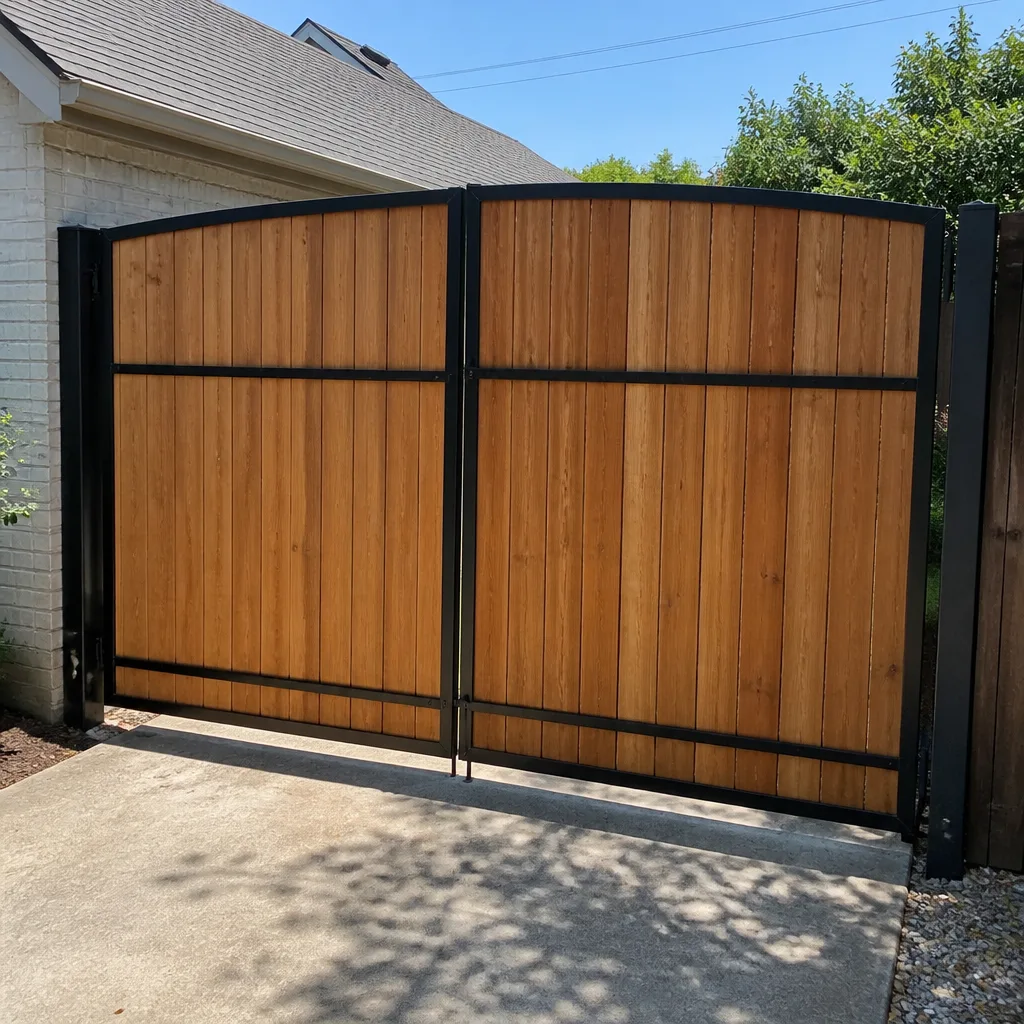 After
AfterGate Repair Cost Breakdown: The Plano Homeowner’s Reference for 2026
The same LiftMaster gate operator costs $310 wholesale and roughly $420 retail. A gate company that bills you $780 for the part alone, before labor, isn’t repairing your gate. They’re funding their margin through your parts invoice. That practice is common, entirely legal, and almost impossible to spot unless you know the component costs before the truck arrives. This guide gives Plano homeowners those numbers. It breaks down what parts actually cost, what labor should look like in the Plano market in 2026, where padding hides, and how to get a quote you can hold a company to.
Quick Answer
Gate repair in Plano, TX typically runs $180 to $900 in 2026, depending on the component. A photo-eye realignment or limit-switch adjustment costs $150 to $250 on average, a swing-gate arm replacement runs $350 to $650, and a full operator replacement on a slide gate typically lands between $900 and $1,800 including labor. The fastest way to know if you’re being quoted fairly is to ask for the parts and labor as separate line items, because that single request changes how the entire quote is built.
Table of Contents
- Why Gate Repair Pricing Is Opaque in Plano
- Parts Costs: The Ten Components You’ll Actually Pay For
- Labor Rates in Plano: What’s Standard and What’s Padding
- The Diagnostic Fee: What It Should Include
- Repair vs. Replace: The Break-Even Threshold by Brand and Age
- How to Request an Itemized Written Quote
- What Plano Specifically Does to Gate Hardware
- Common Mistakes to Avoid
BeforeAfterWhy Gate Repair Pricing Is Opaque in Plano
Most gate companies in Plano quote a flat job rate: one number that bundles parts, labor, overhead, and profit margin without separating any of it. That number tells you what you’ll pay, but nothing about what you’re paying for. The reason it persists is simple. When a parts cost is hidden, the company controls the negotiation. You can’t challenge a $1,200 swing-gate repair if you don’t know the arm assembly retails for $220 and the labor should take ninety minutes.
This is unusual compared to other home trades. A plumber’s invoice usually separates the water heater from the install. A roofer lists shingles per square and labor per hour. Gate repair sits in a murkier position because the parts are branded, specialized, and not widely understood. Most homeowners couldn’t name the difference between a photo-eye and a limit switch, so the quotes stay bundled.
The fix is not complicated. When you ask for a line-item breakdown, one of two things happens. The company either provides it, which means you can evaluate the quote against real component benchmarks, or they resist, which is itself information. Companies that price in writing before work starts, as part of a documented scope, don’t resist itemization because the documentation is the point. We’ve operated under that standard in Plano since 2014, and the breakdown that follows is the same structure we use when we hand a written price to a homeowner before anyone picks up a tool.
Parts Costs: The Ten Components You’ll Actually Pay For
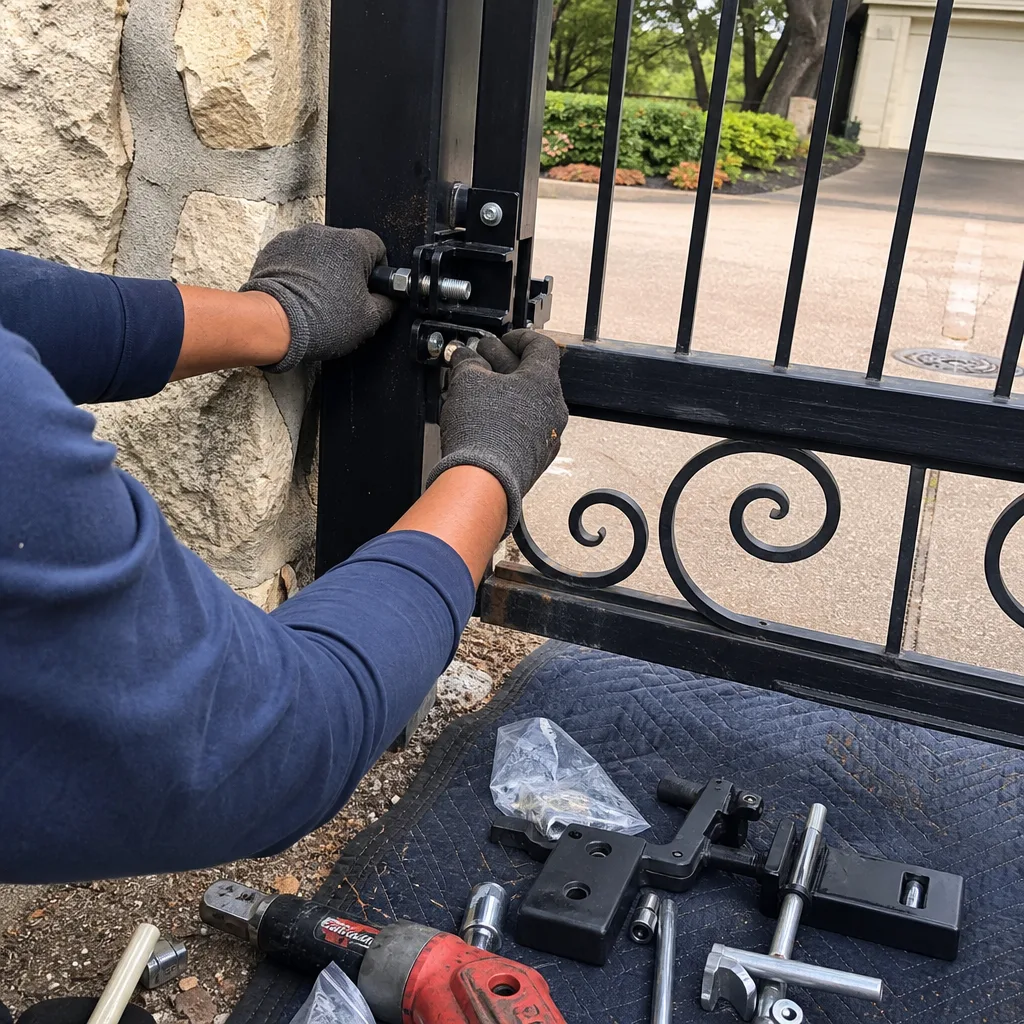
These are the components that fail on Plano gates, in rough order of frequency. The wholesale number is what a gate company pays from their supplier. The retail number is roughly what the same part costs from a consumer-facing online seller. Understanding the spread between those two numbers is how you spot markup.
1. photo-eye (Safety Sensor)
Wholesale: $35 to $70. Retail: $60 to $120. Total installed cost in Plano: $150 to $250. The photo-eye is the infrared beam that sits near ground level and stops the gate if anything crosses the path. It’s the single most common part we replace on residential gates in Plano, and misalignment is more common than failure. A photo-eye that’s two inches out of level will throw a fault every time. Alignment is a ten-minute adjustment; a replacement takes twenty minutes.
2. Limit Switch
Wholesale: $20 to $45. Retail: $40 to $85. Installed: $130 to $220. The limit switch tells the operator where the gate stops at open and closed. When it drifts, the gate slams at the end of travel or stops six inches short. We’ve walked onto Plano jobs where the limit switch was set twelve degrees past travel, which means the motor stalls against the stop every single cycle. That’s a slow way to destroy an operator.
3. Swing Gate Arm (Articulated Arm Assembly)
Wholesale: $140 to $280. Retail: $220 to $420. Installed: $350 to $650 per arm. The arm is what connects the operator to the gate leaf. On a double swing gate, both arms can fail within six months of each other because they see identical cycle counts. If one arm on a double gate fails, expect the other to follow. Replacing both at once saves a second service call and a second diagnostic fee. We quote it both ways and let the homeowner decide.
4. Control Board
Wholesale: $90 to $310 depending on brand. Retail: $150 to $480. Installed: $350 to $850. Control boards fail from power surges, lightning strikes, and moisture intrusion. North Texas gets genuine lightning weather, and Plano homes on the east side near the open corridor see more surge-related board failures than homes in the interior. A surge protector on the operator circuit is a $40 part that prevents a $500 board replacement. We recommend it on every install.
5. Gate Wheel or Roller
Wholesale: $25 to $80. Retail: $45 to $130. Installed: $120 to $250 per wheel. Slide gates run on wheels or rollers that wear down over years of travel across concrete. A flat-spotted wheel doesn’t just make noise; it loads the motor unevenly and shortens operator life. Plano’s flat terrain makes slide gates common in newer developments, which means worn roller replacement is a routine job for us.
6. Receiver / Radio Card
Wholesale: $45 to $110. Retail: $80 to $180. Installed: $160 to $300. The receiver is what talks to your remote. When the gate stops responding to remotes but works from the keypad or the wall button, the receiver is usually the culprit. This is one of the cheaper repairs that gets misquoted as a full operator replacement by companies that’d rather sell a $1,200 job than a $200 fix.
7. Keypad
Wholesale: $60 to $150. Retail: $100 to $240. Installed: $180 to $350. Plano homeowners use keypads heavily because delivery drivers, cleaners, and landscapers all need gate access. A keypad that fails in the rain, or whose buttons stop registering, usually needs a new membrane or a full replacement depending on the model.
8. Battery Backup
Wholesale: $80 to $180. Retail: $140 to $300. Installed: $250 to $450. If your gate works fine during normal operation but fails when the power goes out, the battery is dead. Lead-acid batteries in gate operators last three to five years in Plano heat. Heat shortens battery life more than cold, and Plano summers don’t do favors for batteries mounted inside metal operator boxes.
9. Hinges
Wholesale: $40 to $120 per pair. Retail: $80 to $200 per pair. Installed: $250 to $500. A sagging swing gate is almost always a hinge problem, not an operator problem. When a gate drops, it puts lateral load on the arm, which then fails. The fix is hinge replacement or welding, not operator replacement. We’ve seen Plano homes where a sagging gate destroyed two operators in three years because nobody fixed the hinges.
10. Underground Loop Detector
Wholesale: $120 to $250. Retail: $200 to $400. Installed: $350 to $700. If your gate opens automatically when a car approaches, there’s an underground loop detector buried in the driveway reading the metal mass of the vehicle. When that loop fails, the gate stops auto-opening on approach. This repair involves cutting the driveway surface, splicing the wire, and resealing, which is why the labor runs higher than the part.
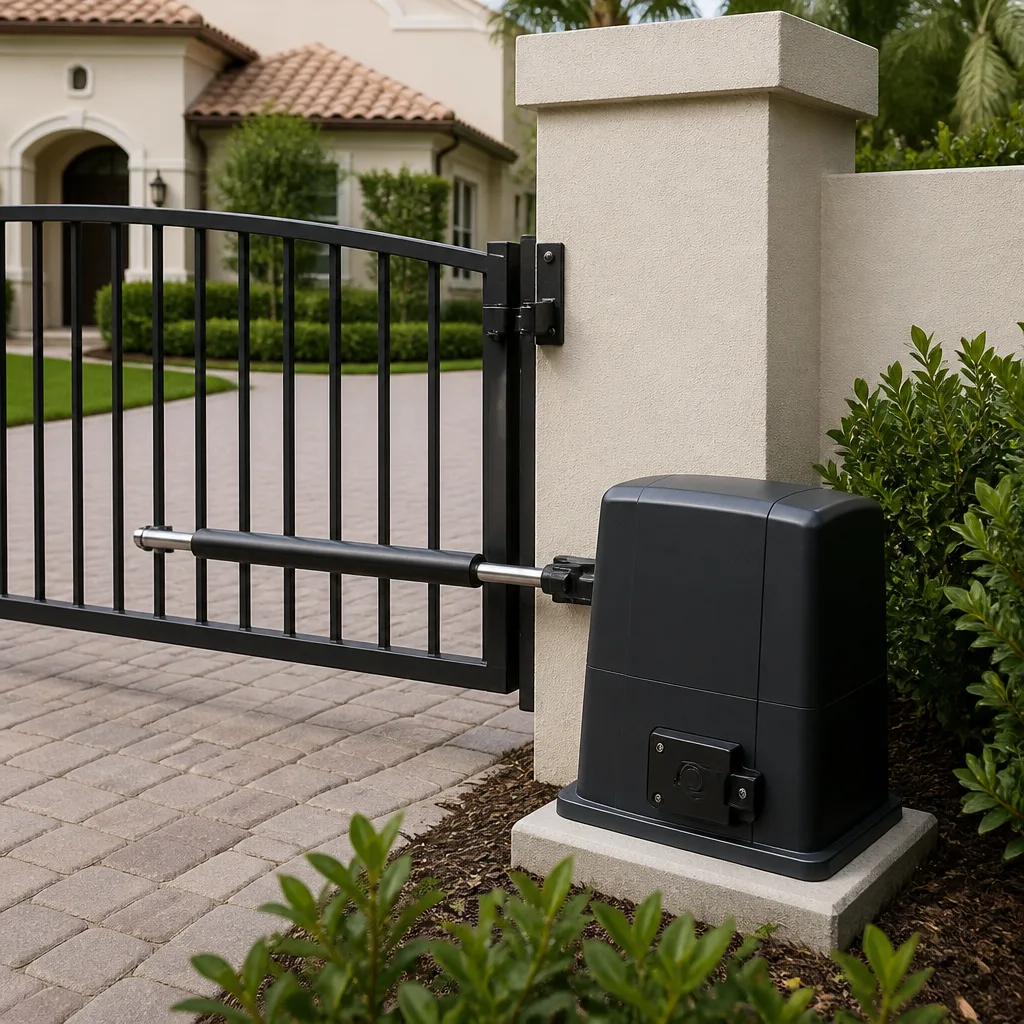
Note on the operator itself: A full gate operator replacement, which includes the motor, control board, receiver, and housing, runs $900 to $1,800 installed for a residential slide or swing gate in Plano. LiftMaster, FAAC, BFT, and Linear all make residential operators with different price points and feature sets. The brand matters less than the match between the operator’s duty cycle rating and how many times per day your gate actually cycles.
Labor Rates in Plano: What’s Standard and What’s Padding
The standard service labor rate for gate repair in Plano in 2026 runs $95 to $150 per hour. That’s the range for a licensed, insured gate technician working on automation equipment. Some companies bill a flat trip charge instead of an hourly rate; some bundle the first hour into the diagnostic fee. None of those structures are inherently suspicious. What should make you pause is an hourly rate above $175 without an explanation, or an hourly rate that’s reasonable but paired with inflated hours on the invoice.
Here’s how labor actually maps to real repair time in our experience across Plano:
- Photo-eye replacement or realignment: 20 to 45 minutes. One hour of labor on the invoice is reasonable because it includes dispatch time and setup.
- Limit switch adjustment: 20 to 40 minutes. This should be a half-hour of labor, not a three-hour job.
- Swing arm replacement: 45 to 90 minutes per arm on a properly installed gate. If the invoice says four hours, ask what else was done.
- Control board replacement: 45 to 75 minutes including programming. Two hours of labor is padding.
- Full operator replacement on a slide gate: 2 to 4 hours. Five-plus hours means the tech was figuring out a gate that a more experienced tech would know in the first twenty minutes. You’re paying for their learning curve.
One structural thing to watch: labor that’s bundled into a “flat job rate” without an hourly figure attached. That’s not inherently unfair, but it prevents you from checking anything. A flat rate of $600 for a photo-eye replacement in Plano is about $400 above the top of the market. The only way to know you’re being quoted $600 is to know that the part is $120 retail and the labor is thirty minutes. That’s the entire purpose of this guide.
The Diagnostic Fee: What It Should Include
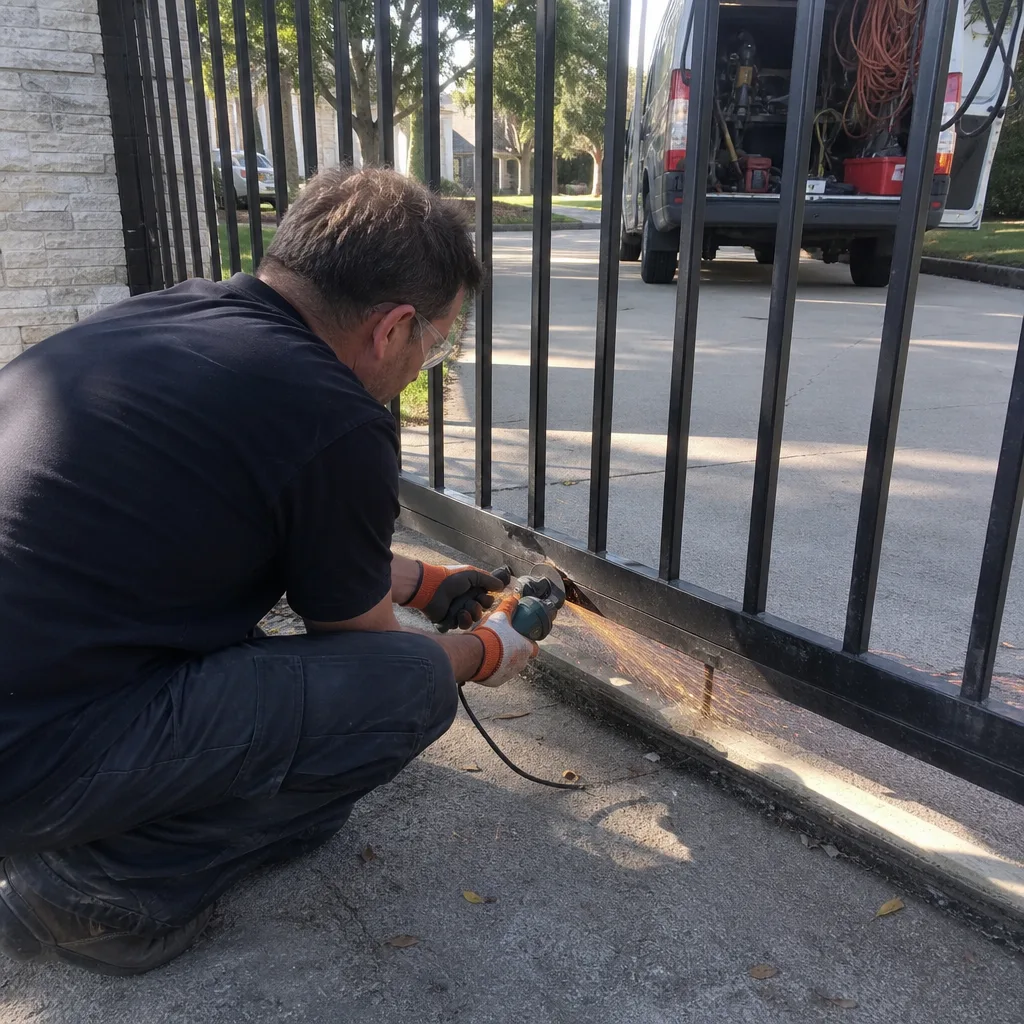
A diagnostic fee in Plano runs $75 to $125. It exists for a legitimate reason: the technician’s time to drive to your property, assess the gate, identify the failed component, and explain the repair. That time has to be paid for whether you approve the repair or not. The diagnostic fee is not a scam. But how it’s applied to the final invoice tells you a lot about the company.
Here’s how it should work:
- The tech arrives and diagnoses the gate. You pay the diagnostic fee.
- If you approve the repair, the diagnostic fee is credited against the total job, or it’s listed as a separate line item and not double-billed.
- If you decline the repair, you’re out the diagnostic fee, and that’s the end of it. You got a diagnosis, which has value.
Here’s what should concern you:
- The diagnostic fee is charged in addition to the full repair, not credited against it. That’s double-billing for the same visit.
- The “diagnosis” is vague. “Your gate’s broken, you need a new one” is not a diagnosis. A real diagnostic report says what failed, what the readings were, and what the repair path is. Under the Haven Standard we operate by, every visit leaves a written record of what was found, what was adjusted, and what was installed. That’s Clause 4: Evidence on every job. If a Plano company won’t tell you what failed in specific terms, that diagnostic fee bought you nothing.
- The diagnostic fee is waived, but only if you approve a repair quote that’s clearly inflated. The fee becomes a pressure lever. A legitimate company credits the diagnostic toward any approved repair at market rates.
We always credit the diagnostic fee against the approved repair. It’s the only structure that makes sense: you paid us to find the problem, and if you hire us to fix it, the finding was part of the fix.
Repair vs. Replace: The Break-Even Threshold by Brand and Age
The decision to repair an operator or replace it usually comes down to age, brand, and failure mode. The rule of thumb we use in Plano: if the operator is under seven years old and the failure is a single component, repair it. If it’s over ten years old and the failure is the control board or the motor itself, replace it. Between seven and ten years, the decision depends on the brand and the specific failure.
Here’s the threshold math. A control board replacement on a LiftMaster or Linear residential operator runs $350 to $850 installed. A full operator replacement runs $900 to $1,800 installed. If the operator is eight years old and the board fails, you’re spending $500 to $850 to repair an eight-year-old unit that has other eight-year-old components inside it. The arm, the limit switches, the receiver, and the battery are all at the same point in their life cycle. You’ll likely spend more in repairs over the next two years than a replacement would cost.
But the counterexample matters. If the operator is four years old and a single limit switch fails, replacing the entire operator because a $45 part broke is throwing away a useful machine. That happens in Plano more than it should, because some companies make more margin on a $1,400 install than a $200 repair, and the recommendation follows the margin.
Brand matters for parts availability. FAAC and BFT parts are sometimes slower to source than LiftMaster or Linear parts, which affects lead time but not the repair-vs-replace decision. We service nine automation brands, including all four of those, specifically because Plano homes have such a mix. A company that only services one brand will steer you toward replacing anything they don’t carry parts for. That’s their limitation being billed as your upgrade.
How to Request an Itemized Written Quote
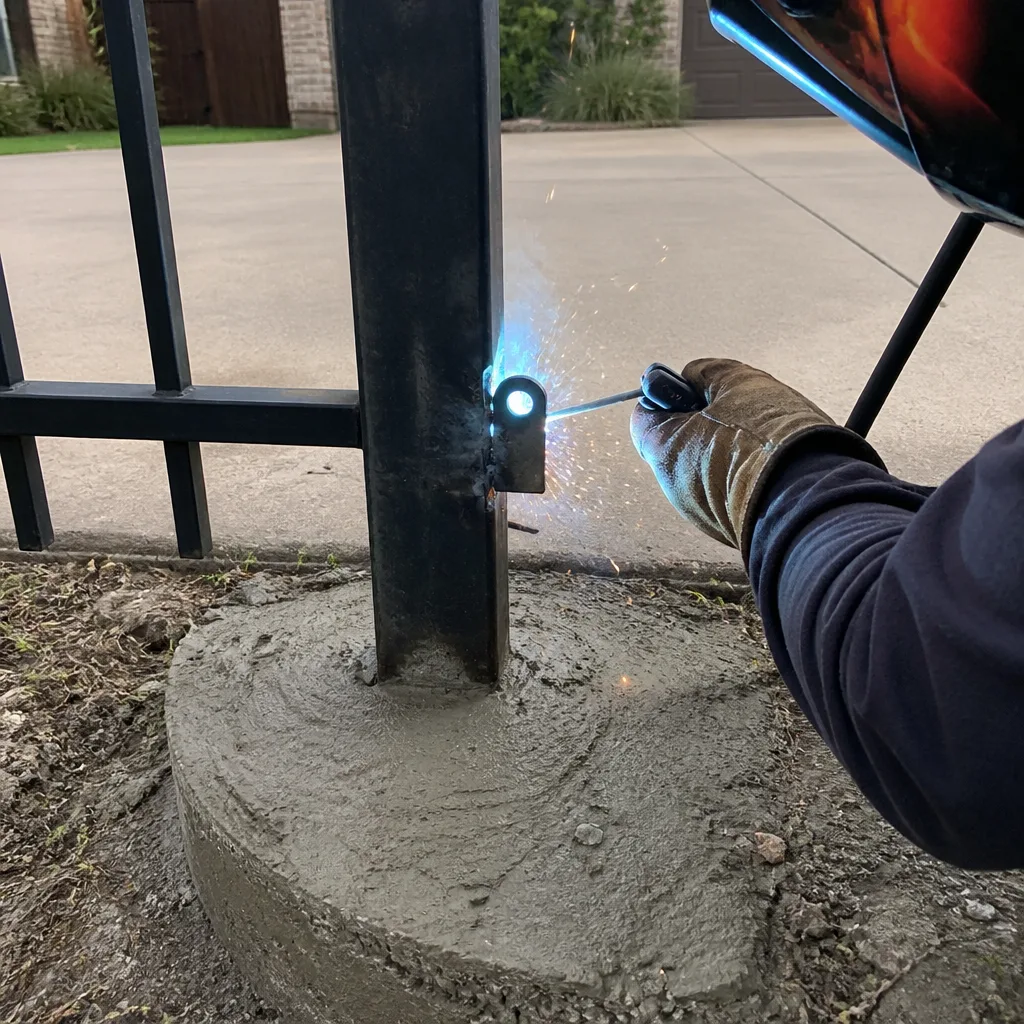
You can get an itemized quote from any legitimate gate company in Plano. The request itself is the filter. Here’s the process:
- Ask for the breakdown before the tech arrives. “When you come out, I’d like a written quote with parts and labor separated.” Any company that does this routinely will say yes without hesitation.
- Ask for brand and model on parts. “LiftMaster control board” is acceptable. “Control board” is vague. The part number lets you check the price. If the quote says “OEM parts” but won’t name the manufacturer, that’s a flag.
- Ask for labor hours and rate separately. “Two hours at $120 per hour” is a checkable line item. “Labor: $600” without an hourly rate or an hours estimate is a number they made up.
- Ask what’s negotiable. The diagnostic fee is sometimes negotiable. The parts cost is fixed but the markup is not. The labor rate is generally fixed. A good company will tell you which lines move and which don’t without being defensive.
- Get the quote in writing before you approve the work. In Plano, as everywhere, a verbal quote is worth the paper it isn’t printed on. A company that won’t put a number in writing before starting is a company that plans to change the number after finishing.
Under Clause 1 of the Haven Standard, the written price is handed over before any work begins. No “call for a quote” at the end of the pitch, no surprise invoice when the gate closes. The price on the page is the price on the invoice. That’s the entire structure. If you’re comparing quotes in Plano, make every company play by the same rule: written breakdown, before the tool comes out.
What Plano Specifically Does to Gate Hardware
Plano is not a neutral environment for gate equipment. The specifics matter because they show up in the failure patterns.
Heat. North Texas summers push operator boxes past 130 degrees inside when they’re mounted in direct sun. That heat kills batteries faster, warps plastic housings, and accelerates control-board capacitor failure. We see more board failures in August than any other month. A white operator housing reflects heat; a black one absorbs it. The color choice isn’t cosmetic.
Clay soil. Plano sits on expansive clay that moves with moisture content. Gate posts set in concrete are usually fine, but the surrounding ground shifts enough to knock a slide gate track out of level over time. A slide gate that was smooth in March starts binding by August because the track shifted a quarter inch. The fix is usually track re-leveling, not operator replacement, and it’s a job we do regularly in neighborhoods like Willow Bend and Kings Ridge. For a full rundown of seasonal upkeep, see our Gate Repair Maintenance Checklist for Plano Homeowners.
Lightning and surge activity. Texas leads the nation in lightning strikes, and the corridor east of Highway 75 in Plano sees some of the densest strike activity in the county. A surge protector on the operator circuit is a $40 to $80 part that prevents the single most common avoidable failure we see. We recommend it on every operator install, and we photograph it in the job record so the homeowner knows it’s there.
HOA requirements. Plano has a high concentration of HOA-governed communities with rules about gate appearance, material, and even automation hardware. Some HOAs specify wrought iron; some specify a color match for the operator housing. Before replacing a gate or an operator in an HOA community, check the architectural guidelines and any Gate Repair Permits, Codes & Inspections in TX: What You Need to Know. Getting the gate fixed and then getting a violation letter is a special kind of avoidable frustration. We’ve worked on gates across Plano long enough to know when to ask the HOA question before the work starts.
Common Mistakes to Avoid
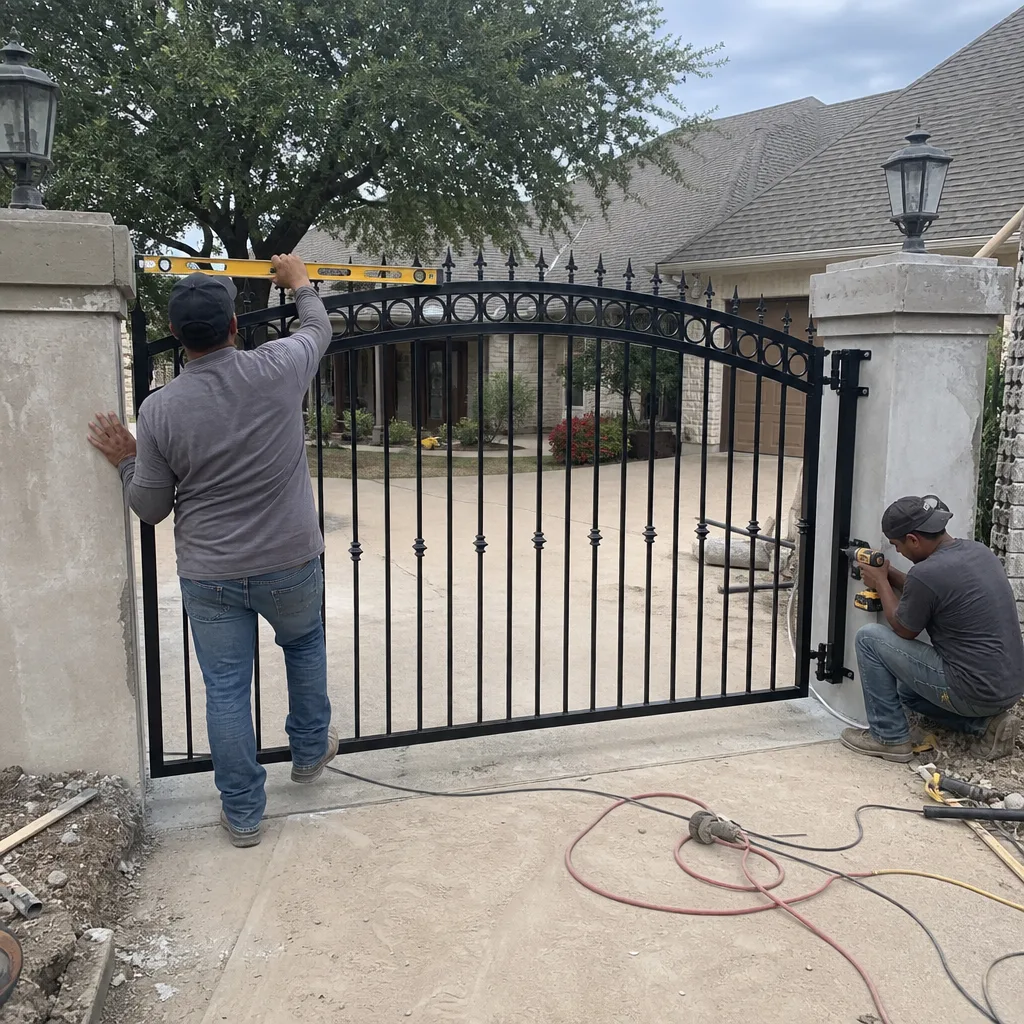
- Approving a flat job rate without asking what’s in it. A flat rate is fine if the company will break it down when asked. If they won’t, that rate is the answer to a question they don’t want you asking.
- Replacing an operator when the failure is a photo-eye, limit switch, or receiver. These are $130 to $300 repairs. A $1,400 operator replacement for a failed photo-eye is the single most common overcharge in Plano gate repair. Ask what specifically failed. If the answer is vague, get a second opinion.
- Ignoring a sagging gate. A gate that drags or sags is putting load on the operator every cycle. What starts as a $400 hinge repair becomes a $1,200 operator failure if you wait six months. The gate’s mechanical structure and its automation are one system.
- Paying for a diagnostic fee and then paying full price on the repair without the fee credited. That’s double-billing. Ask before the tech leaves: “Does the diagnostic fee apply to the repair?”
- Skipping the surge protector in Plano. The cost of protection is about 5% of the cost of the board it protects. North Texas lightning is not an occasional event. It’s a weather feature.
- Accepting a quote that doesn’t name the parts brand. “OEM parts” means nothing. A real quote says “LiftMaster LM60EV control board” or “FAAC 790 operator arm.” The brand name is your check on the price.
- Not asking for documentation after the job. If the tech can’t show you what was replaced and what the settings were, you can’t hold anyone accountable. Photographic evidence and written records should be standard on every gate repair in Plano. If it’s not offered, ask why.
When to Call a Professional
Gate automation involves electrical components, moving mechanical parts, and enough weight to cause serious injury if something fails at the wrong moment. A 600-pound slide gate doesn’t need to be moving fast to do damage. If the gate is binding, sparking, making grinding sounds, opening on its own, or failing to stop when something crosses the photo-eye, that’s not a weekend project. Call someone who works on gates every day. The diagnostic fee is cheaper than a hospital visit or a damaged vehicle. Vance Gate Repair Plano offers gate repair in Plano with a written price before work starts, and the diagnostic fee is credited toward any approved repair. Call (972) 236-7089.
Frequently Asked Questions
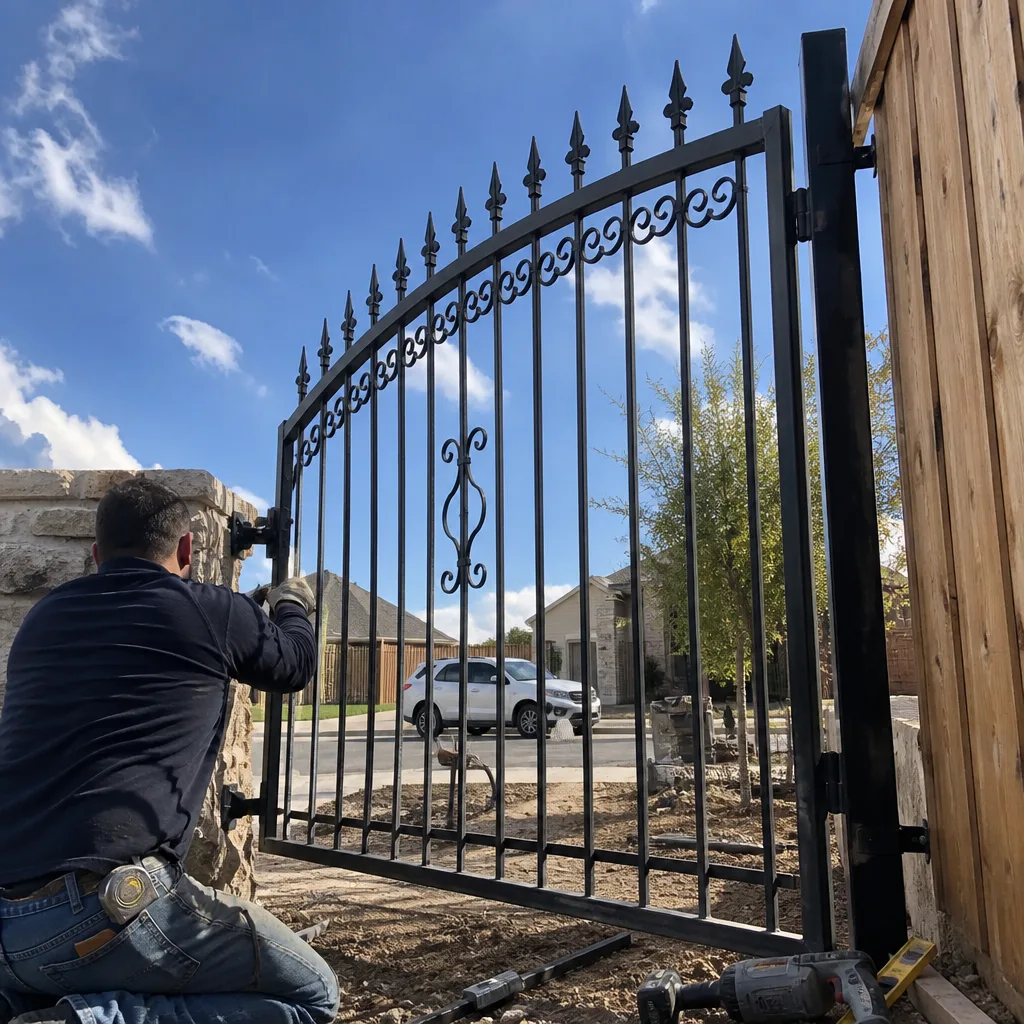
Gate repair in Plano typically costs between $180 and $900 for component-level repairs, with a full operator replacement running $900 to $1,800 including labor. The specific cost depends on the failed component, the brand, and the labor involved. A written quote with parts and labor separated is the only way to verify you’re being charged market rates. Call (972) 236-7089 for a free estimate on your specific gate.
A diagnostic fee of $75 to $125 covers the technician’s time to travel to your property, assess the gate, and identify the failed component before any repair is approved. The fee should be credited against the repair if you approve the work. If a company charges the diagnostic fee in addition to the full repair without crediting it, that’s double-billing, and you should ask about it before signing anything.
Repair the operator if it’s under seven years old and the failure is a single component like a limit switch or photo-eye. Replace it if it’s over ten years old and the motor or control board has failed, because other components are near the end of their life cycle too. Between seven and ten years, the decision depends on the specific failure and the brand. A company that services multiple brands, like our gate motor and opener service in Plano, can give you a straight repair-vs-replace recommendation rather than steering you toward whatever they carry.
Yes, and you should. Request a written quote with parts and labor separated, brand names on the parts, and an hourly rate on the labor. Any legitimate gate company in Plano can provide this. The written price before work starts is the only protection you have against a surprise invoice at the end. If a company won’t itemize, treat that as the answer.
A swing gate arm replacement in Plano runs $350 to $650 per arm installed, depending on the operator brand and whether the arm bracket is intact. On a double swing gate, both arms often fail within months of each other because they see identical cycle counts. Replacing both at once saves a second diagnostic fee and a second service call. For an exact quote on your gate, call (972) 236-7089.
A legitimate gate repair company should leave you with a written record of what was found, what was adjusted, and what was replaced, along with photographs of the work. This documentation protects you if the repair fails and ensures any future technician doesn’t have to rediscover the same problem. Under our Haven Standard, every visit includes a documented photo record at no additional charge. It’s not a premium add-on; it’s how the job should be done. If you’re comparing gate companies in Plano, visit our gate installation in Plano page to see how we document installs, and our Vance Gate Repair Plano home page for the full picture of how we work.
The Bottom Line
Gate repair pricing in Plano doesn’t have to be mysterious. The component costs are knowable, the labor rates have a real market range, and the documentation habits of a good company are visible before you ever sign anything. The question to ask is not “what will this cost” but “show me the breakdown.” A company that separates parts from labor, names the brand, credits the diagnostic fee, and leaves a written record is charging what the work is worth. A company that won’t do those things is charging what they think you’ll pay. The difference is knowable. Now you know how to find it.
Written by Adrian Vance, Owner at Vance Gate Repair Plano, serving Plano since 2014.