
Last updated September 20, 2026
Free on-site gate assessment - hinges, posts, and your LiftMaster or Nice gate operator checked before anything is quoted
The assessment is free and the quote is the invoice.

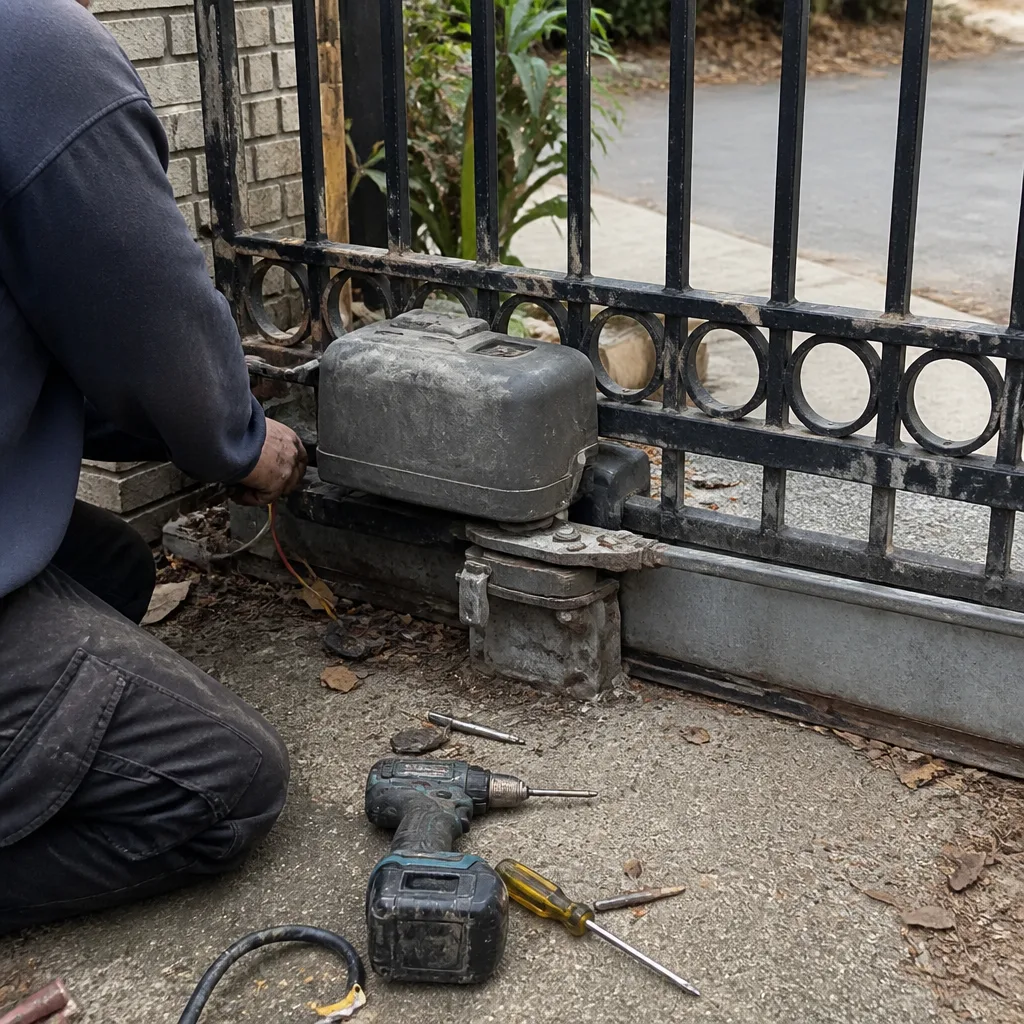 Before
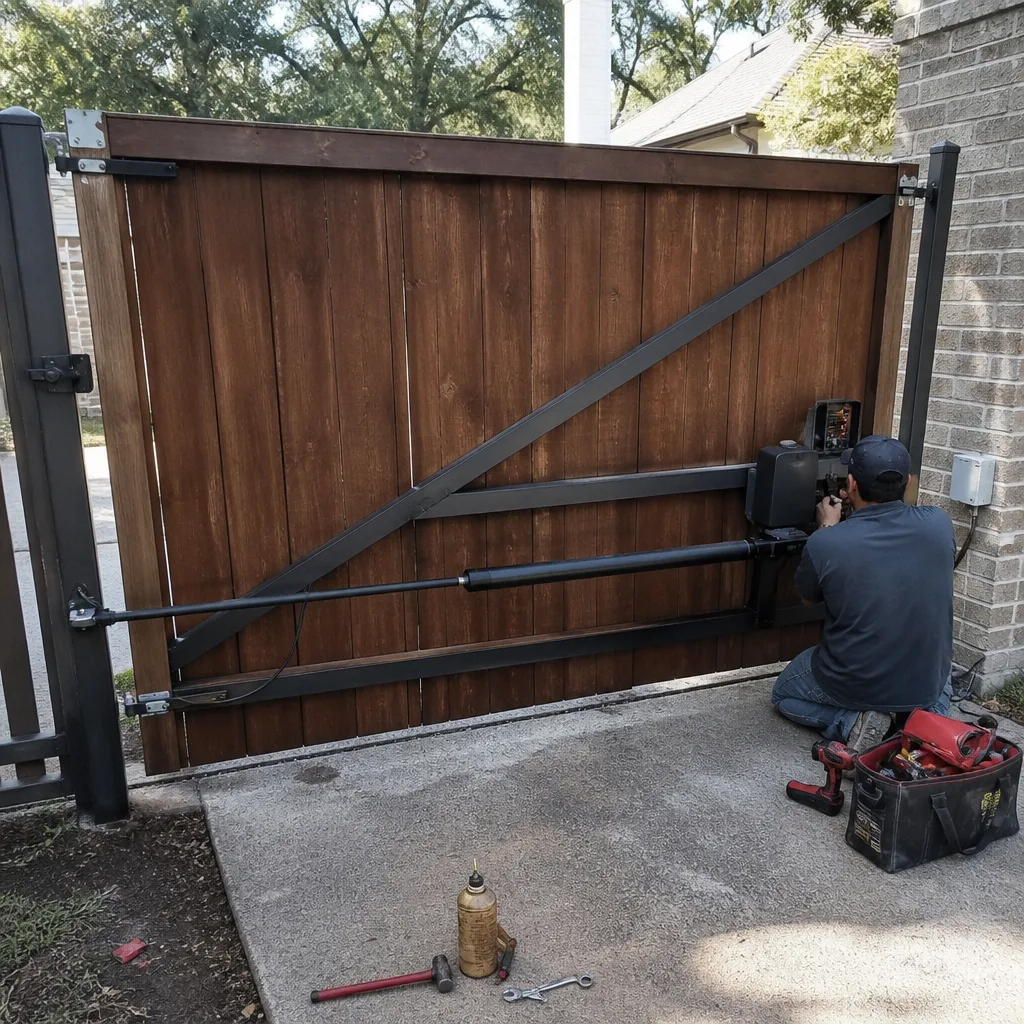 After
After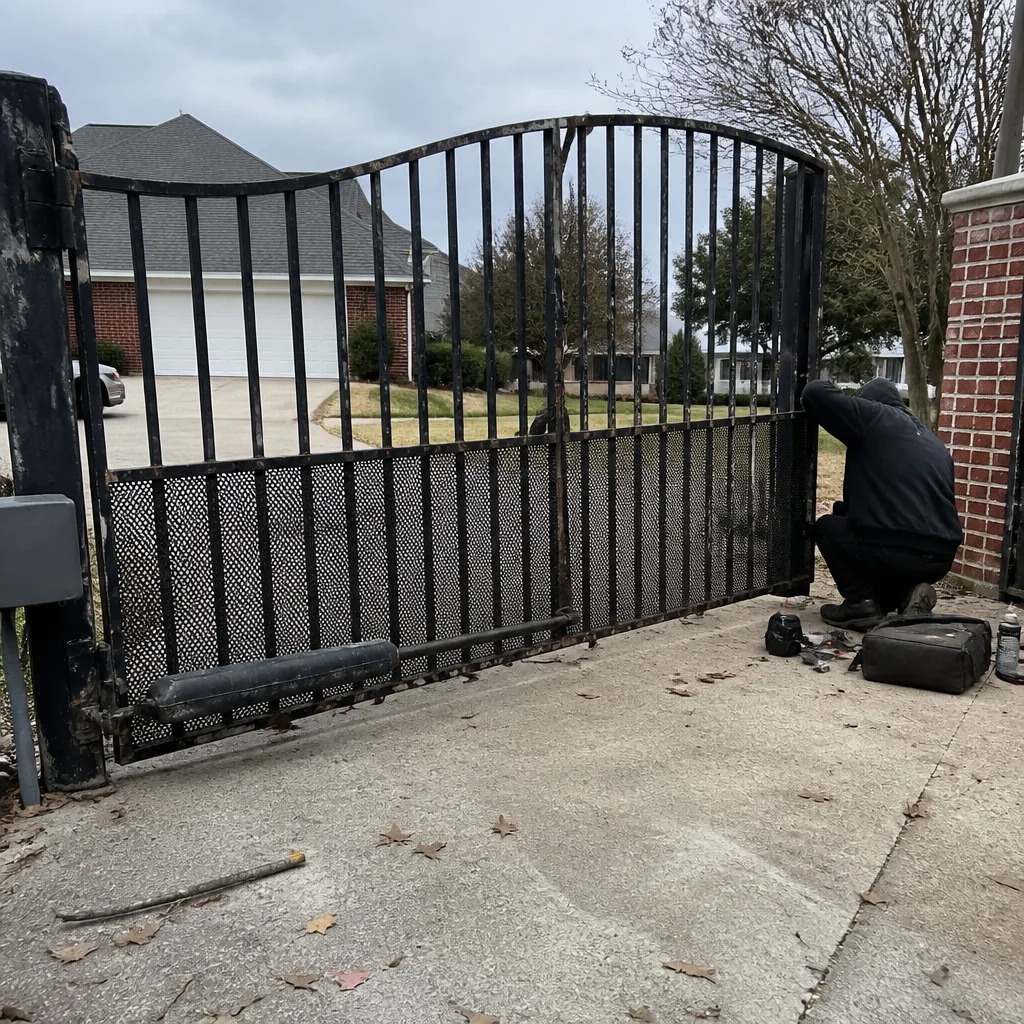 Before
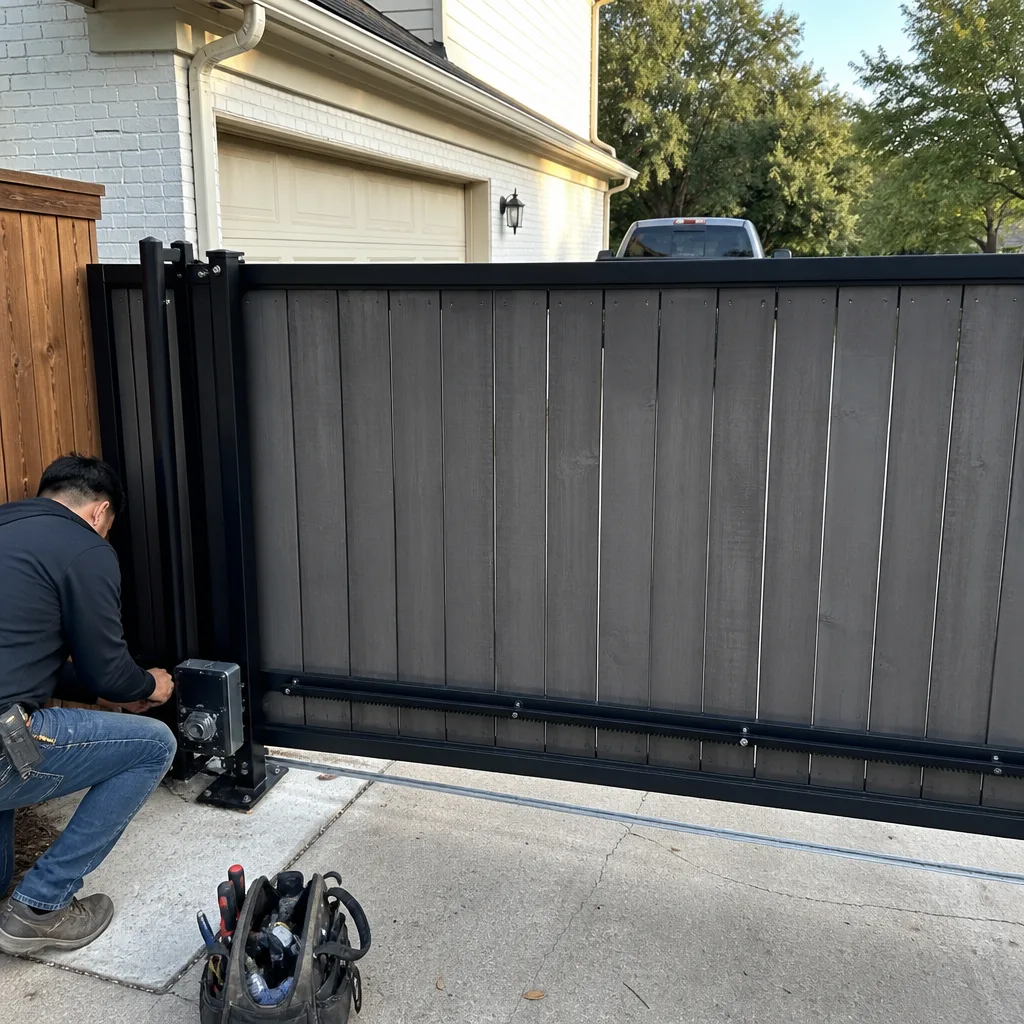 After
After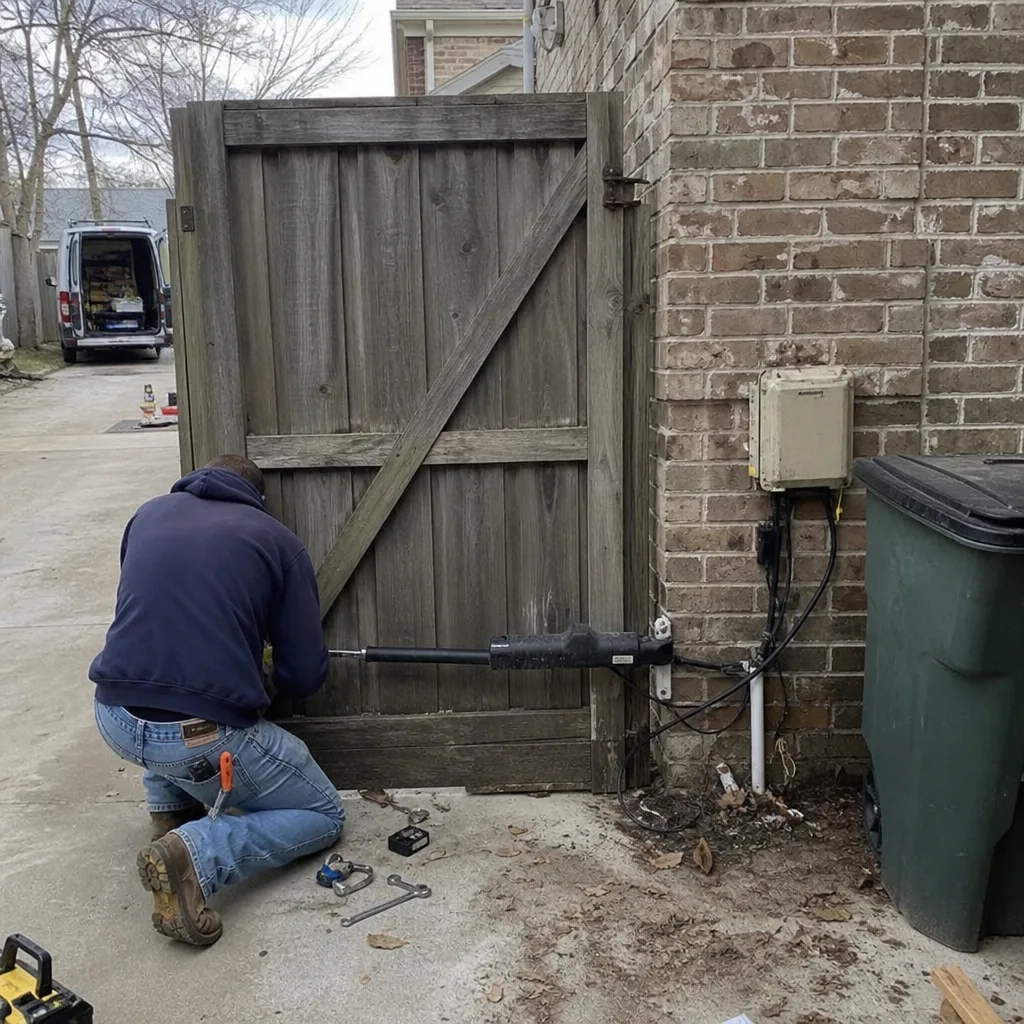 Before
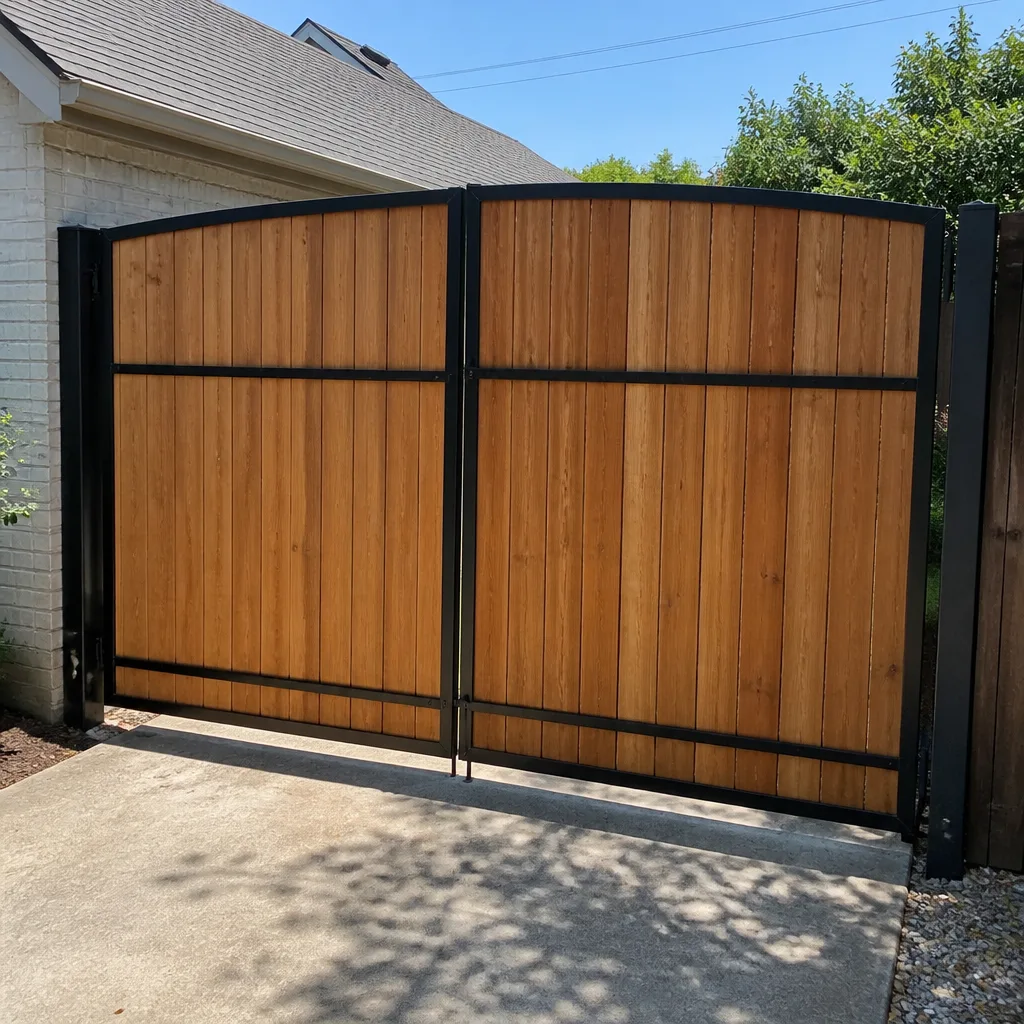 After
AfterDIY vs Professional Gate Repair: The Plano Homeowner’s Decision Guide
Replacing a gate battery yourself costs about $35 and takes ten minutes. Replacing a gate operator board yourself costs around $290, voids whatever warranty remains, and forces you to re-program limit switches that most residential owners set wrong, producing a gate that crushes the object it’s supposed to stop for. The difference between those two repairs is where this guide-and our Gate Repair services-live. Plano homeowners don’t need a blanket answer about whether they’re “handy enough” to fix a gate. They need a task-level map of which repairs make sense to attempt and which ones convert a $200 problem into a $1,400 problem. That’s what follows, drawn from what we see on service calls across Collin County.
Quick Answer
For Plano homeowners, the DIY-versus-professional gate repair decision should be made at the task level, not the skill level. Battery replacement, remote re-syncing, wheel cleaning, and hinge lubrication are reasonable DIY jobs. Anything involving torsion springs, operator circuit boards, limit-switch calibration, or welded structural members calls for a trained technician because those repairs carry safety, warranty, and liability consequences that outrun the labor savings.
Table of Contents
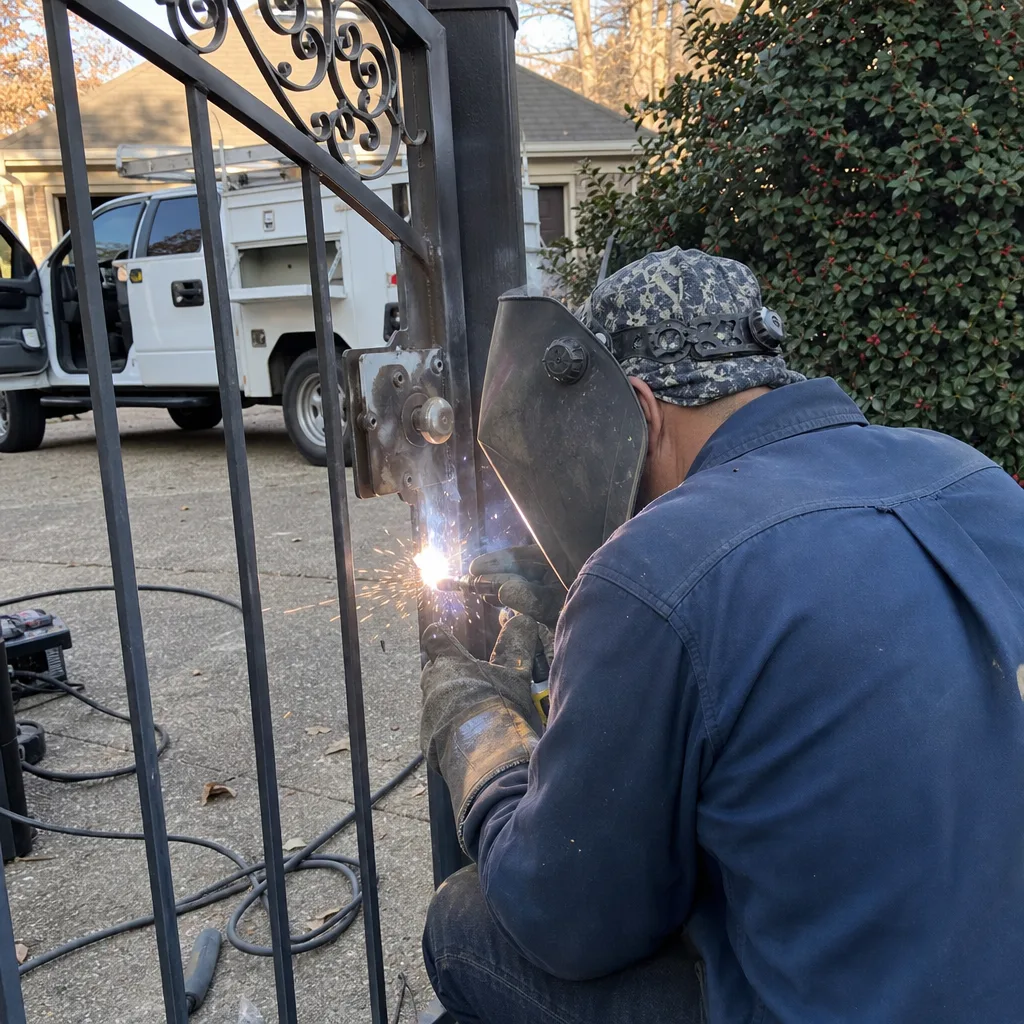
- The Task-Level Decision Matrix: What’s Actually Safe to DIY
- Texas Liability Exposure: What a Self-Repaired Gate Means in Court
- Which Gate Operator Brands Are DIY-Hostile by Design
- The Documentation Argument: Why Written Service Records Matter When You Sell
- How to Be a Useful Participant in a Professional Repair
- What Plano’s Climate and Code Mean for Gate Repair Decisions
- What DIY Actually Saves: A Cost Comparison in Plano Dollars
BeforeAfterThe Task-Level Decision Matrix: What’s Actually Safe to DIY
The right question isn’t “Can I fix a gate?” It’s “Does this specific task have a recoverable failure mode?” A recoverable failure is one where a mistake costs you time or a small part. An unrecoverable failure is one where a mistake costs you a motor, a warranty, a finger, or a lawsuit. That distinction organizes the entire decision.
Safe DIY tasks on a Plano residential gate include:
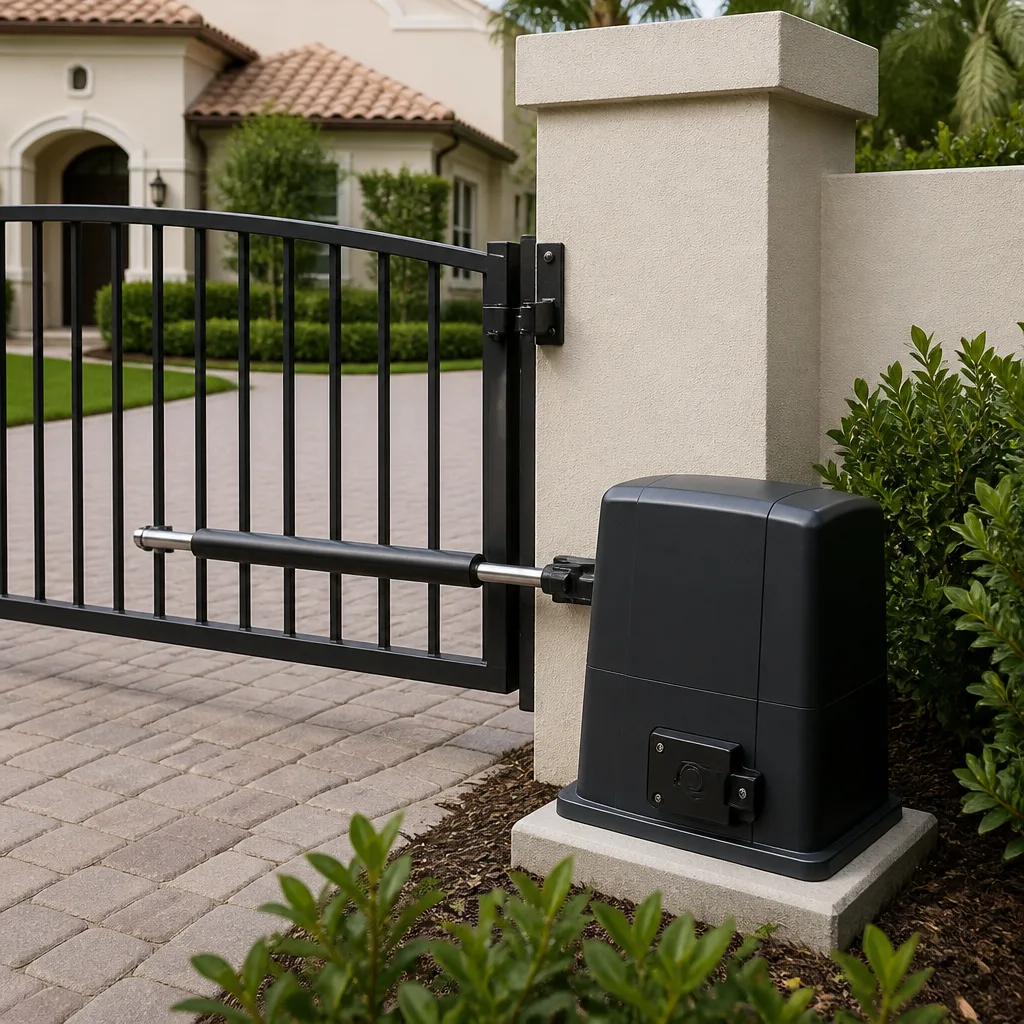
- Operator battery replacement: Most swing and slide gate operators run on a 12V or 24V battery. If the gate works fine while connected to AC power but stalls during a power outage, the battery has failed. Replacement is usually two terminals and a plastic cover. Expect to pay $25 to $45 for a quality replacement battery at a local supply house or online.
- Remote control re-syncing: If a remote stopped working after a neighbor changed their garage code, the fix is usually a learn-button sequence on the operator control board. The manual for your brand walks through this in about four steps.
- Track and wheel cleaning: Slide gates accumulate leaf debris, dirt, and fine grit in the track channel. A stiff brush and a shop vacuum handle most of it. Do this twice a year in Plano’s clay-heavy soil conditions.
- Hinge and roller lubrication: A lithium-based spray grease on hinge pins and roller assemblies once per season prevents the squealing and slow-binding that leads to motor strain. This is a ten-minute job that costs less than $15 in materials.
Professional-required tasks include:
- Torsion spring replacement or adjustment: Swing gates that use torsion-bar assist springs store enormous energy. A spring that releases under tension can break fingers, hands, or facial bones. This is not a skill-level question. It’s an energy question.
- Operator limit-switch calibration: The limit switch tells the motor where the gate stops opening and where it stops closing. Set it 12 degrees past travel and the gate rams into the stop, bends the bracket, and eventually burns out the motor. Most residential owners set this wrong because they’ve never read the technical manual for their specific operator.
- Circuit board replacement: Modern gate operators are not simple relays anymore. They’re logic boards with proprietary programming sequences, safety-beam logic, and obstruction-sensing algorithms. A wrong wire landed on the board can fry the replacement before you finish.
- Any welded structural repair: If a fence post has pulled away from the gate frame or the frame itself has cracked at a weld point, the repair requires a welder and an understanding of load distribution.
For a complete breakdown of what professional Gate Repair in Plano covers, see our service page. The key insight is that recoverable failures are rare in gate mechanics. Most mistakes are either invisible until they cause damage or immediately dangerous.
Texas Liability Exposure: What a Self-Repaired Gate Means in Court
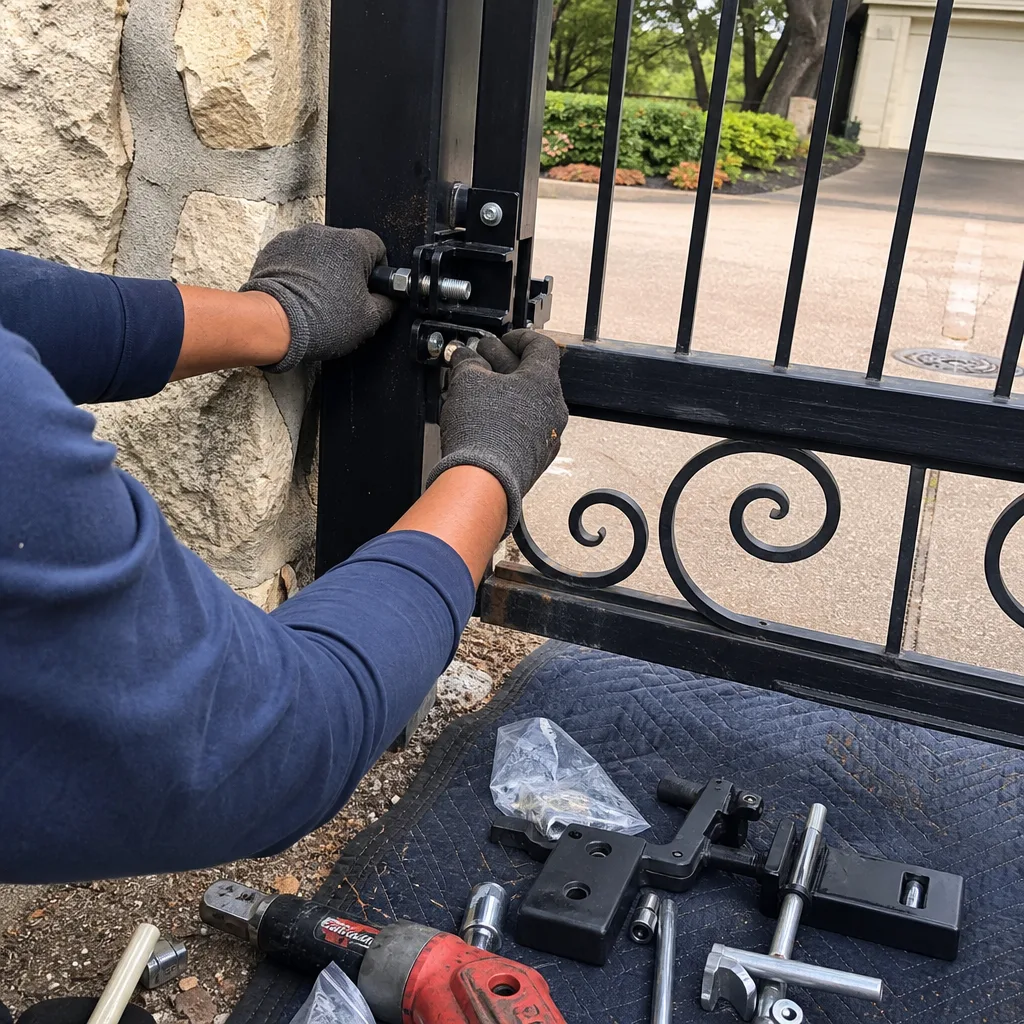
Here’s what most DIY guides skip. In Texas, if your gate closes on a delivery driver’s vehicle, a neighbor’s dog, or a child on a bicycle, the liability picture doesn’t care who adjusted the limit switch last. It cares whether you can show the gate was properly maintained and properly set.
Under Texas premises liability, a homeowner owes a duty to warn or make safe known hazards on the property. A self-repaired gate that fails to reverse on obstruction is not a neutral fact. It’s evidence of negligent maintenance if the injury leads to a lawsuit. The standard insurance question after a gate incident is: “When was the gate last serviced, and by whom?”
If the answer is “I adjusted the force setting myself last March to stop the gate from reversing on leaves,” you’ve provided the opposing attorney with exactly what they need. You’ve documented your own deviation from manufacturer specifications. Homeowners insurance may cover the claim, but your rates move, and your deductible applies. If the injury is severe enough, the policy limits become the question.
Professional repair doesn’t remove liability. It transfers the documentation burden. When a licensed technician calibrates an operator, the job record shows what was set, to what value, against which manufacturer spec. That’s the record that defends you in a claim. A handshake and “I think I got it right” is not a record.
This is the core of what we call the Haven Standard at Vance Gate Repair Plano home. Every repair leaves a written record of what was found, what was adjusted, and what was left behind. Not because it’s nice to have. Because in a liability dispute, it’s the difference between “properly maintained” and “negligently modified.”
Which Gate Operator Brands Are DIY-Hostile by Design
Not all gate operator manufacturers take the same position on homeowner repairs. Some publish complete service manuals with wiring diagrams, error-code tables, and adjustment procedures. Others treat technical documentation as proprietary and release only installer-level resources to authorized dealers. That distinction matters a lot when you’re deciding whether to open the operator cover.
Ghost Controls is the most DIY-friendly of the major brands. The company publishes full installation and programming manuals online, sells parts directly to consumers, and maintains an active support line that will walk a homeowner through swing-arm replacement, battery swaps, and limit adjustments. If you have a Ghost Controls operator, the DIY ceiling is higher than with any other major brand.
Mighty Mule occupies the middle ground. Installation manuals are public, and the brand sells replacement parts through retail channels. But advanced board programming and failure diagnostics require a level of electrical literacy that most homeowners don’t have, and Mighty Mule’s support team tends to push escalated issues toward service providers.
DoorKing and Elite are the two most installer-centric brands in the residential space. DoorKing’s technical bulletins and wiring diagrams are not freely published. The components are high-quality and long-lasting, but when they fail, the diagnostic path runs through a trained technician with brand-specific training. Elite’s UL-certified operators carry programming requirements that assume commercial access-control knowledge. Opening one of these operators without the service manual is guessing, and guessing on a $900 control board is expensive.
Our view at Gate Motor & Opener in Plano work is simple: the brand on the operator should not determine whether a repair gets done. We service nine major automation brands, which means we don’t steer a homeowner toward replacing a DoorKing board with a different brand just because it’s easier for us. The motor you have is the motor we work on.
The Documentation Argument: Why Written Service Records Matter When You Sell
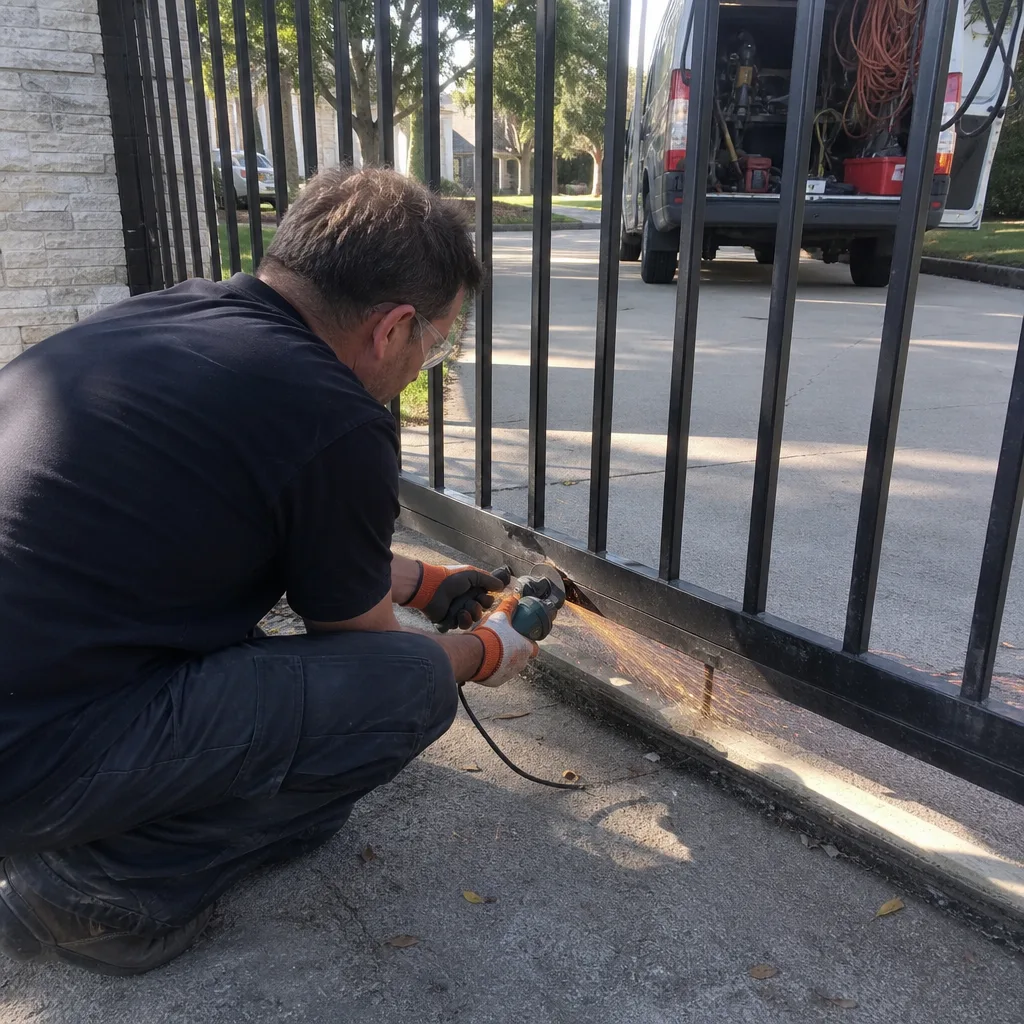
Plano homeowners sell their houses. When they do, the buyer’s inspector will look at the gate operator and note whether it appears functional. What the inspector cannot see is what a written service record shows: that the gate was calibrated to manufacturer spec in March, that the battery was replaced in July, and that the safety reverse was tested and passed in November.
That record does two things. First, it answers the buyer’s question before the buyer asks it. A gate with a maintenance history is a gate that doesn’t generate a repair request in the first week after closing. Second, it protects the seller from a post-sale dispute. If the gate stops working two weeks after closing and the buyer claims the seller concealed a defect, the service record shows the gate was operating correctly at the time of sale.
For a homeowner who did their own repairs, that record doesn’t exist. The gate may work perfectly, but “works perfectly” is your word against the buyer’s. A written invoice with part numbers, adjustment values, and a date is a document.
This isn’t a theoretical concern in Plano’s market. Homes in neighborhoods like Willow Bend, Kings Ridge, and Chase Oaks routinely sit on larger lots with driveway gates as a listed feature. When a gate is a selling point, its maintenance history is part of the negotiation. The Haven Standard’s documentation habit, developed on commercial access-control sites starting in 2014, exists precisely because property transactions don’t accept verbal histories.
How to Be a Useful Participant in a Professional Repair
You don’t have to choose between “do it myself” and “hand it over and disappear.” The best Plano homeowners we work with are active participants in the repair, not passive observers. They ask good questions and keep good records. Here’s how to do that.
- Photograph everything before the technician arrives. Take clear photos of the operator, the gate in open and closed positions, the track or hinge area, and any visible damage. These give the technician context and give you a before state for comparison.
- Write down the symptoms in concrete terms. Not “the gate is acting weird.” Better: “The gate opens fully but reverses three feet before reaching the closed position, only when the temperature is below 40 degrees.” That’s a diagnostic sentence.
- Ask for the written price before any work starts. Under Clause 1 of our Haven Standard, the flat price is written and handed over before anyone picks up a tool. If a company won’t do that, ask why.
- Ask what was set, not just what was replaced. “We replaced the limit switch” is half the story. “We replaced the limit switch and set the open limit to 87 degrees, which is three degrees short of the physical stop” is a complete record.
- Request the part number. Every installed component has a part number. Write it down or ask for it on the invoice. That number is what you’ll need to reorder the same part in seven years without paying for a service call to identify it.
- Ask for photos of the completed work. A technician who photographs the new board installed, the new limit position, and the closed gate leaves you with a record that survives memory.
These habits cost nothing and take about five minutes. They turn a service call from a transaction into a documented event. That’s the same discipline commercial facilities use, and it transfers directly to a residential gate in Plano.
What Plano’s Climate and Code Mean for Gate Repair Decisions
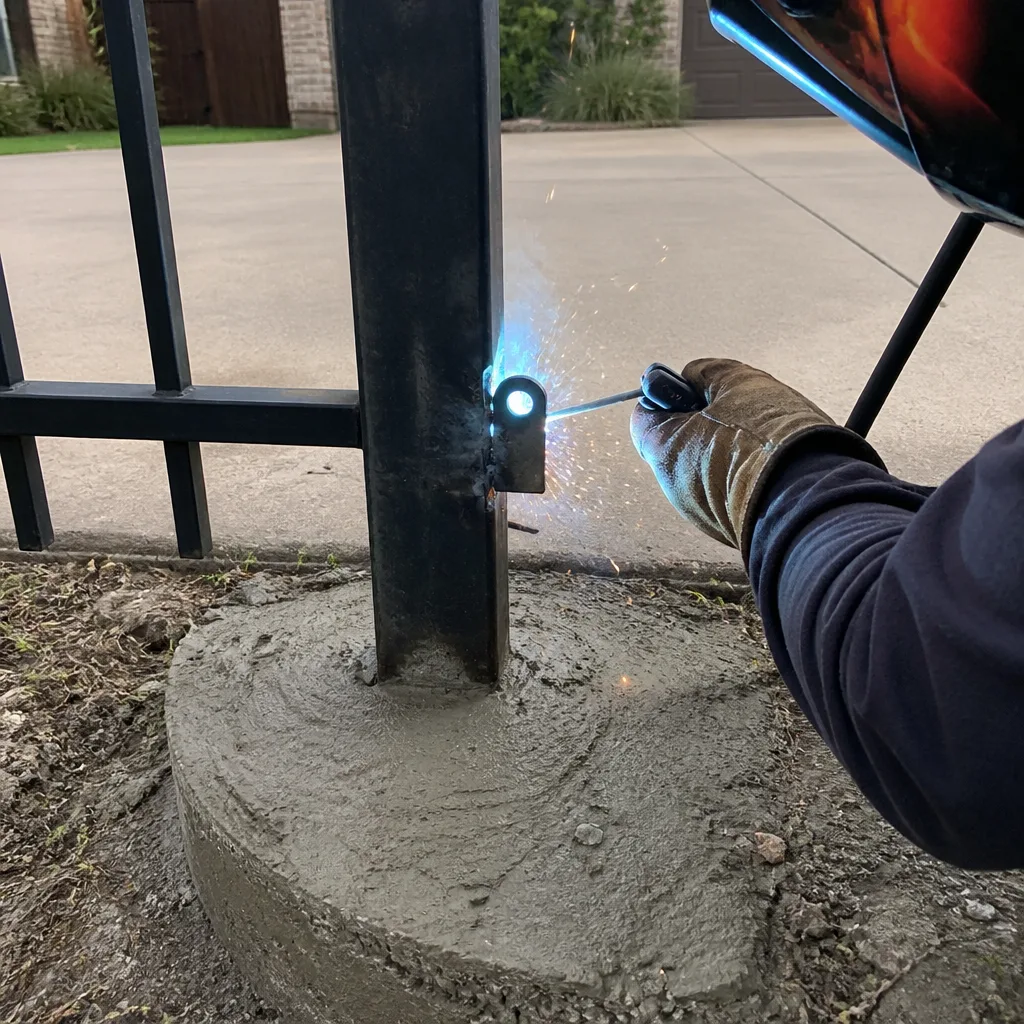
Plano’s climate does specific things to gate hardware, and those specifics inform the DIY-versus-professional question in ways that generic gate guides never mention.
The first issue is soil movement. Plano sits on expansive clay soil. Through wet winters and dry summers, the ground under a gate post expands and contracts, sometimes by several inches. That movement puts lateral pressure on gate posts and hinges. A gate that was perfectly aligned in April can be dragging by August, not because the gate changed but because the ground under it did. This is a real factor in Plano gate repairs that homeowners in stable-soil regions don’t face.
Clay soil also contributes to slide-gate problems. The V-track that a slide gate rides on collects silt and debris after every rain. If the track fills, the gate motor strains against increased resistance, which shortens motor life and accelerates wheel wear. Regular track cleaning is a DIY task worth doing; the alignment repair that becomes necessary when a strained motor has pulled the chain out of tension is not.
The second issue is heat. Plano regularly exceeds 95 degrees in July and August, and that heat does two things to gate operators. Capacitors on control boards degrade faster in sustained heat, which is why board failures cluster in late summer. And operator enclosures trap heat, which means internal temperatures can exceed the ambient temperature by 20 to 30 degrees. A board that fails in August may have been slowly cooking since June.
Plano also has specific code requirements for automatic gate installations. The city requires that automatic vehicular gates comply with UL 325 safety standards, which mandate safety reversing mechanisms, photo-eye sensors, and warning placards. A DIY operator board replacement that bypasses or miswires the safety circuit doesn’t just create risk; it puts the installation out of compliance with the code that applies to the property. That’s a discussion Gate Installation in Plano projects always include, because code compliance is part of installation, not an add-on.
What DIY Actually Saves: A Cost Comparison in Plano Dollars
The economic case for DIY gate repair usually starts from a false premise: that professional repair costs $400 and DIY costs $40, so the savings is $360. That math only works if the DIY attempt succeeds on the first try, doesn’t void a warranty, and doesn’t create a downstream failure. Here’s what the numbers actually look like for common Plano repairs.
Battery Replacement
- DIY cost: $30 to $45 for the battery, 10 minutes of labor
- Professional cost: $95 to $140, including the battery, installation, and a load test of the charging circuit
- Verdict: DIY is reasonable if you’re comfortable with two terminals. The professional premium buys a charging-circuit check that catches the underlying problem if the battery failed prematurely.
Remote Control Programming
- DIY cost: Free if you have the manual, 15 minutes of patience
- Professional cost: $75 to $120 for a service call that includes re-syncing all remotes and keypads
- Verdict: DIY is the right call. This is a recoverable failure; the worst case is you wait for the technician.
Operator Circuit Board Replacement
- DIY cost: $250 to $350 for the board, plus the risk of incorrect installation, plus voided warranty if the operator is still under coverage
- Professional cost: $450 to $650 for the board, installation, limit-switch reprogramming, and safety-circuit verification
- Verdict: Professional. The $200 savings evaporates the first time the gate rams the stop or fails to reverse on a child’s bike.
Safety Photo-Eye Replacement
- DIY cost: $40 to $70 for the sensor pair, plus the challenge of alignment without a signal meter
- Professional cost: $180 to $260, including replacement, alignment, and obstruction-test verification
- Verdict: Professional for most homeowners. A photo-eye that’s two inches out of alignment fails to stop the gate, and most residential owners don’t have the metering equipment to verify alignment precisely. This is the component that protects people and pets.
Torsion Spring Replacement
- DIY cost: $50 to $80 for the spring, plus the medical bill if it releases under tension
- Professional cost: $300 to $450, including the spring, installation, and load testing
- Verdict: Professional, without exception. The energy stored in a wound torsion spring is fatal in the worst case and permanently disabling in the common case.
The honest math is this: DIY gate repair pays off on about 20% of repair categories, representing maybe 15% of total repair dollars. The other 80% of categories carry a risk-adjusted economic penalty for DIY attempts. When a $290 board replacement becomes a $900 motor replacement because the limit switches were set wrong, the savings calculation reverses hard.
Common Mistakes to Avoid
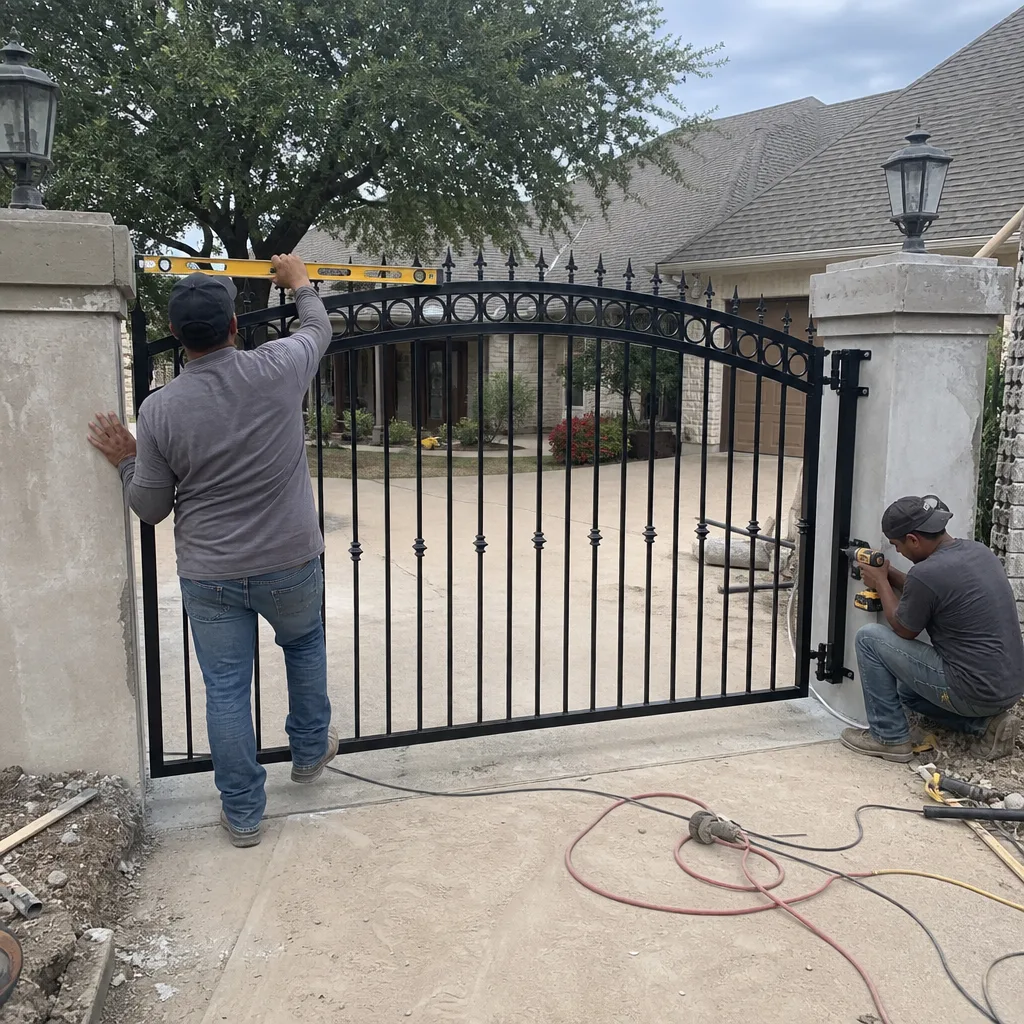
- Adjusting the force setting to compensate for a dragging gate. When a gate starts binding and the motor strains, the instinct is to crank up the force setting. That’s how you get a gate that will crush a garbage can or a small dog rather than reversing. The correct fix is finding and eliminating the source of binding, usually a wheel, hinge, or track issue, not overriding the safety function. This is the single most common unsafe DIY adjustment we see in Plano.
- Replacing a board without photographing the wiring first. The most expensive DIY failures we see are boards fried by a wrong wire landed on the wrong terminal. If you’re going to attempt this against everyone’s advice, photograph every wire before you touch anything, and label each one. Then buy a new board because you’ll probably still get it wrong.
- Using WD-40 on gate rollers and hinges. WD-40 is a water displacer, not a lubricant. It strips existing grease and leaves the metal dry within weeks. Use a lithium-based spray grease. This is a cheap mistake that shortens hardware life.
- Ignoring the photo-eye warning light. Most gate operators blink a diagnostic code when the photo-eye is misaligned or obstructed. That blinking light is the operator asking to be fixed before someone gets hurt. Ignoring it is how preventable injuries happen.
- Leaving the operator cover off “temporarily.” Plano’s heat, humidity, and occasional ice storms will destroy an exposed control board faster than any single wiring mistake. If you open it, close it. If the cover is broken, replace it.
- Relying on a YouTube video for a different brand. A Ghost Controls limit-set procedure and a DoorKing limit-set procedure are not the same. A homeowner who watches a video for one brand and applies it to another is guessing with a false confidence. Brand-specific documentation is the floor for any DIY attempt.
When to Call a Professional
Call a professional if the repair involves a torsion spring, a circuit board, a limit-switch adjustment, a safety photo-eye, or any welded structural member. Call a professional if your gate operator is a DoorKing or an Elite and you don’t have the installer-level documentation in hand. Call a professional if the gate has already failed to reverse on an obstruction once. Call a professional if you’re selling your home and want a service record to show a buyer. And call a professional if you’ve already attempted a repair and the gate is worse than it was. The second repair always costs more than the first one would have, because now the technician is diagnosing your changes before diagnosing the original problem. Vance Gate Repair Plano offers free estimates throughout the Plano area. Call (972) 236-7089 and a live person answers, day or night.
Frequently Asked Questions
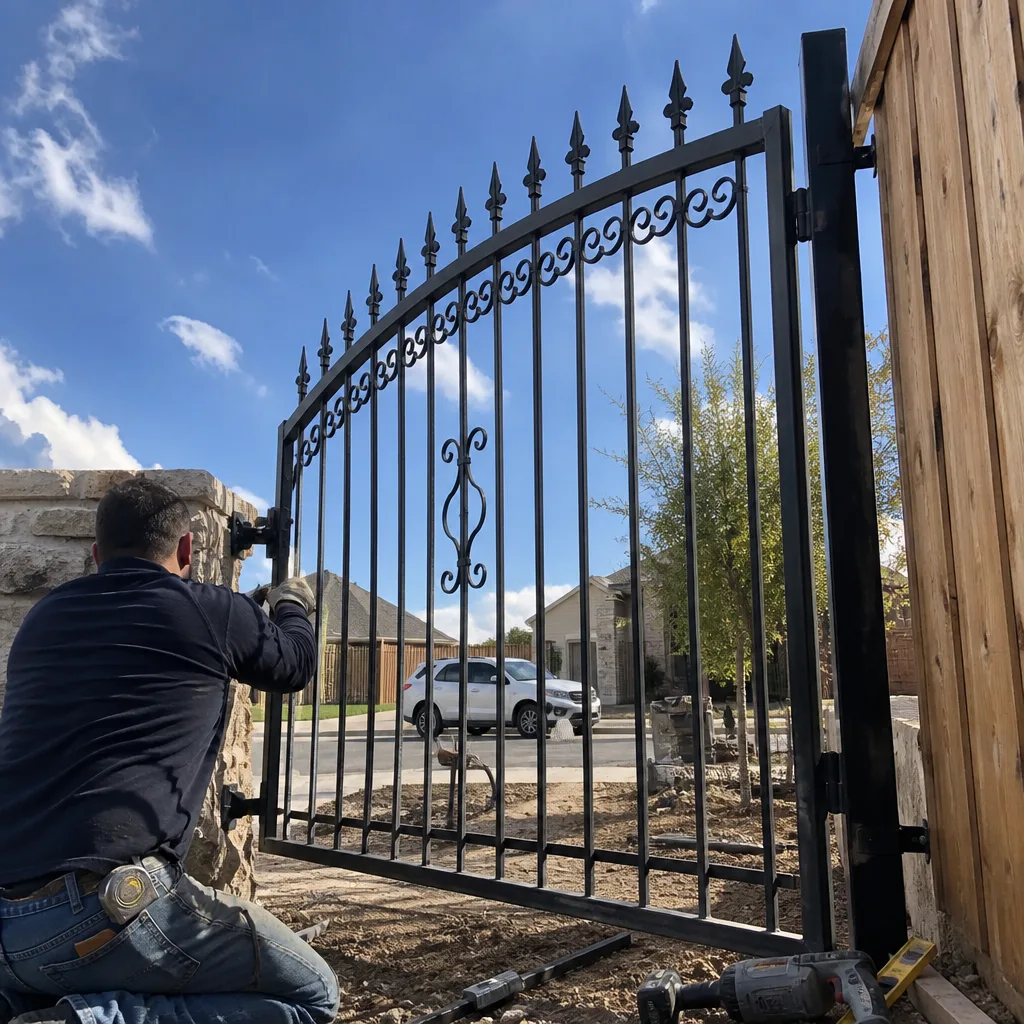
You can handle battery replacement, remote re-syncing, and basic cleaning and lubrication safely. Anything involving the control board, limit switches, safety photo-eyes, or torsion springs should go to a professional because those components carry safety and liability consequences when set incorrectly. For Plano homeowners, the practical DIY ceiling is higher on Ghost Controls operators and essentially nonexistent on DoorKing and Elite units without installer documentation.
Most residential gate repairs in Plano run between $95 and $450 depending on the component. Battery replacement sits at the low end, motor or circuit board replacement at the high end. Every professional repair should include a written price before any work starts. If a company won’t provide one, that’s a red flag. Call (972) 236-7089 for an exact quote; estimates are free.
Homeowner’s insurance may cover liability claims arising from a gate incident, but the claim process gets significantly harder if the gate was self-adjusted away from manufacturer specifications. The insurer’s first question will be about maintenance history. A written service record from a licensed technician answers that question. A verbal assurance that “I think I set it right” does not.
Ghost Controls publishes complete public manuals, sells parts directly to consumers, and maintains responsive homeowner support. Mighty Mule is workable for basic tasks but starts to thin out at the board-programming level. DoorKing and Elite assume installer-level training and are the least DIY-accessible brands in common residential use in Plano.
Yes. Automatic vehicular gates in Plano must comply with UL 325 safety standards, which mandate safety reversing mechanisms, photo-eye sensors, and warning placards. Any repair that bypasses or miswires the safety circuit puts the installation out of code compliance, which becomes relevant in a liability claim or a property sale.
Plano’s clay soil expands when wet, which can shift gate posts and change gate alignment enough to cause binding or drag. It can also wash silt into slide-gate tracks, increasing motor strain. The gate didn’t break because of the rain; the rain exposed a marginal alignment or a clogged track. Cleaning the track is a good DIY first step. If the binding persists, call (972) 236-7089 for a diagnosis rather than adjusting the force setting.
The Bottom Line
The DIY-versus-professional gate repair decision is not about how handy you are. It’s about what a mistake costs. Replacing a battery, cleaning a track, or re-syncing a remote are recoverable tasks that any careful Plano homeowner can handle. Replacing a board, adjusting a limit switch, or touching a torsion spring creates risks that outrun the savings in almost every scenario. Plano’s climate, soil movement, and code requirements add specific wrinkles that generic guides miss. When in doubt, get a written second opinion. The right professional will show you the price, show you the record, and show you the work.
Written by Adrian Vance, Owner at Vance Gate Repair Plano, serving Plano since 2014.