
Last updated September 20, 2026
Free on-site gate assessment - hinges, posts, and your LiftMaster or Nice gate operator checked before anything is quoted
The assessment is free and the quote is the invoice.

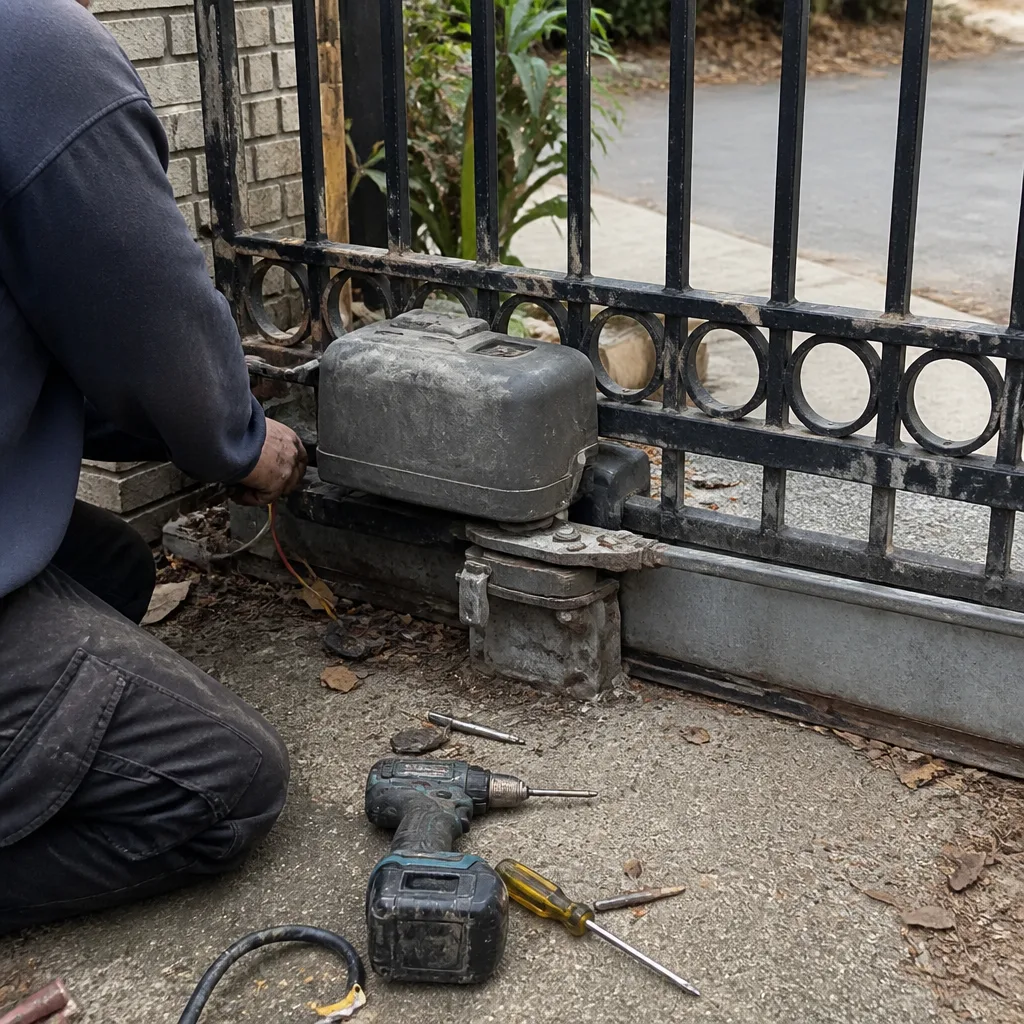 Before
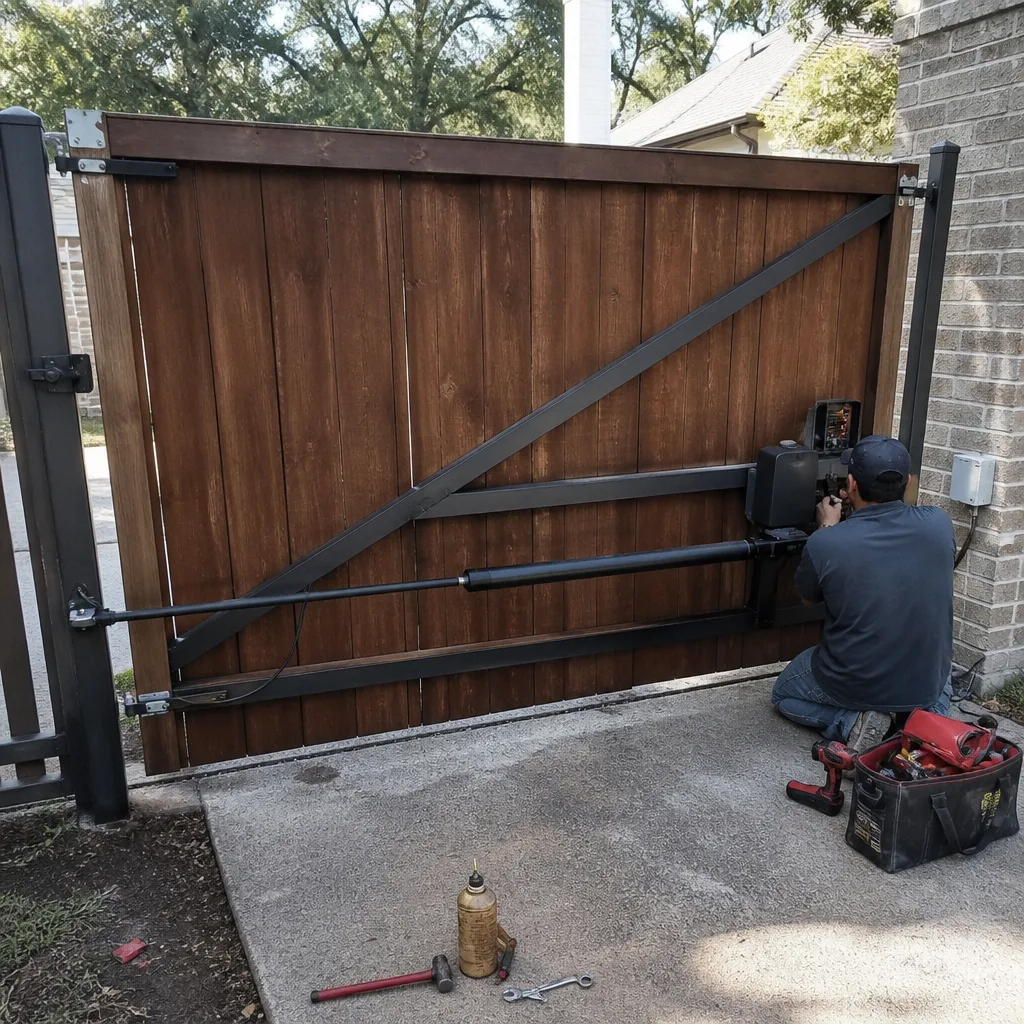 After
After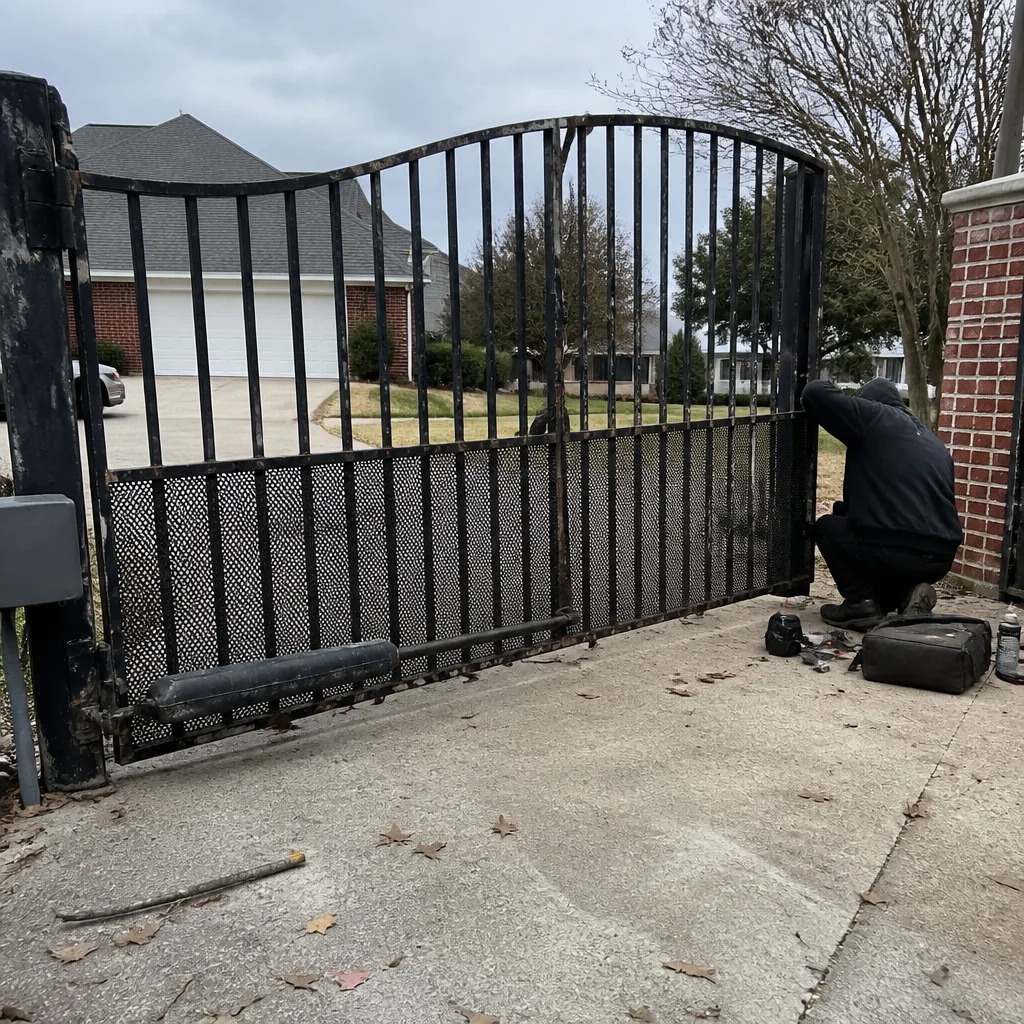 Before
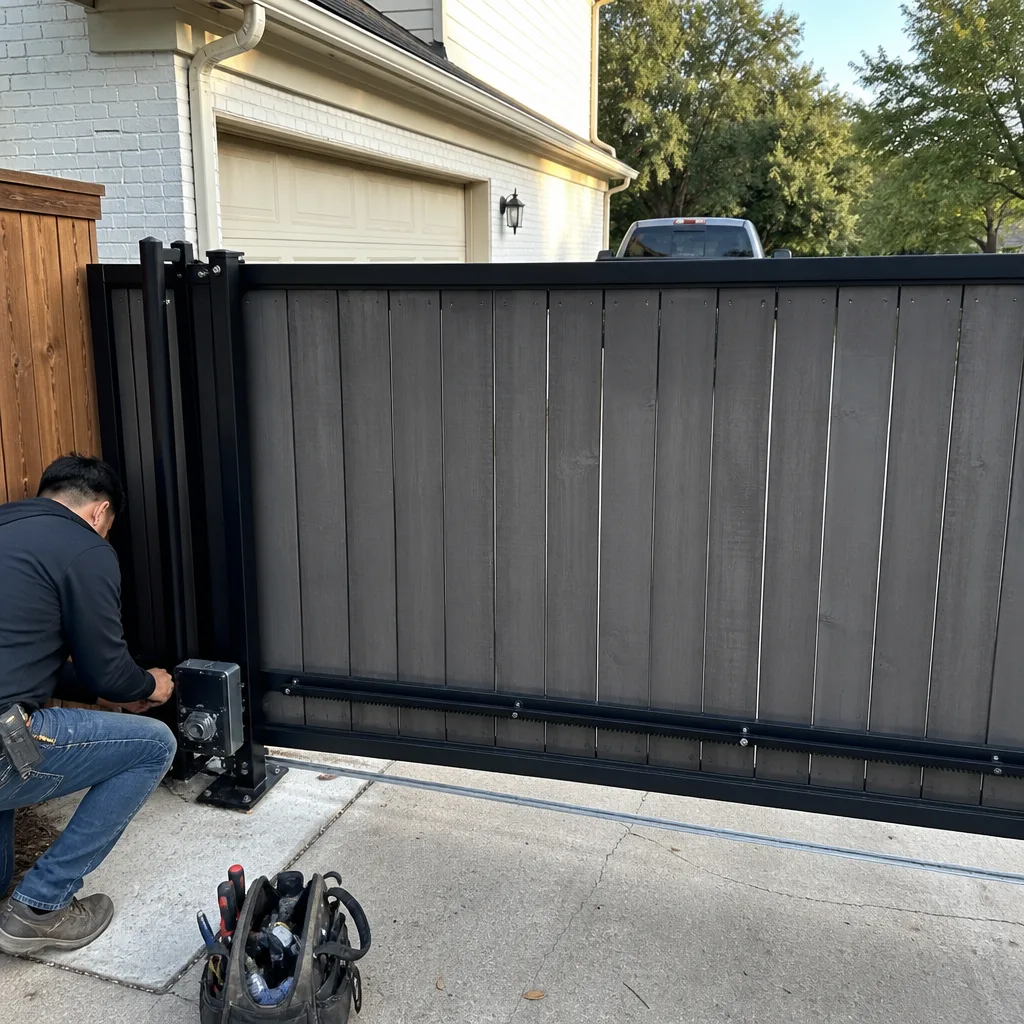 After
After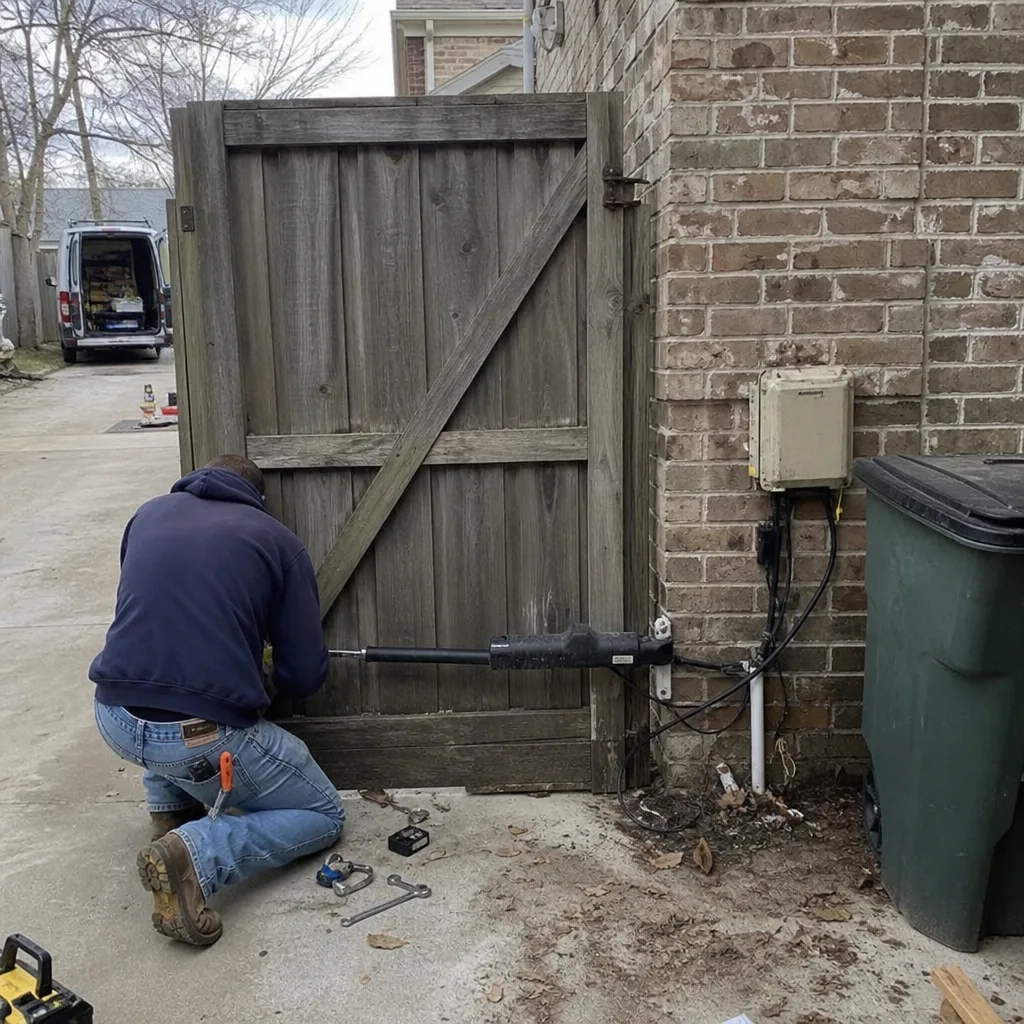 Before
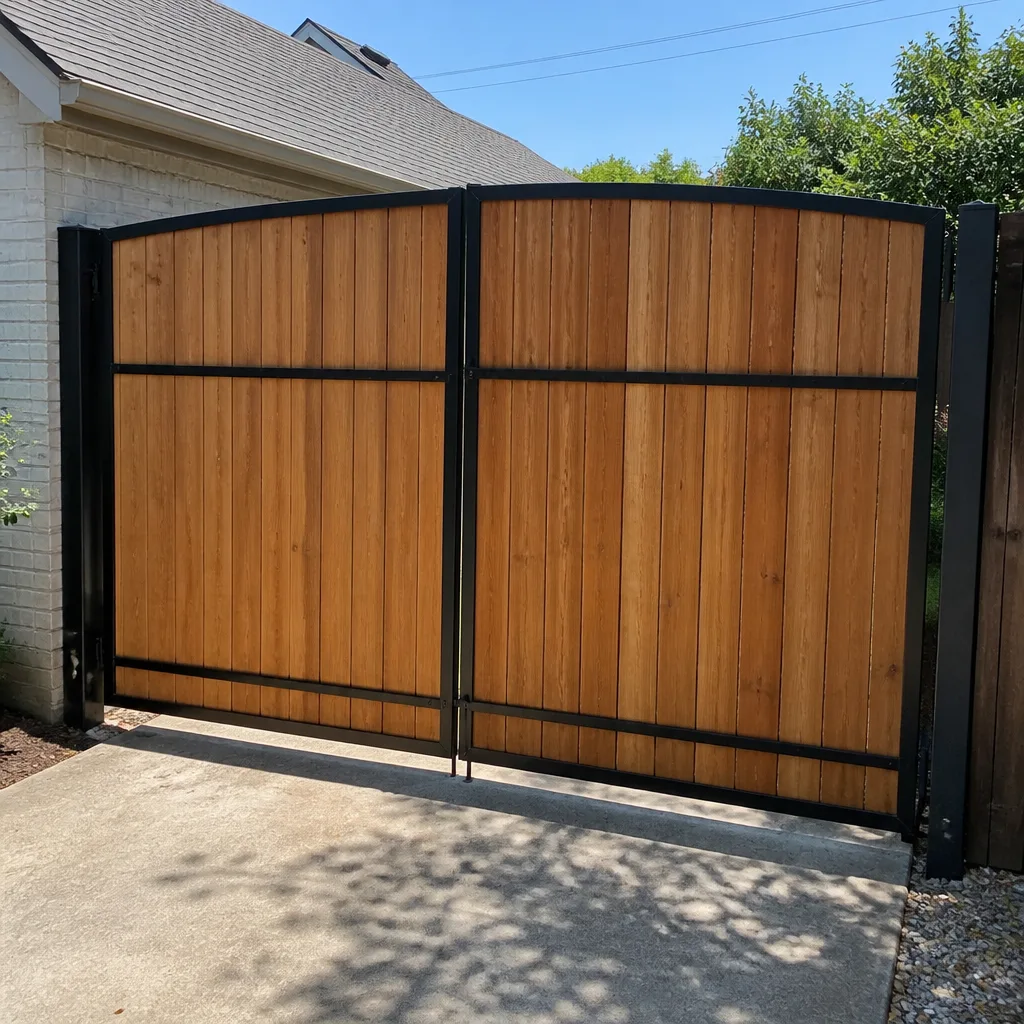 After
AfterSeasonal Gate Repair Care for Plano: Year-Round Homeowner’s Guide
Plano recorded 47 days above 100°F in summer 2023. Every one of those days, gate operators across the city were running at or beyond their rated ambient temperature. The spec is printed right on the motor housing, usually in small type near the UL label, and almost no homeowner has ever read it. This guide, alongside our The Complete Guide to Gate Repair in Plano, assigns specific inspection tasks to Plano’s four distinct stress periods: summer motor overheating, fall debris intrusion, winter freeze-expansion, and spring ground shift. Each season damages a different component, and each one has a measurable threshold you can check before the failure happens.
Quick Answer
Seasonal gate care in Plano means four targeted inspections per year, each tied to a specific climate stress. Summer requires checking operator temperature ratings and adding shade. Fall requires clearing slide-gate tracks to under one inch of debris. Winter requires pre-adjusting limit switches before freeze events. Spring requires measuring post lean against a 1/4-inch-per-foot threshold. Each check takes under 30 minutes, and each one prevents the specific failure Plano’s weather causes next.
Table of Contents
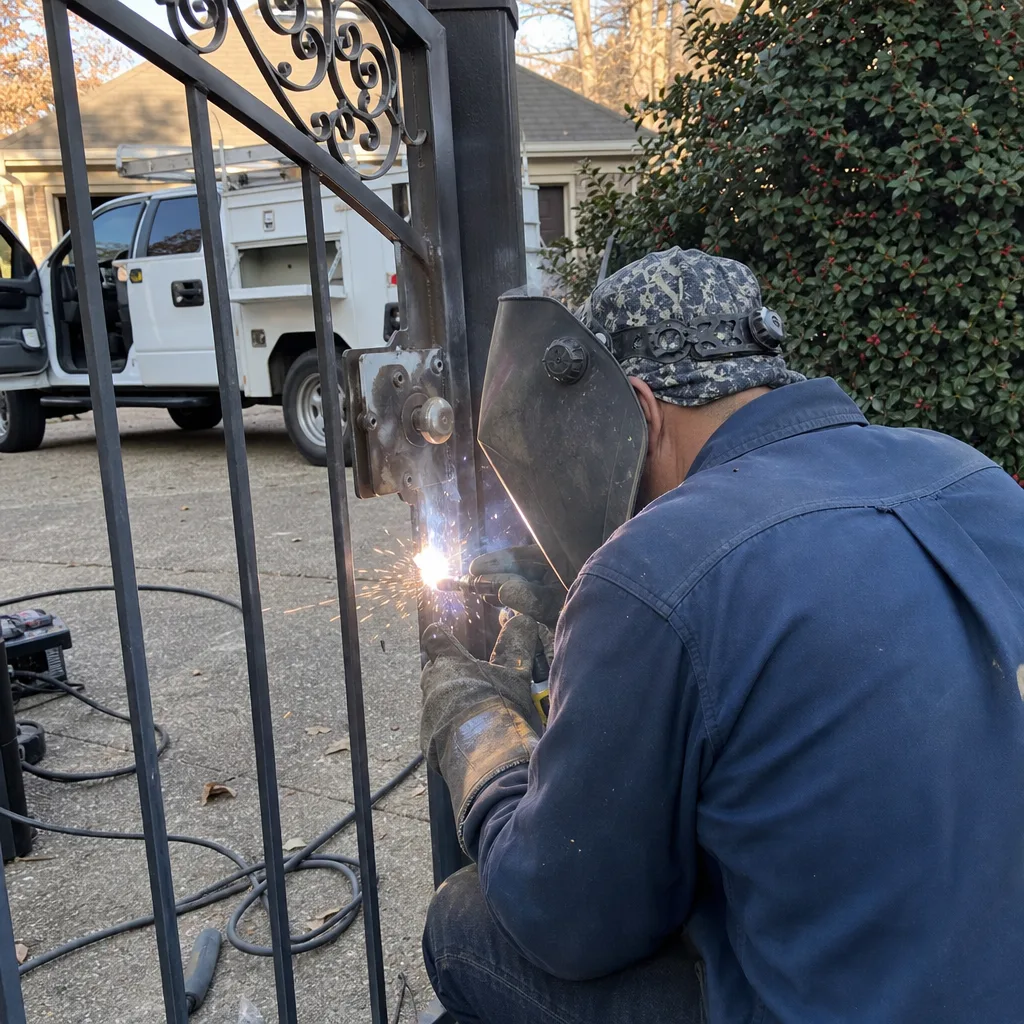
- Summer Stress: Operator Overheating and Thermal Shutdown
- Fall Stress: Debris Intrusion and Track Blockage
- Winter Stress: Freeze-Expansion and Limit Switch Misalignment
- Spring Stress: Soil Heave and Post Movement
- The Seasonal Log Template: Exact Readings to Record
- Common Mistakes to Avoid
- When to Call a Professional
- Frequently Asked Questions
BeforeAfterSummer Stress: Operator Overheating and Thermal Shutdown
Plano summers are the single hardest season on gate automation. The operator motor sits inside a metal housing, often painted dark, mounted on a post or pillar that bakes in direct sun from roughly 11 a.m. to 7 p.m. The motor generates its own heat during operation. On a 105°F afternoon, the air inside that housing can reach 140°F before the motor even runs.
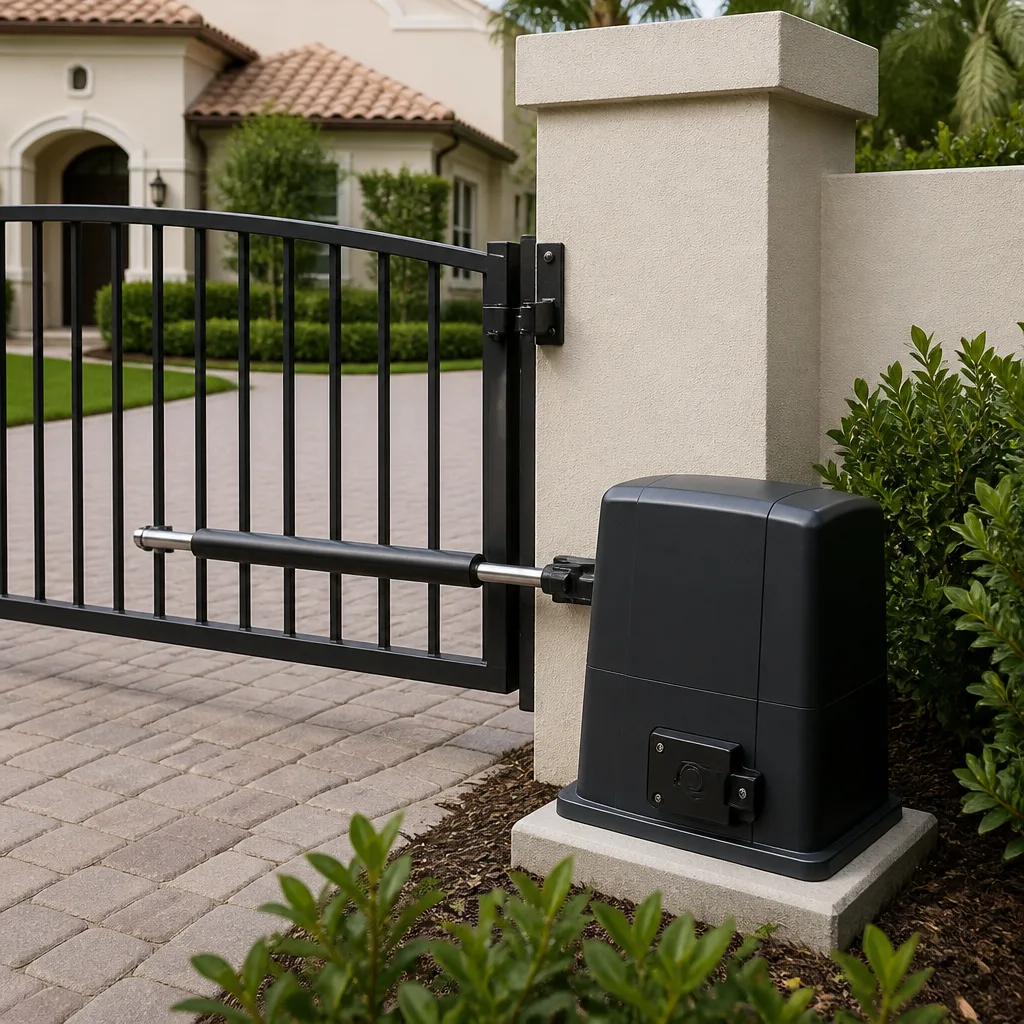
Every gate operator has an ambient temperature rating printed on the motor housing. Most residential swing-gate and slide-gate operators are rated to 95°F or 104°F ambient. A small number, including certain Linear and BFT industrial-grade models, are rated higher, but the majority of units installed in Plano’s residential neighborhoods are not. When the internal thermal sensor trips, the gate simply stops responding until the motor cools. That’s the thermal cutoff, and it’s designed to prevent permanent winding damage. What it is not designed to do is tell you why it tripped.
Here’s what to check before Plano’s first 100°F day, in order:
- Locate the ambient temperature rating on the motor housing label. Write it down in your seasonal log. If it says 95°F and the housing sits in full afternoon sun, the gate is running at design limits every hot day.
- Check the housing temperature at 3 p.m. with an infrared thermometer. Aim at the side facing west or south. If the surface reads 120°F or higher, the motor inside is working above the manufacturer’s intended range.
- Evaluate shade options. A shade panel mounted three to four feet above the operator, with clearance for airflow, can drop housing temperature by 20°F or more. The key is that the panel must not be attached directly to the operator housing; trapped air between a panel and the housing makes the problem worse.
- Verify the duty cycle. Many Plano homes have gates that cycle 30 to 40 times a day during summer, with kids home from school and pool traffic constant. A residential operator rated for 10 to 15 cycles per hour will overheat faster when it never gets a rest between cycles.
We’ve replaced operators in Plano neighborhoods like Willow Bend and Deerfield that were functioning perfectly until the first sustained heat wave. The motor windings fail gradually: each thermal trip slightly degrades the insulation, and after two or three summers of regular trips, the motor shorts internally. The fix at that point is not a reset. It’s a gate motor replacement in Plano, which runs between $800 and $1,600 depending on the brand and whether the arm bracket is intact.
Shade is almost always the cheaper intervention. A properly ventilated shade structure costs a fraction of a motor replacement and extends the life of the existing operator by years. The only caveat: any structure attached to the gate post must meet Plano’s setback and height requirements, which a quick call to the city’s building department confirms before you build.
Fall Stress: Debris Intrusion and Track Blockage
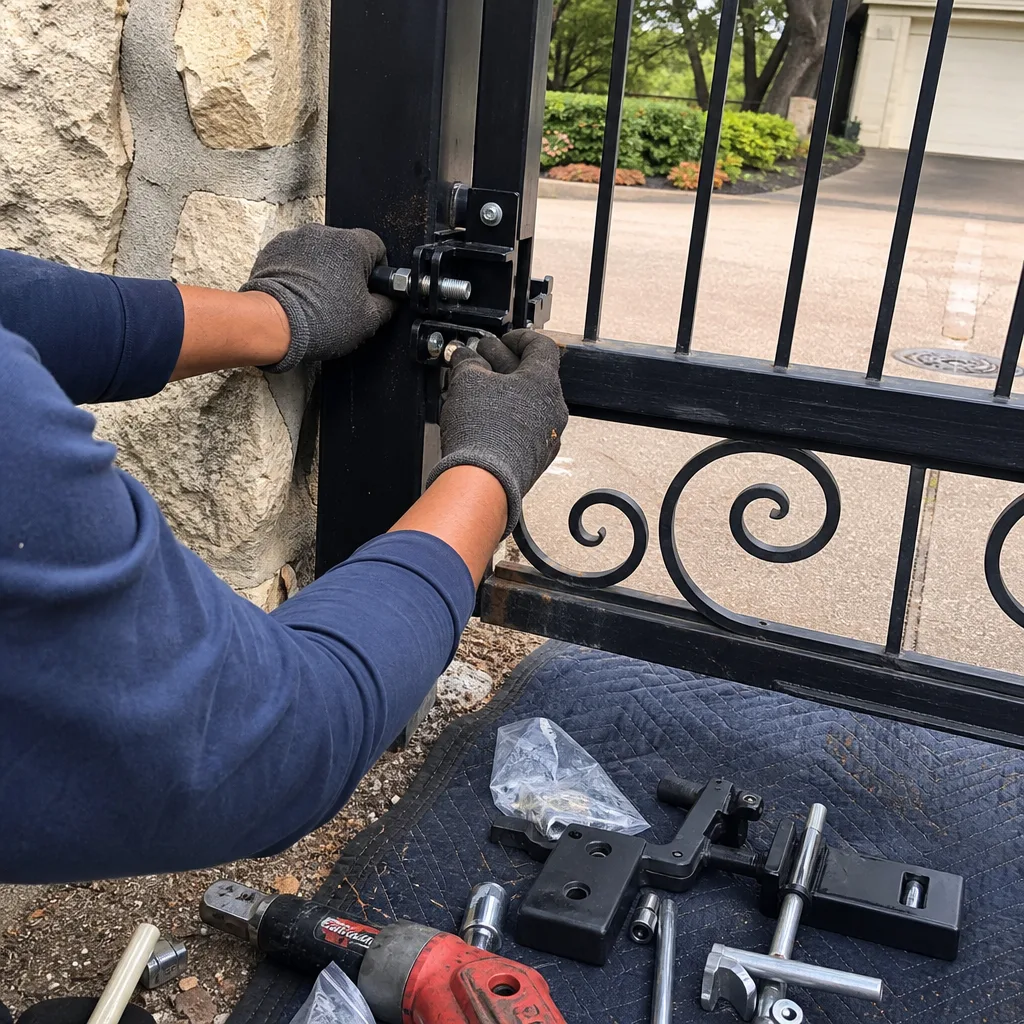
Plano’s tree canopy is one of the densest in Collin County. October through December drops leaves, acorns, small branches, and the fine grit that collects in every slide-gate track and swing-gate hinge assembly. What starts as a maintenance nuisance becomes a motor failure when the debris reaches a specific threshold, and that threshold is measurable.
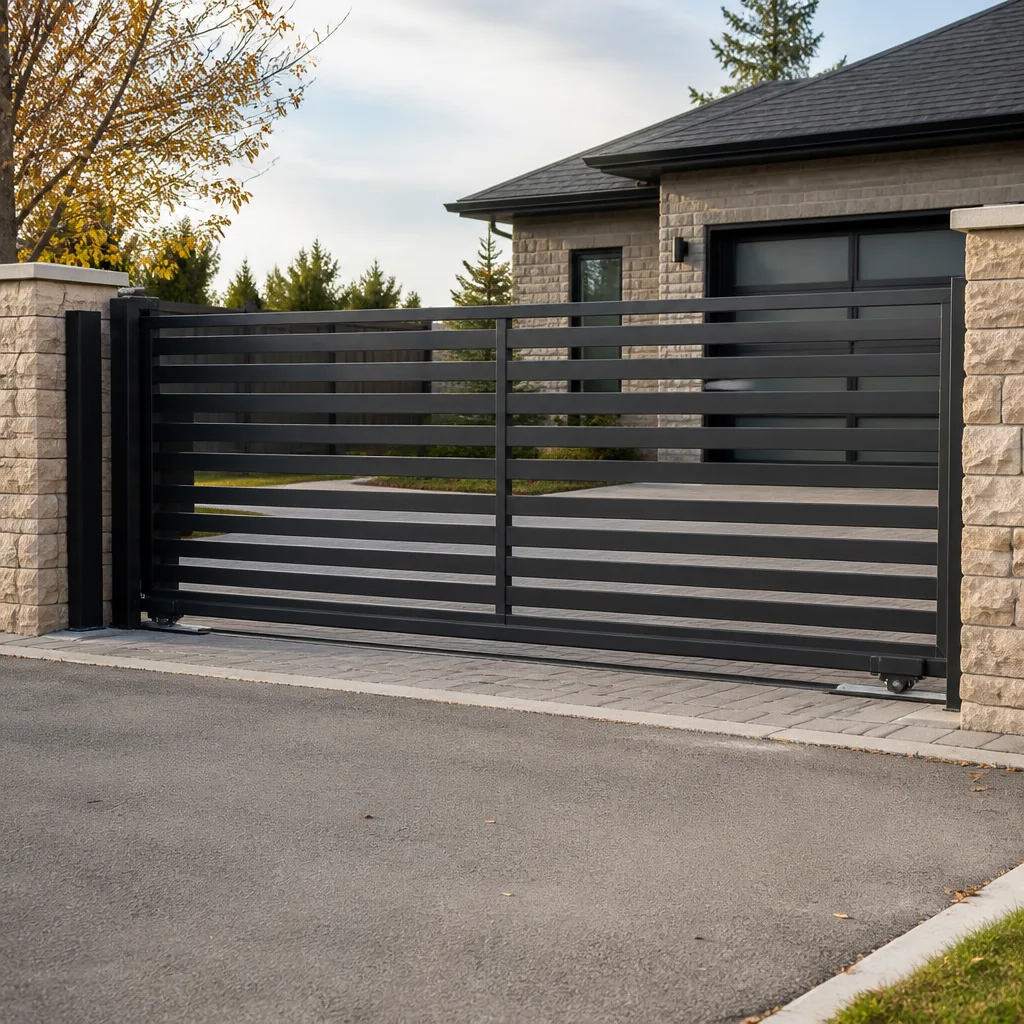
Slide gates run on a steel track, either surface-mounted or embedded, with the gate supported by trucks and guide rollers. The drive mechanism is a chain, a rack and pinion, or a belt. Debris in the track increases rolling resistance. The operator compensates with higher motor current. The current increase is linear with resistance, and the motor’s thermal protection is designed for the rated load, not the accumulated resistance of two months of leaf litter.
The threshold is one inch. When accumulated debris anywhere along the track exceeds one inch in depth, motor current draw increases measurably, and the operator begins working hard enough to shorten its service life. Here’s the Plano-specific sequence:
- Clear the track before the first major leaf drop. In Plano, that’s usually mid-to-late October. Remove leaves, acorns, and twigs from the full track length, including the section hidden when the gate is open.
- Inspect the guide rollers and trucks. Debris wraps around roller axles and gets packed into bearing housings. A roller that no longer spins becomes a skid, and a skidding roller drags against the track the same way debris does, with the same current spike.
- Check the chain or rack tension. Debris in the drive path forces the chain to run over foreign material, which stretches it. A chain that’s visibly loose after debris removal needs tension adjustment. This is a 15-minute fix for a technician and a $300 to $500 repair if the chain jumps off the sprocket under load.
- Verify the safety photo-eyes. Fall dust and leaf fragments accumulate on the lens faces. A photo-eye (the infrared beam that stops the gate if something crosses the path) with a dirty lens can trigger false reversals or fail to detect an obstruction. Clean the lenses with a dry cloth. If the gate still misbehaves, the photo-eye alignment may be off.
Any Plano homeowner with a slide gate should do this in late October and again in early December. The second pass catches the late leaf drop and the acorn crop that squirrels knock down through November. The third pass, in January, is when we see the most debris-related service calls, because the December windstorms strip the last of the canopy directly into the track.
For swing gates, fall is less about tracks and more about hinge lubrication. The hinge pins on Plano gates collect fine dust and leaf particles that mix with existing grease, forming an abrasive paste. Clean the hinges with a solvent wipe and re-apply a light moly grease before the first freeze. A hinge that runs dry through winter accelerates wear on the pin barrels and eventually creates gate sag.
Winter Stress: Freeze-Expansion and Limit Switch Misalignment
Plano freezes differently than Dallas. The city sits slightly north and west, and overnight lows during February cold snaps regularly hit the low 20s. The real damage does not come from the cold itself; it comes from the expansion of moisture inside the gate structure and the contraction that follows. Different materials move at different rates, and the mismatch shows up first in the limit switch positions.
A limit switch is a mechanical or electronic stop that tells the operator where the gate’s fully open and fully closed positions are. In a correctly adjusted system, the gate reaches the physical stop at the same moment the switch trips. But steel gate frames, aluminum panels, and the concrete piers they mount to all expand and contract at slightly different rates during a freeze-thaw cycle. The gate’s physical travel changes by a quarter-inch or more. The limit switch does not adjust itself to compensate.
What this means in practice: a gate that opened and closed perfectly in December may stop half an inch short in February or slam harder against the closed stop than it did before the freeze. The operator’s current sensing will eventually compensate by moving the limit slightly, but the mechanical stops have not moved, and the gate now closes with more force than it should.
Here’s the pre-freeze checklist for Plano homeowners with automated gates:
- Record your current limit positions. On a warm day before the first freeze, note exactly where the gate stops in both directions. Photograph the gap at each stop if possible. This gives you a baseline.
- Check the gate’s closed position after the first hard freeze. If the gap has changed by more than half an inch, the limit switch needs adjustment. This is a 20-minute service call, not a repair, and it prevents the gate from driving itself past its mechanical stop when the switch is out of sync.
- Inspect hinge and roller bolts. Freeze cycles loosen hardware. Tighten any bolt that moves with a wrench. Do not overtighten hinge bolts on wood gates; the wood is softer than the steel and will compress.
- Verify the photo-eye alignment. Cold air stiffens wiring and shifts the mounting brackets slightly. A misaligned beam (visible as a blinking LED on the eye unit) is the most common winter-related gate failure in Plano’s older neighborhoods, where original installations from the 1990s and 2000s have aged mounting hardware.
Viking and Ghost Controls operators store limit settings electronically rather than mechanically, and they are less susceptible to freeze-related drift than older electromechanical units. But the physical stops still matter for any operator, because an electronic limit that tells the motor to stop at a position the gate can no longer reach means the gate either over-travels or never fully closes.
We’ve seen a seasonal pattern in our Plano gate repair calls: the first hard freeze of the year produces a cluster of “gate won’t close all the way” calls within 48 hours, and almost every one traces back to a limit switch that was last adjusted during warm weather. Pre-adjusting before the freeze prevents the failure entirely.
Spring Stress: Soil Heave and Post Movement
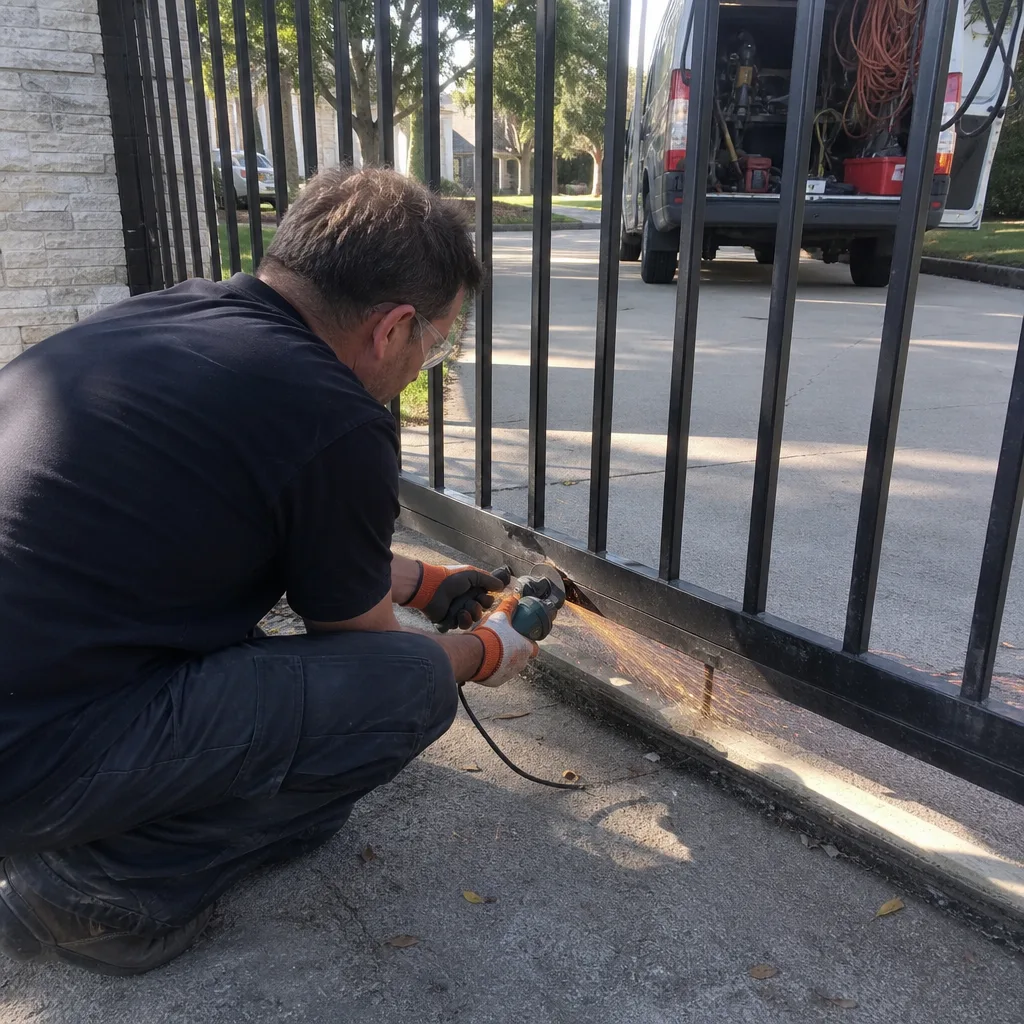
Plano’s soil is the famous Texas black clay found across much of Collin County. It expands when wet and shrinks when dry, and the movement is measured in inches, not fractions. A wet winter followed by a drying spring shifts the ground under gate posts, and the symptoms show up months before a post visibly leans.
The concern is not dramatic movement. It is the slow, incremental movement that changes the gate’s geometry enough to cause binding, misalignment, or operator overload. Here are the indicators that matter:
- Gate bind at one point in the swing arc: A gate that moves freely but drags at a specific angle is riding on a post that has tilted slightly. The bind point tells you which post moved and roughly which direction.
- Latch misalignment: A latch that no longer lines up with its receiver by more than half an inch suggests the gate post or the latch post has moved vertically or horizontally.
- Gap changes between gate and ground: If the gap at the free end of a swing gate changes by more than an inch between winter and spring, the hinge post is moving. Measure and record the gap each season.
- Fresh cracking in concrete collars or piers: Hairline cracks that appear in the spring after a wet winter are often the first visible evidence of soil movement. Not every crack is structural; a crack that widens over a 30-day period is.
The threshold for action is 1/4 inch of lean per foot of post height, measured with a level against the post. Below that, the movement is usually manageable with hinge adjustment. Above it, the post needs a structural assessment, and that is not a DIY repair. Pulling a leaning post and resetting it in new concrete is a two-person job that involves disconnecting the gate, supporting it in place, and re-anchoring the post plumb. It is also occasionally covered by homeowners insurance when the movement traces to a documented soil shift or foundation event.
Spring is the right time in Plano to evaluate gate installation foundations, even if the gate itself is working. The soil has been through its full wet-dry cycle, and every post has settled into whatever position it is going to hold through summer. Measurements taken in April or May are a reliable baseline for the year ahead.
For gates with automated operators, a post that has moved even slightly changes the stresses on the operator mount, the arm bracket, and the chain or rack alignment. Correcting the post before the operator suffers is a $400 to $1,200 job. Ignoring it until the operator burns out turns it into a $1,500 to $2,500 job. The sequence matters, and it runs on Plano’s soil calendar, not on the calendar on the wall.
The Seasonal Log Template: Exact Readings to Record
Documentation is the difference between catching a problem early and discovering it through a failure. Here is the one-page log we recommend every Plano homeowner keep, with the exact readings to record each visit. This is the same habit we bring to our service visits under Clause 4 (Evidence on every job), and it works just as well for homeowner-level maintenance.
- Date and ambient temperature at inspection.
- Operator housing surface temperature at the hottest point (summer only; use an infrared thermometer).
- Gate travel time from full open to full close, timed in seconds. A change of more than 2 seconds from baseline means something is dragging.
- Gap at the closed stop, measured with a tape in sixteenths of an inch.
- Debris depth in the slide track at the deepest point, in inches (fall and winter only).
- Post lean measurement: level reading against each gate post, noted as a fraction.
- Photo-eye status: steady LED versus blinking LED, and whether the gate reverses on a test obstruction.
- Latch alignment: visual check against the receiver, noted as aligned or the direction of misalignment.
- Any unusual noise during operation, described in words: grinding, squealing, clicking, or thumping, and where on the gate it comes from.
Run the gate three full cycles each inspection and record the readings on the third cycle, when everything is warm and settled. The log takes ten minutes to complete once the routine is familiar, and it gives any future technician a baseline that shortens diagnosis time. If you call us for gate repair in Plano, bring the log out. It tells the technician what changed and when, and it eliminates the guesswork that otherwise precedes every repair.
Common Mistakes to Avoid
- Skipping a season because the gate works fine. By the time a gate fails in Plano, the underlying cause has usually been building for a season or two. The 47-day heat wave of 2023 didn’t destroy motors in a single afternoon; it finished the ones that had been running at 140°F housing temperatures for three consecutive summers.
- Spraying the track with WD-40. WD-40 is a solvent and water displacer, not a lubricant for gate tracks. It strips the existing grease, leaves a thin film that attracts dust, and leaves the track running dry within a week. Slide gate tracks should be clean and dry, with lubrication applied to the rollers and bearings, not the track surface.
- Adjusting the limit switch after a freeze without rechecking the mechanical stops. If the gate’s travel changed because the post moved, adjusting the limit to match the new travel masks the structural problem. The correct sequence is: check the post, fix the post if it moved, then adjust the limit.
- Ignoring the ambient temperature rating. Plano homeowners upgrade to a heavier gate, add decorative cladding, or install a solid privacy panel, and no one checks whether the existing operator is still sized for the load. The motor works harder, runs hotter, and dies years before its rated life. The temperature spec on the housing is the starting point for any gate modification.
- Blocking the operator’s ventilation. Enclosing an operator in a decorative cabinet, wrapping it in insulation, or planting shrubs directly against the housing traps heat. Operators need airflow. A ventilated shade panel above the unit is good; anything that seals the unit into a closed space is a slow motor kill.
- Waiting until the gate stops moving to call. Noise, slow travel, drift in the stop position, and intermittent photo-eye faults are all early warnings. Each one is cheaper to address than the complete failure that follows. The $150 adjustment becomes a $900 repair when it’s deferred for a year, and that ratio holds across almost every gate component in Plano’s climate.
When to Call a Professional
Call a gate technician when the post lean exceeds 1/4 inch per foot, when the operator trips its thermal cutoff more than twice in a season, when the gate makes a new grinding noise that persists after lubrication, or when the limit switch needs adjustment more than once a year. The same goes for any repair involving the tension spring on a counterweight or torsion system, which stores enough energy to cause serious injury if released incorrectly. That spring is not a DIY component under any circumstance. Vance Gate Repair Plano offers free estimates in Plano, with the written price delivered before any work begins. Call (972) 236-7089 if any of these thresholds are met.
Frequently Asked Questions
A seasonal inspection and adjustment visit in Plano typically runs $120 to $250, including track cleaning, hinge lubrication, limit switch verification, and a written report of the readings. Repairs found during the visit are quoted separately, in writing, before any additional work is done. Call (972) 236-7089 for an exact quote on a seasonal maintenance visit.
Yes, most of the checks described here are homeowner-level tasks: reading surface temperatures, clearing debris, checking post lean, and recording travel times. The limit-switch adjustment, any spring work, and any post resetting should be done by a trained technician. The seasonal log template above tells you what to measure; it also tells you what to hand off, as covered in our DIY vs Professional Gate Repair: The Plano Homeowner’s Decision Guide.
Operator motor failure from sustained overheating is the most common seasonal failure we see in Plano, and it’s the one most homeowners don’t see coming. The second is limit switch drift from winter freeze-thaw cycles. Both are preventable with the seasonal checks described in this guide.
Plano’s expansive black clay soil moves significantly with moisture changes, expanding in wet months and shrinking in dry months. This movement causes gate posts to shift and lean, which misaligns latches, binds hinges, and strains operator components. Measuring post lean every spring catches movement before it becomes a structural problem.
We service nine major gate-automation brands, including BFT, Linear, Viking, and Ghost Controls, plus LiftMaster, FAAC, DoorKing, Elite, and Mighty Mule. Our Gate Repair services fix the operating gate rather than steering toward replacement when repair is the right call.
A live person answers our phone 24/7, and emergency calls are dispatched as soon as a technician is available the same day in most Plano neighborhoods. Because the price is written before any work starts, you know what the repair will cost before a tool is picked up. Call (972) 236-7089 for immediate dispatch.
The Bottom Line
Plano’s climate does not damage gates uniformly. Summer attacks the motor, fall attacks the track, winter attacks the limit switches, and spring attacks the posts. Each season has its own inspection task and its own early-warning threshold, and each one is measurable with basic tools and a 10-minute inspection. The homeowner who records the readings season after season catches the drift before it becomes a failure, and can find more guides & resources on our blog. The one who waits until the gate stops moving pays for the same diagnosis in repair dollars instead of maintenance minutes. That’s the math, and it holds in every Plano neighborhood with an automated driveway gate.
Written by Adrian Vance, Owner at Vance Gate Repair Plano, serving Plano since 2014.