
Free on-site gate assessment - hinges, posts, and your LiftMaster or Nice gate operator checked before anything is quoted
The assessment is free and the quote is the invoice.

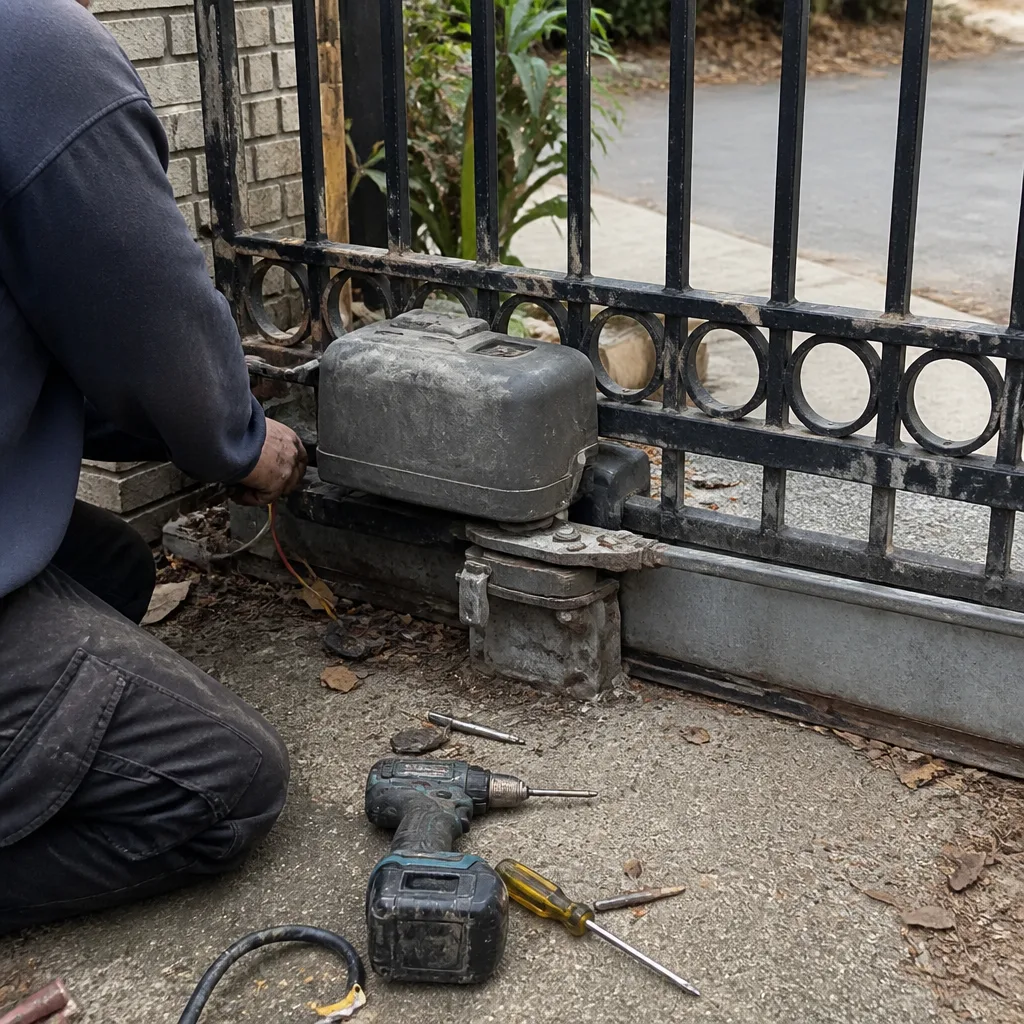 Before
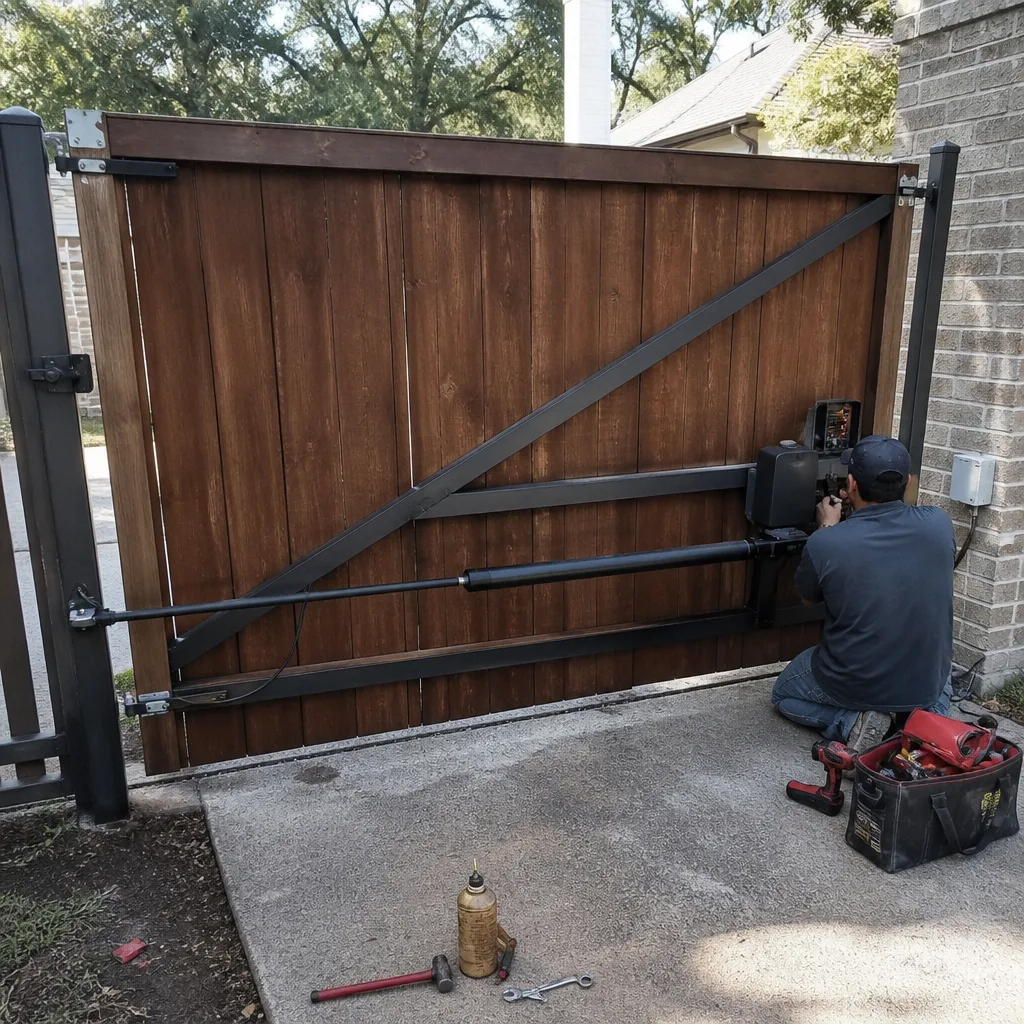 After
After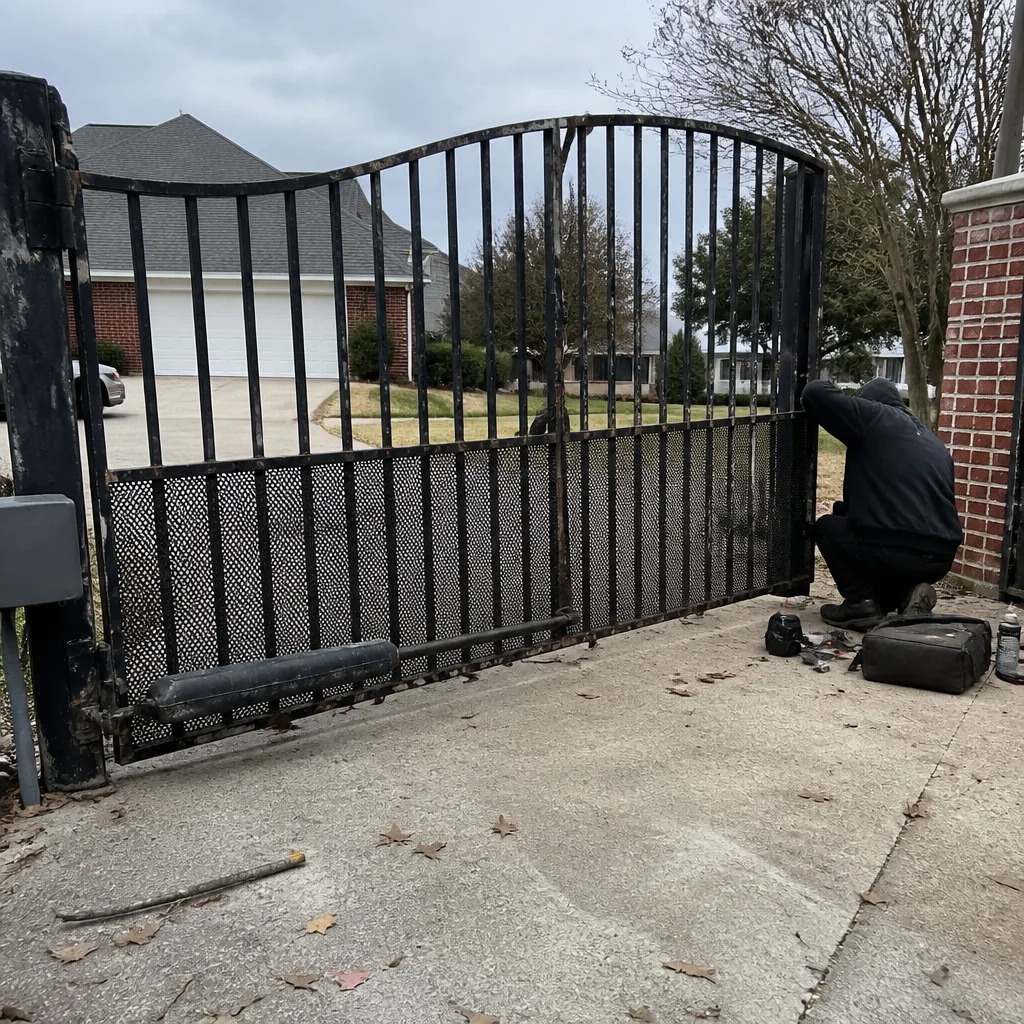 Before
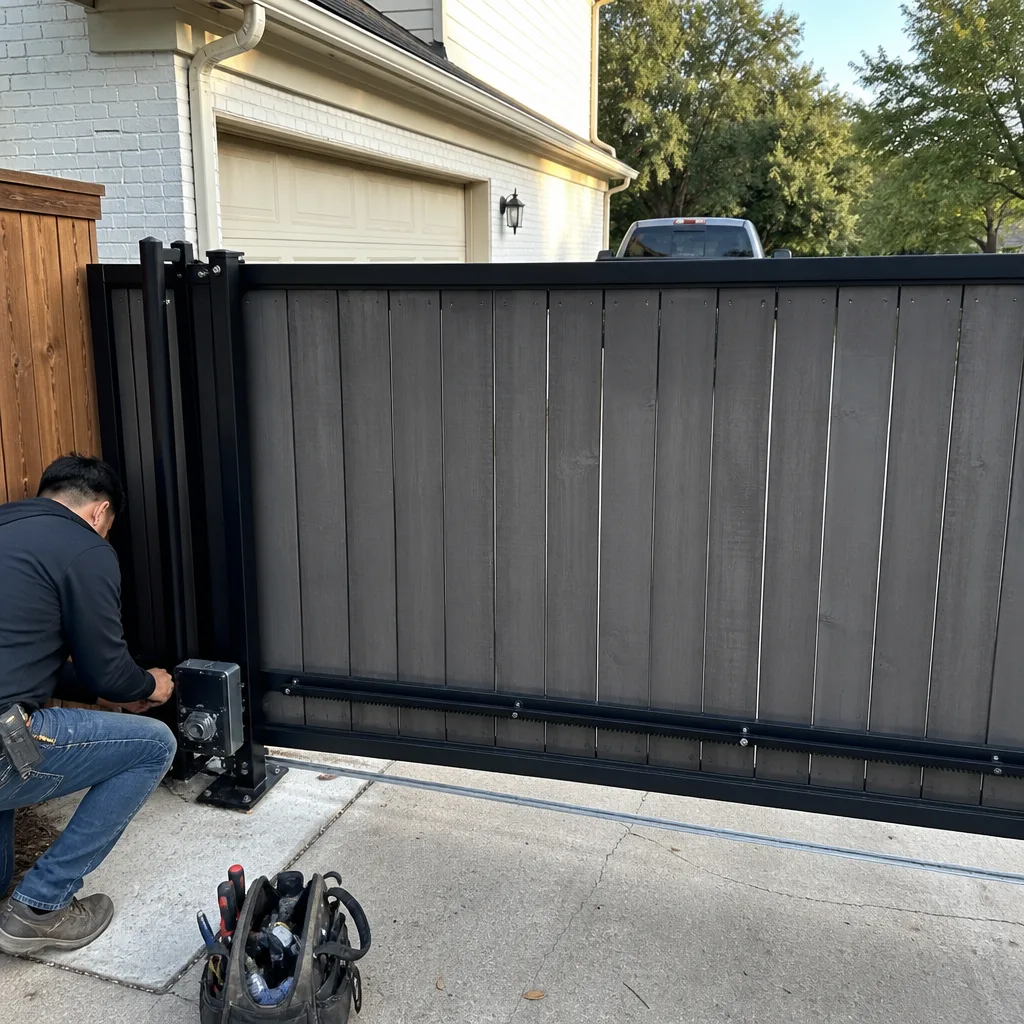 After
After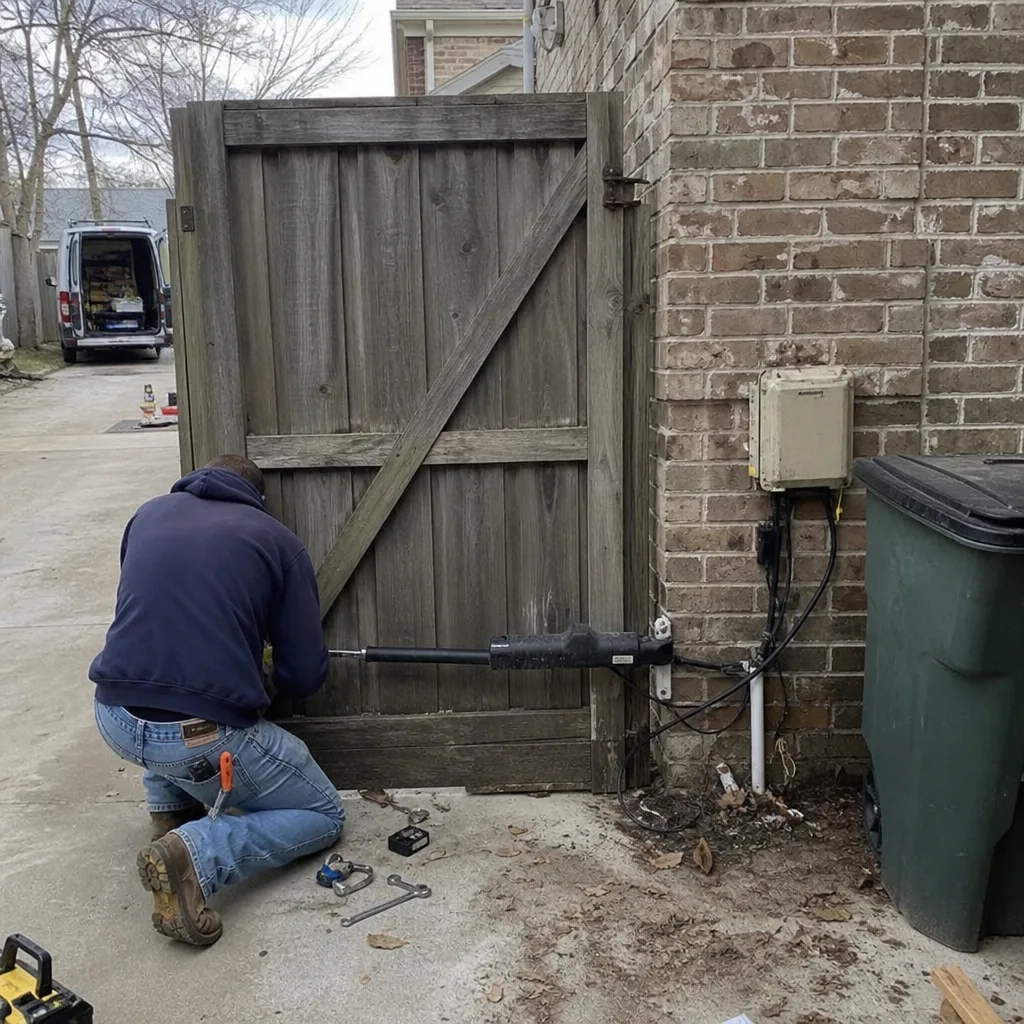 Before
 After
AfterFAAC Gate Motor Replacement: The Plano Owner’s Guide
A FAAC gate motor replacement in Plano typically runs between $1,100 and $2,600 installed, depending on the model line and whether the control board can be reused. We stock FAAC-compatible motors on the truck and can usually complete the swap same-day when the part matches what’s on the property. Most Plano homeowners discover the failure the same way: the gate starts moving slower, then stutters, then sits dead with a faint hum coming from the housing.
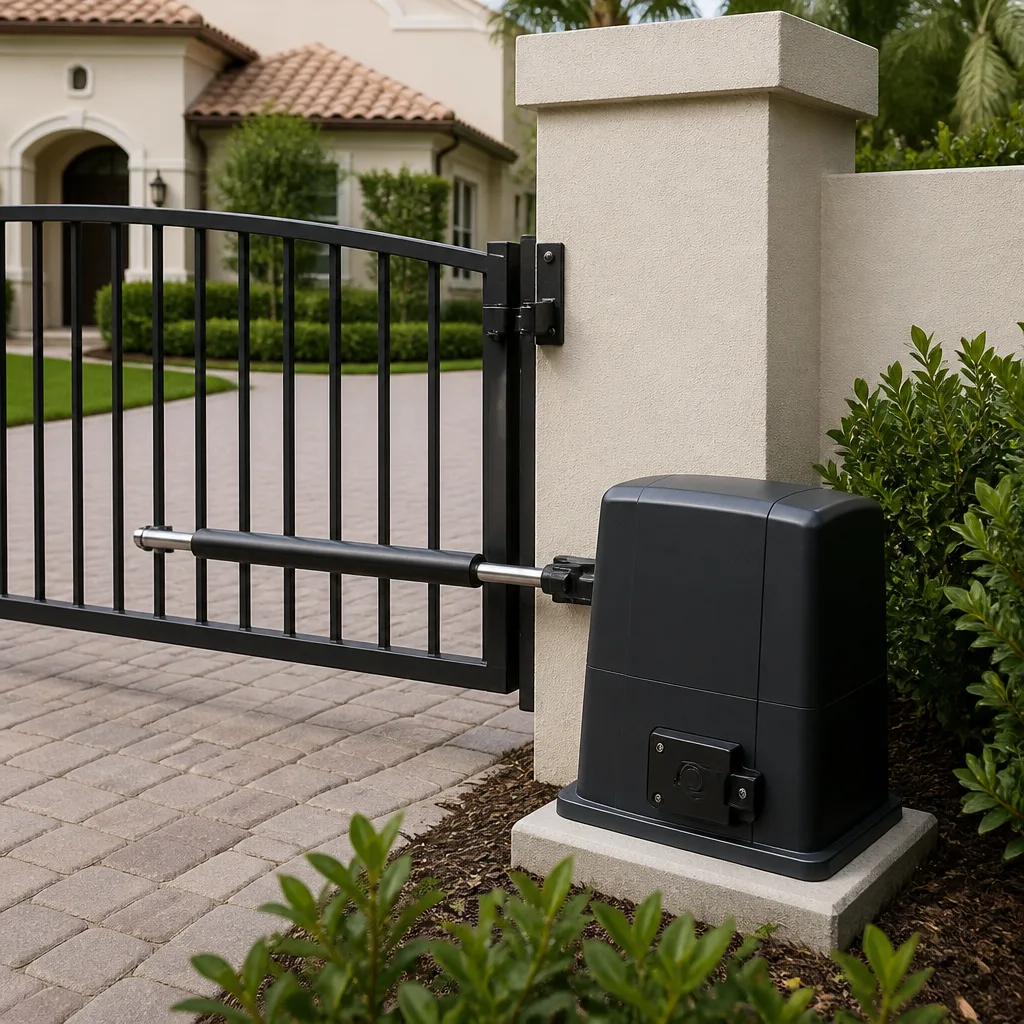
The first thing we tell every FAAC owner is to write down the model number before doing anything else. It’s stamped on the motor housing, usually on a silver label near the release handle. That number tells us which board revision, which capacitor, and which arm geometry we’re dealing with – and it prevents the expensive mistake of ordering a part that bolts up but won’t communicate with the existing board. Adrian Vance has been sorting FAAC motor compatibility issues since 2014, and the model label is still step one on every call.
Here is what I found. Here is what it takes to fix it. Everything else is just paperwork.
Which FAAC Models This Applies To
FAAC has been building gate operators since the 1960s, and their residential line in Plano splits into a few distinct families: the 400 series (swing gates), the 740/750 series (slide gates), and the newer S418 and S450H models that replaced them. The hydraulic 400 and 415 operators are still common on older Plano properties near established neighborhoods like Willow Bend and Russell Creek, while the electromechanical 390 and 412 show up on homes built in the last decade.
The compatibility gotcha with FAAC is the capacitor and board pairing. A 400-series motor runs on a specific capacitor value that changed between board revisions. If the motor says “FAAC 400” but the board inside is a 455D revision, a generic 400 replacement won’t always spin at the right torque. We match by both the motor label and the board revision, not just the series number. That’s the difference between a motor that works and one that trips the thermal overload every afternoon when the Texas sun has been on the housing for five hours.
On the aftermarket question: FAAC OEM parts are solid, but they’re priced accordingly. For the 400 series specifically, a quality aftermarket motor from a supplier like All-O-Matic or a reconditioned OEM unit can save $300 to $500 and carry the same one-year workmanship coverage from us. We don’t stock cheap offshore equivalents for FAAC because the arm geometry tolerances aren’t there, and a sloppy arm mount is how you end up replacing the same part twice. We’ll show you both options and let you pick.
Signs Your FAAC Gate Motor Replacement Is Failing
- The gate hums but doesn’t move. That’s the capacitor failing to give the motor its starting jolt. FAAC motors are capacitor-start, so a dead capacitor means full voltage sits at the motor with no rotation. It’s repairable if caught early, but a motor that’s been humming for weeks has usually cooked a winding by the time we open it up.
- The gate opens slower in cold weather. FAAC hydraulic operators use oil that thickens when the temperature drops. In Plano, our winter swings aren’t severe, but mornings in the 30s will slow a 400-series noticeably if the oil has never been changed. It’s a maintenance flag, but it can also point to a motor that’s losing torque and compensating with heat.
- The motor trips the breaker or the overload light after every cycle. That’s the windings pulling more current than the board is rated to feed. On a FAAC system, repeated overload trips usually mean the motor is end-of-life or the arm geometry has shifted and is binding. We check the arm first, because a binding arm will kill a new motor in six months.
- You can hear the relay click but the gate stays put. The board is sending the signal, so the failure is downstream: the motor, the capacitor, or the wiring between them. On older FAAC 455D boards, this is also the classic symptom of a burned relay contact, so we test before we condemn the motor.
- The gate arm moves a few inches and stops, then reverses. That’s the obstacle-detection circuit reading resistance from a dying motor as an obstruction. The board thinks something is in the gate’s path. It’s a false reading, but it follows the motor failure almost every time.
BeforeAfterReplacement Cost & What’s Included
In Plano, a FAAC swing-gate motor replacement runs $1,100 to $2,100 installed for the 390/412 line, and $1,600 to $2,600 for the hydraulic 400 series. Slide-gate motors run on the higher end of that range because the gearbox and chain tension work is more involved. The spread depends on whether we’re reusing the existing board and capacitor, whether the arm bracket is intact, and whether the gate itself needs any adjustment to move freely after the swap.
What’s included in our price: the motor or motor assembly, the labor to remove and install, fresh arm geometry measurements, limit-switch calibration, and a full function test. You also get the written price before any work starts, and a documented photo record when we’re done – what was found, what was set, what was installed. We don’t do verbal estimates and we don’t “discover” charges at the end. Under the Haven Standard, the price you approve is the price you pay.
The work is covered by our 365-Day Done Right Promise. If the motor or our installation isn’t right within a year, we make it right at no charge. No argument, no fee, no expiration dance.
DIY or Call Us?
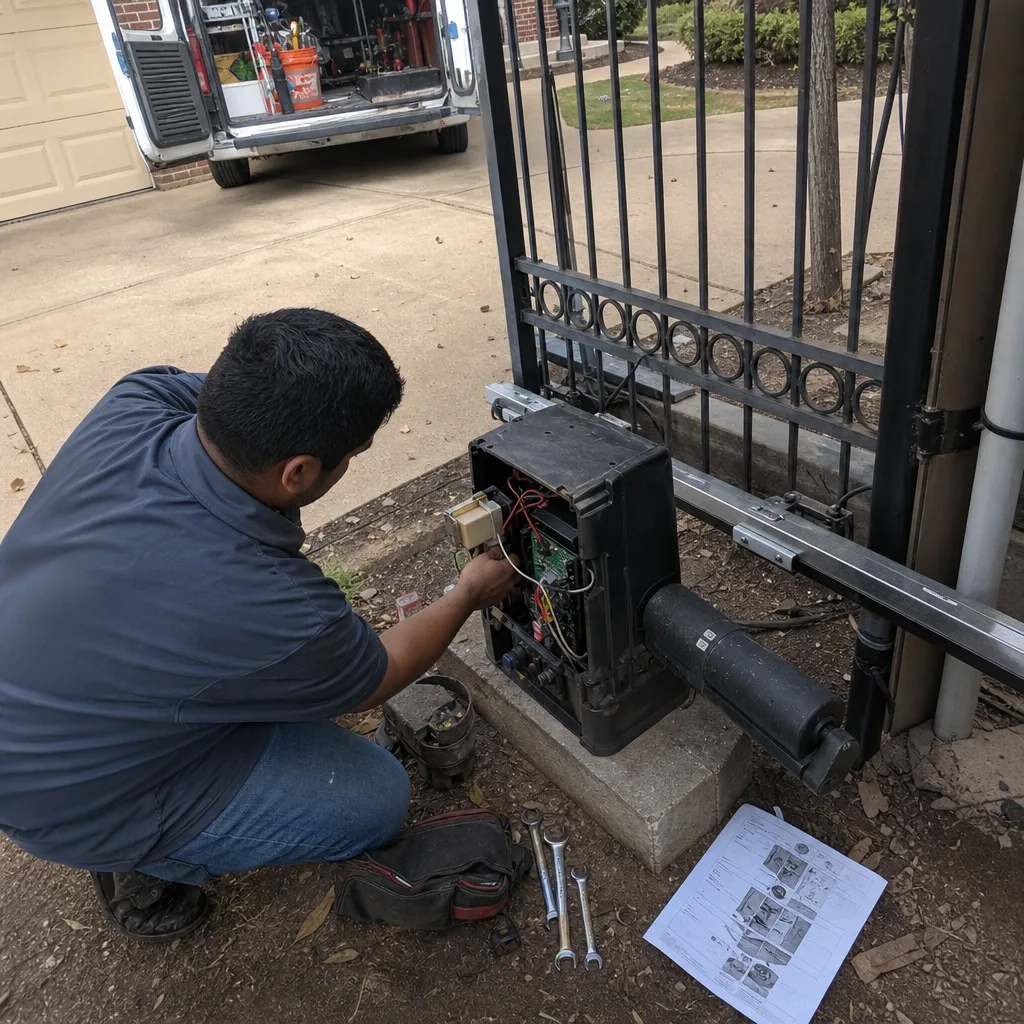
There’s a legitimate DIY check here, and it’s the capacitor. If your FAAC gate hums but doesn’t move, and you’re comfortable with a multimeter, you can test the capacitor for continuity and see if it’s swollen. It’s a $30 to $80 part. But the motor itself is a different story. A FAAC motor swap means working around high-tension springs on a swing gate and live 120-volt or 240-volt connections inside the housing. It also means getting the arm geometry right so the gate doesn’t bind and cook the new motor.
We’ve repaired enough DIY FAAC attempts in Plano to know the pattern: the customer replaces the motor, the gate works for three weeks, then it starts tripping the overload because the arm wasn’t set to the right travel angle. We reset the geometry and photograph the new settings. If you’re not sure, call (972) 236-7089 and we’ll come look. The estimate is free and written, and you don’t have to commit to anything.
FAQs
In Texas heat, expect 7 to 10 years from a FAAC motor with regular capacitor maintenance, and closer to 6 if the gate has never been serviced. The heat doesn’t wear out the motor directly; it degrades the capacitor and the board, which then makes the motor work harder and fail sooner. Call (972) 236-7089 if yours is near that range and you want an inspection before it fails on the one morning you can’t be late.
Yes, in roughly a third of the cases we see. A failed capacitor, a burned relay, or a misaligned arm can all be fixed without pulling the motor. We test everything before we quote a replacement, and you get that finding in writing. If it can be repaired, we’ll tell you and quote the repair.
Most residential FAAC motor swaps take 2 to 4 hours on site, including calibration and testing. Same-day service is available for most operators we stock. Call (972) 236-7089 and we can tell you over the phone whether the part is on our truck and when we can be there.
We carry the most common FAAC replacement motors, capacitors, and board components on our service vehicles. We also stock parts for LiftMaster, Mighty Mule, and Ghost Controls for properties with mixed or older systems. If we don’t have your exact model, we can usually have it in 1 to 3 business days.
Written by Adrian Vance, Owner, Vance Gate Repair Plano at Vance Gate Repair Plano, serving Plano and nearby areas.