
Last updated September 20, 2026
Free on-site gate assessment - hinges, posts, and your LiftMaster or Nice gate operator checked before anything is quoted
The assessment is free and the quote is the invoice.

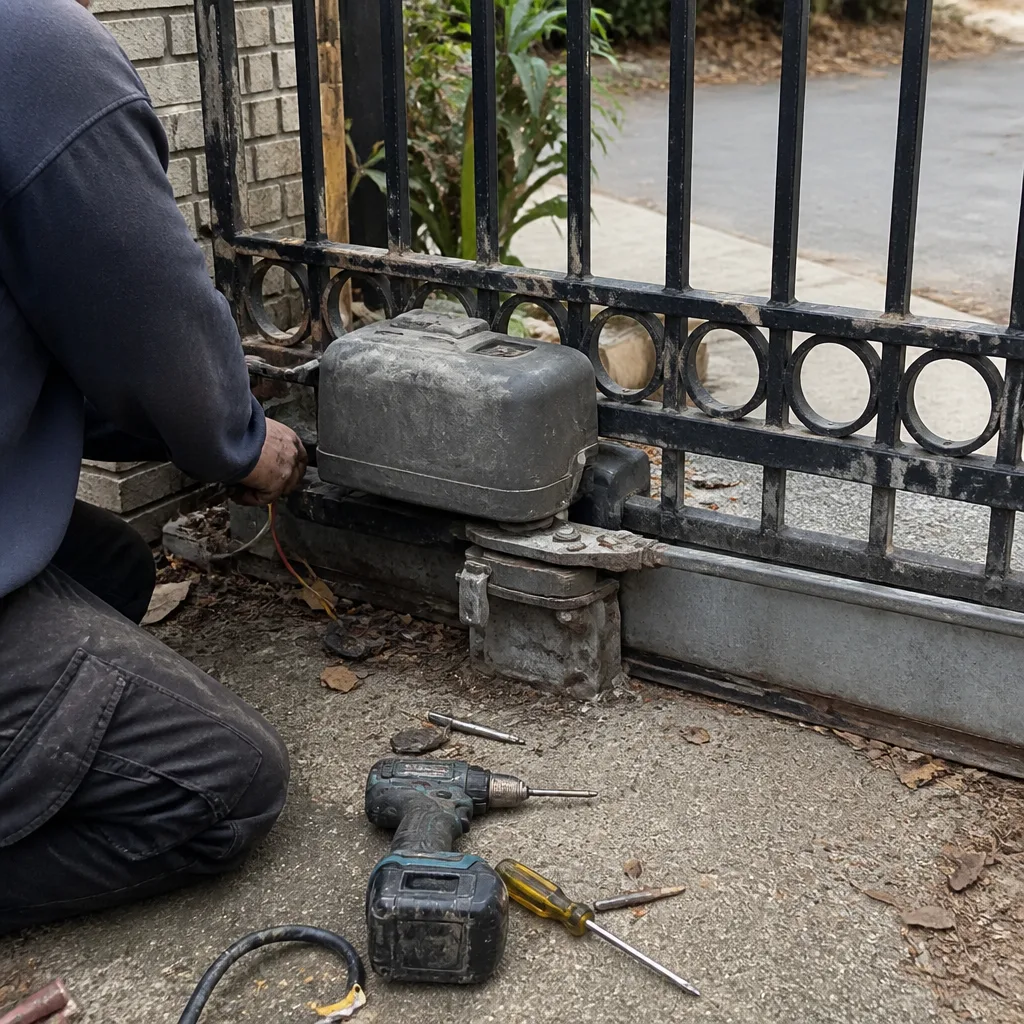 Before
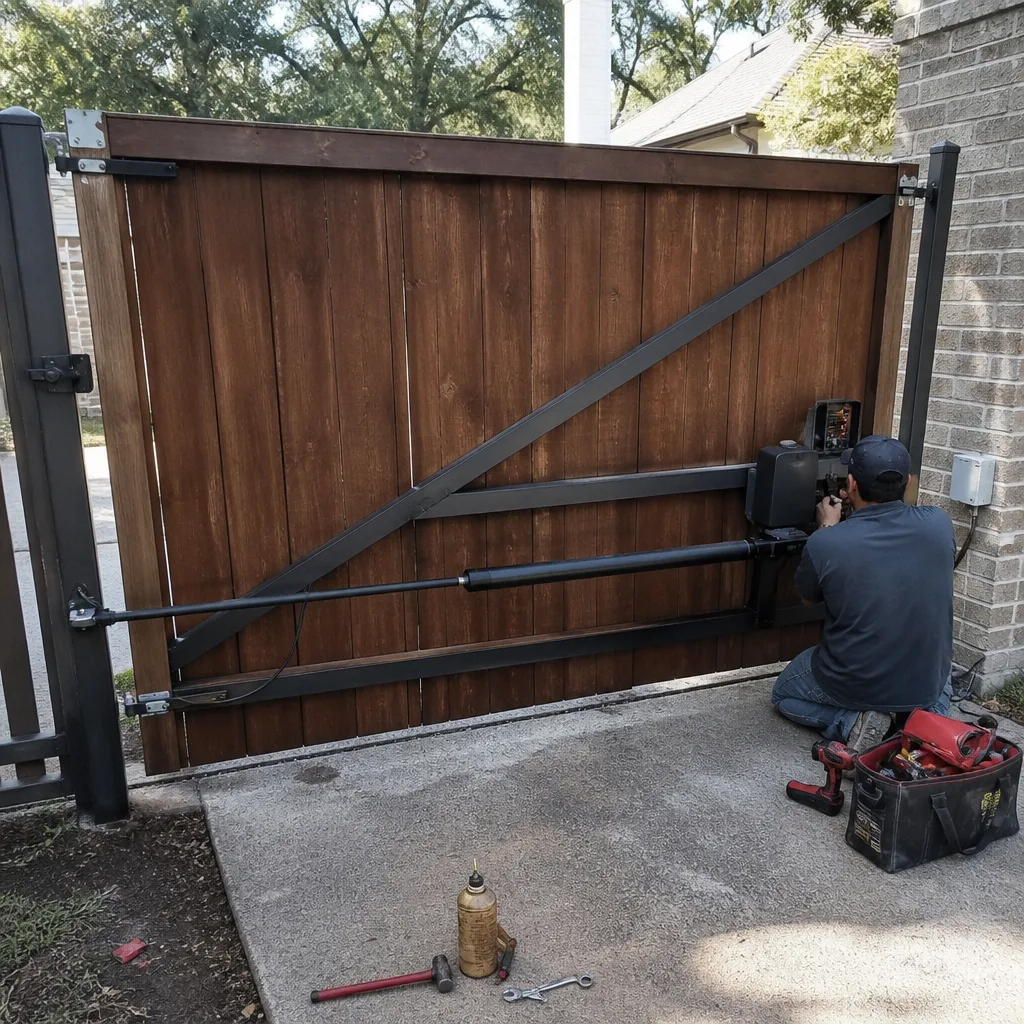 After
After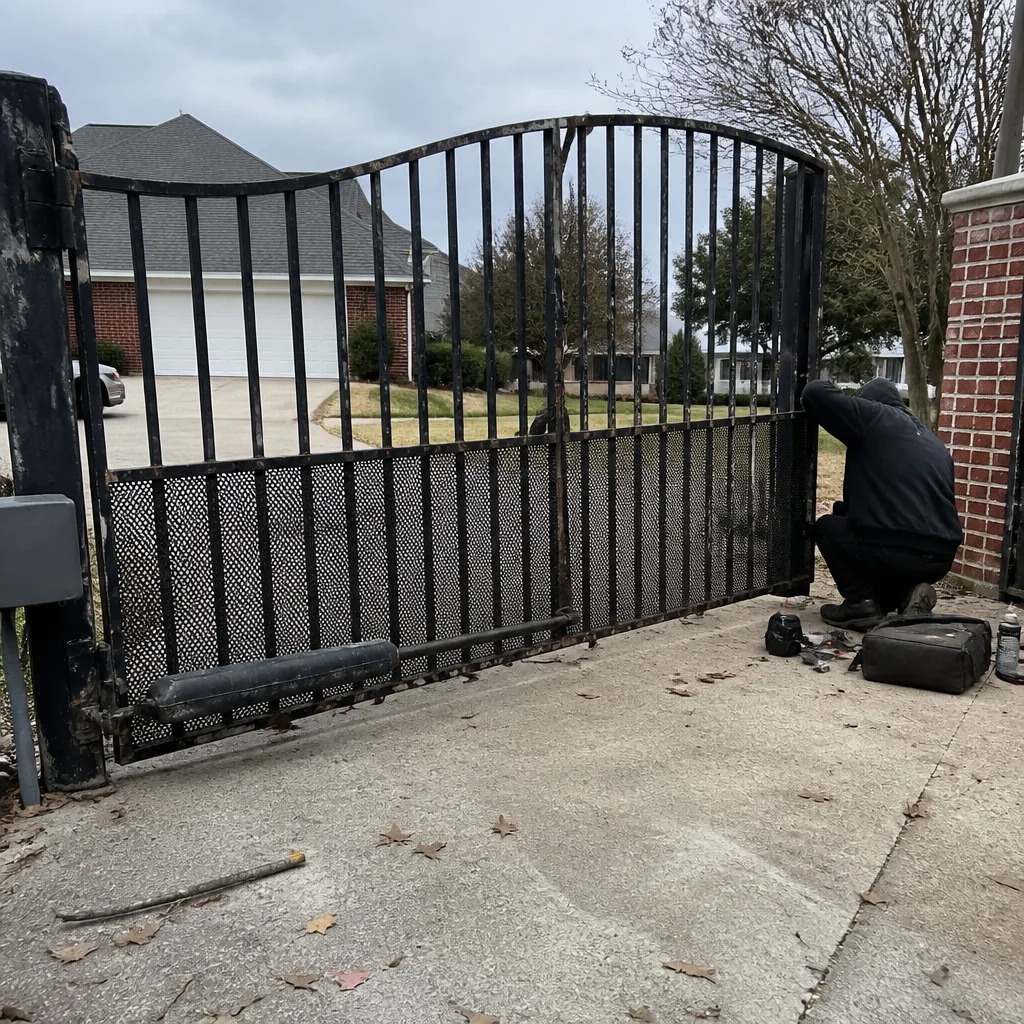 Before
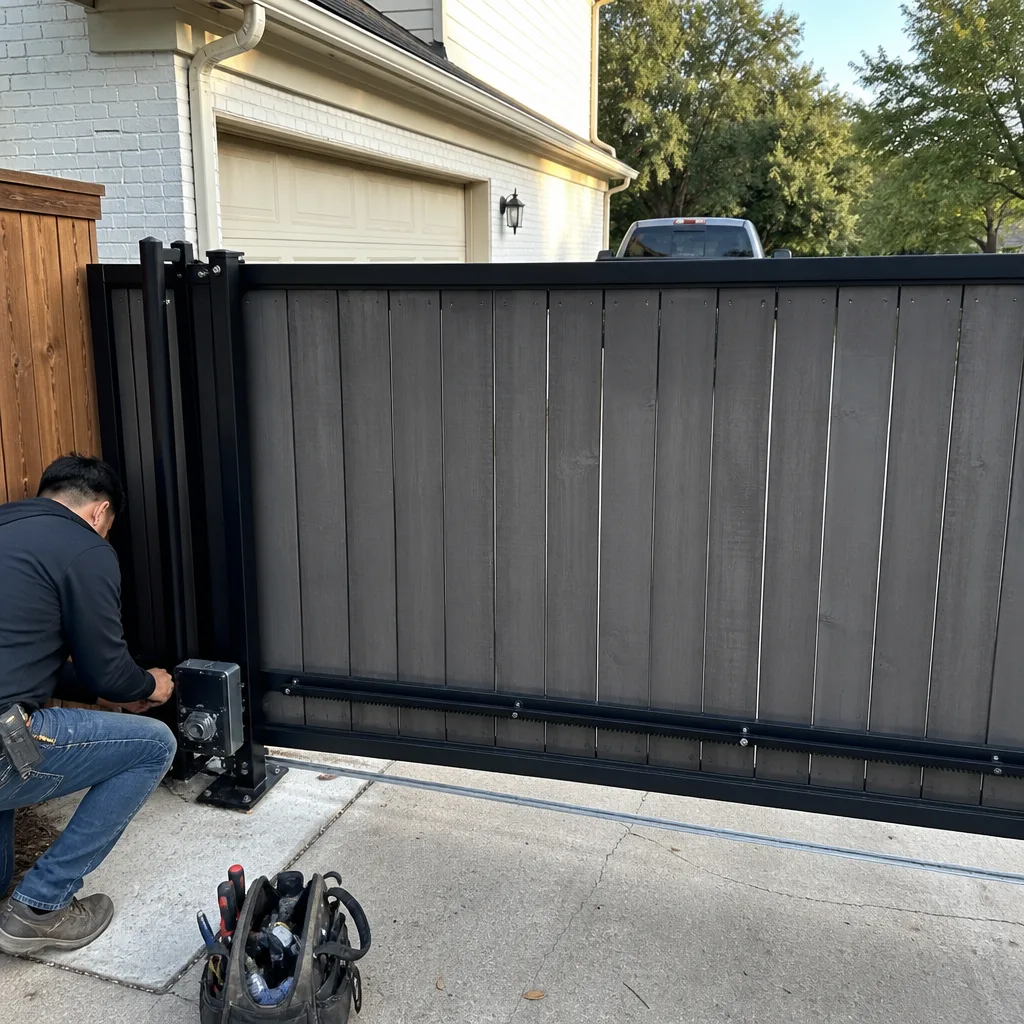 After
After Before
 After
AfterGate Repair Permits, Codes & Inspections in TX: What You Need to Know
Here’s what nobody tells you when your automatic gate stops closing: the mechanical repair is rarely the expensive part. The expensive part is finding out three years later, at closing, that the operator you replaced needed a permit. We know because we’ve watched it happen in Plano more than once. A homeowner swapped out a failed gate operator one weekend, sold the house two years later, and the buyer’s inspector flagged the unpermitted low-voltage electrical work. The closing was delayed nine days, and the seller paid several hundred dollars for an after-the-fact inspection, documentation, and a retrospective penalty. The original permit would have cost $75. This guide maps exactly where that line falls in Plano and Collin County, so you know before you touch a wrench which side of it you’re standing on. For related reading, see our Gate Repair Warning Signs: A Plano Homeowner’s Reference Guide.
Quick Answer
In Plano, Texas, most purely mechanical gate repairs (hinges, wheels, track adjustment, operator replacement using existing wiring) do not require a building permit. Work that touches new low-voltage wiring, a new post foundation or concrete embed, or any modification to a fire-access or emergency-egress gate does trigger Plano’s permit process. The state low-voltage electrical license requirement (Texas Occupations Code, Chapter 1305) applies to any technician who installs or alters gate operator wiring, regardless of whether a city permit is pulled. If you’re replacing a gate operator in Plano, the line between “handyman work” and “you need a licensed low-voltage contractor” is drawn by the wiring.
Table of Contents
- When a Plano Building Permit Is Required for Gate Work
- When No Permit Is Required
- Texas Low-Voltage Electrical Code (Chapter 1305) and Gate Operators
- Fire-Access Gate Compliance in Plano and Collin County
- Pulling a Permit Yourself vs. Hiring a Licensed Contractor
- After-the-Fact Permits: What They Cost and How They Work
- What the Plano Gate Inspection Actually Covers
- Common Mistakes to Avoid
- When to Call a Professional
- Frequently Asked Questions
BeforeAfterWhen a Plano Building Permit Is Required for Gate Work
Plano’s permit trigger for gate work is more specific than most people assume. The city does not require a permit simply because a gate is on your property. The permit requirement attaches to the scope of the work, not the gate itself. Here’s where the line actually falls.
A Plano building permit is required when the job includes any of the following:
- New post foundations or concrete work. If a post has to come out and a new footing poured, or if you’re installing a gate where one never existed, the structural alteration triggers a permit. In Plano’s expansive clay soil, footings are a structural concern, and the city wants them inspected.
- New low-voltage electrical runs. Running new wiring from the house to a gate operator, or from a transformer to an operator, is covered under the city’s electrical permit scope. Even though it’s low voltage, Plano’s electrical inspectors treat new circuits as electrical work.
- Modification to a fire-access gate. If the gate serves a community where the Plano Fire Department has designated it as a fire apparatus access point, any modification to the operator, the latching mechanism, or the emergency release requires a permit and a fire inspection.
- Gate installation as part of new construction. Any gate installed as part of a new build or major remodel falls under the umbrella permit for the project.
In our experience in Plano neighborhoods like Willow Bend, Whiffletree, and Kings Ridge, the most common permit surprise is the “simple operator swap” that turns into a new-conduit job. If the existing wiring is damaged or undersized, and the technician has to pull new wire, the scope just crossed into permitted territory.
When No Permit Is Required
Here’s the good news: most day-to-day gate repairs in Plano are permit-free. The city explicitly treats routine maintenance and like-for-like replacement as repair work, not construction. That includes:
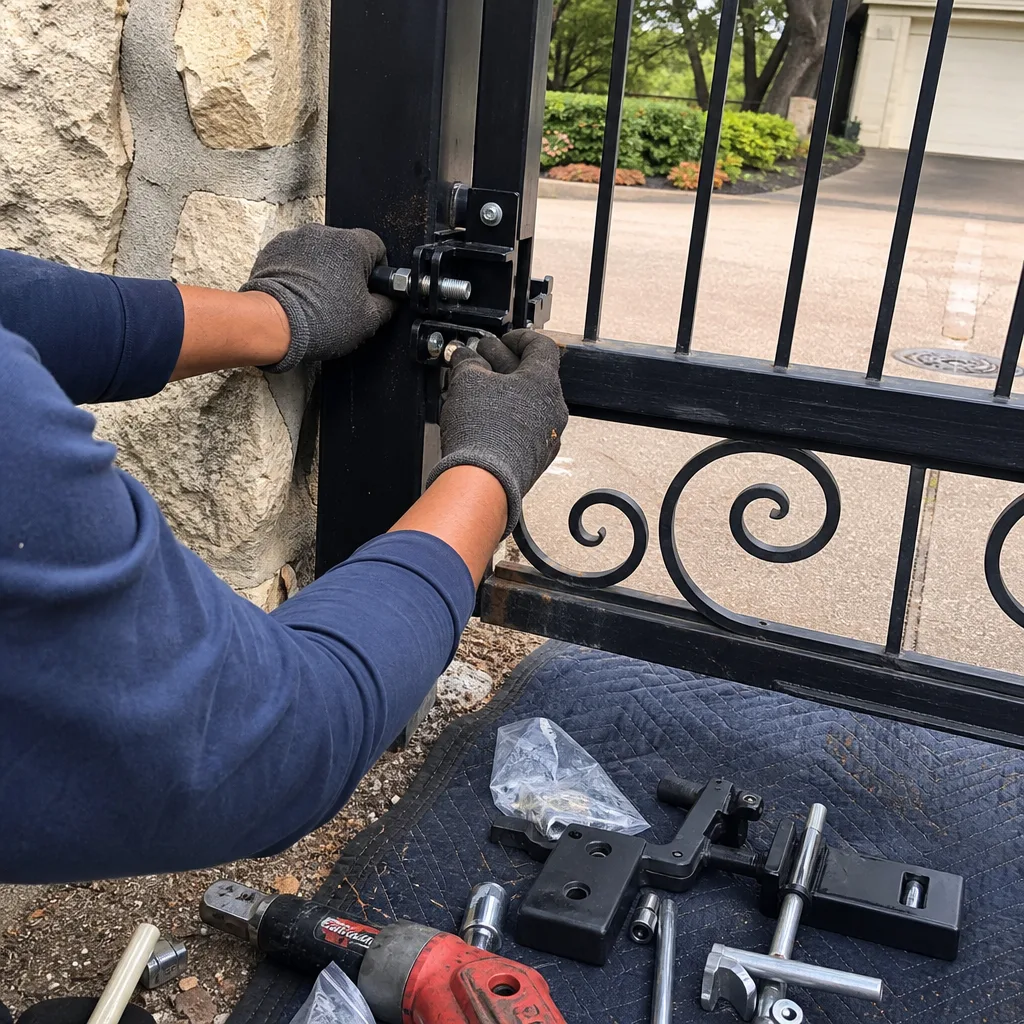
- Replacing worn hinges, rollers, or track hardware
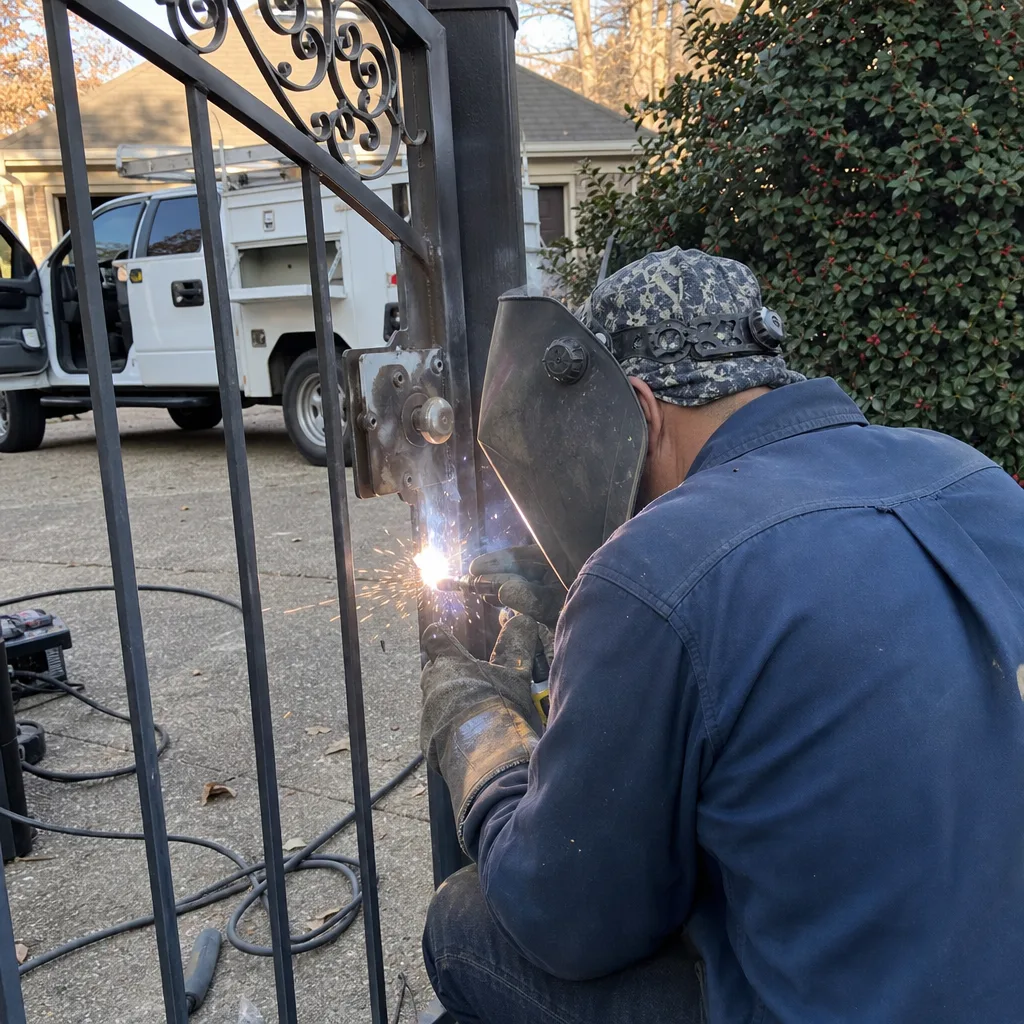
- Welding repair on an existing gate frame (same footprint, no foundation change)
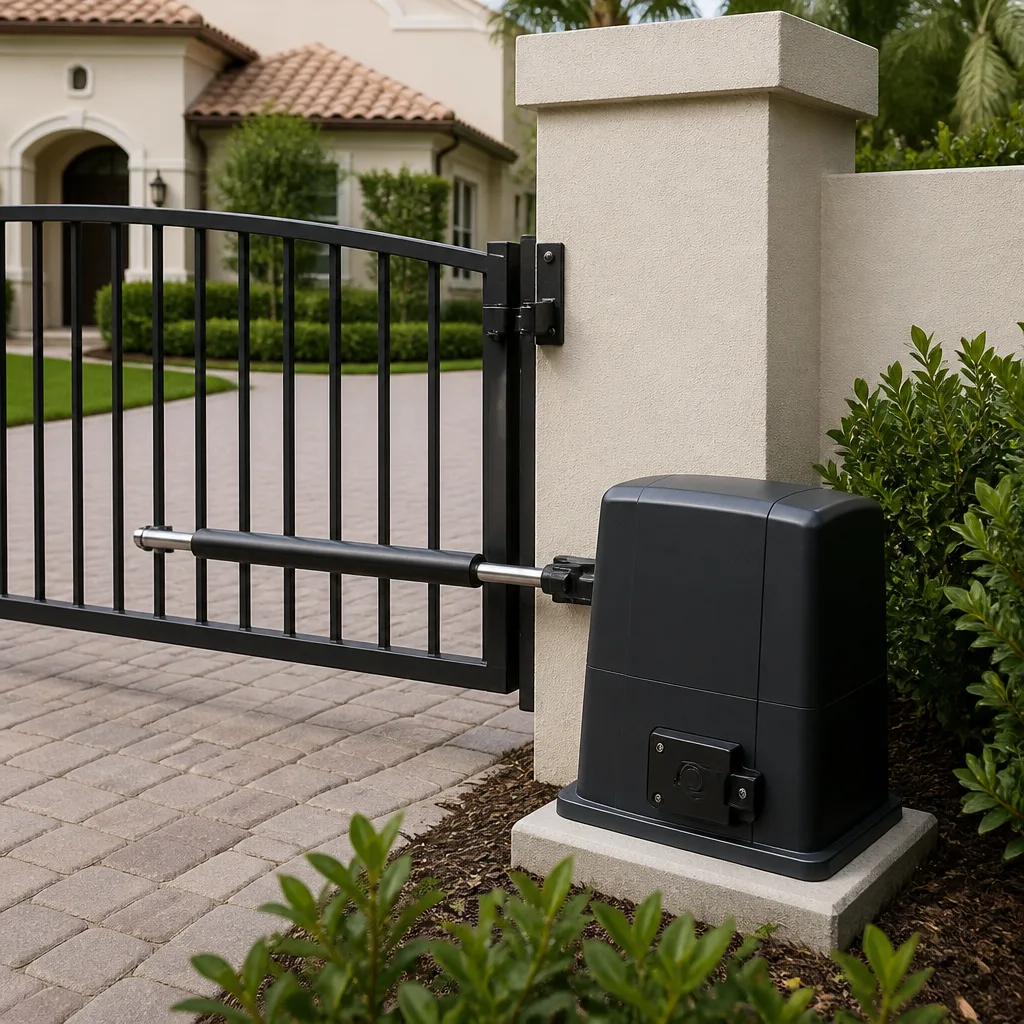
- Replacing a gate operator with a like-for-like unit using the existing wiring and mounting
- Adjusting limit switches, travel, or closing force
- Replacing a photo-eye or safety edge sensor at the existing location
- Lubrication, alignment, and seasonal maintenance
The key phrase in Plano’s guidance is “like-for-like.” If the work restores the gate to its original function without altering the electrical circuit or the structural footprint, no permit is needed. That’s why a gate motor replacement that reuses the existing wiring and mounting bracket often requires nothing more than a licensed technician and a receipt. What it does require, however, is the person doing the electrical portion to be properly licensed under Texas state law. A permit exemption is not a licensing exemption. The two questions are separate.
Texas Low-Voltage Electrical Code (Chapter 1305) and Gate Operators
Texas regulates low-voltage electrical work at the state level under Chapter 1305 of the Texas Occupations Code. Gate operators, photo-eyes, keypads, card readers, and loop detectors all fall under this statute. The moment a technician touches the low-voltage wiring connected to any of those devices, state law requires that technician to hold the appropriate license from the Texas Department of Licensing and Regulation (TDLR).
Here’s what that means in plain language for a Plano homeowner:
- If a gate company sends out an unlicensed handyman to wire a new LiftMaster operator, the homeowner has not broken the law, but the work is legally noncompliant and can be flagged during a future home inspection.
- A licensed electrical contractor or a licensed low-voltage contractor (many gate companies carry one or both) can legally perform the wiring and pull the corresponding permit if one is needed.
- Plano enforces this at the inspection and permitting stage. If work was done by an unlicensed individual and a permit was required, the after-the-fact permit process gets more complicated.
The wiring on a typical residential gate operator runs at 12 or 24 volts DC after the transformer. That doesn’t sound dangerous, and it isn’t from a shock standpoint. But the statute doesn’t care about safety from shock. It cares about the integrity of the low-voltage electrical system, and gate operators are explicitly named in the covered device list. We’ve had Plano homeowners tell us a previous company said a permit wasn’t needed because it was “just 12 volts.” That’s how you end up with the closing-day surprise from the introduction.
Fire-Access Gate Compliance in Plano and Collin County
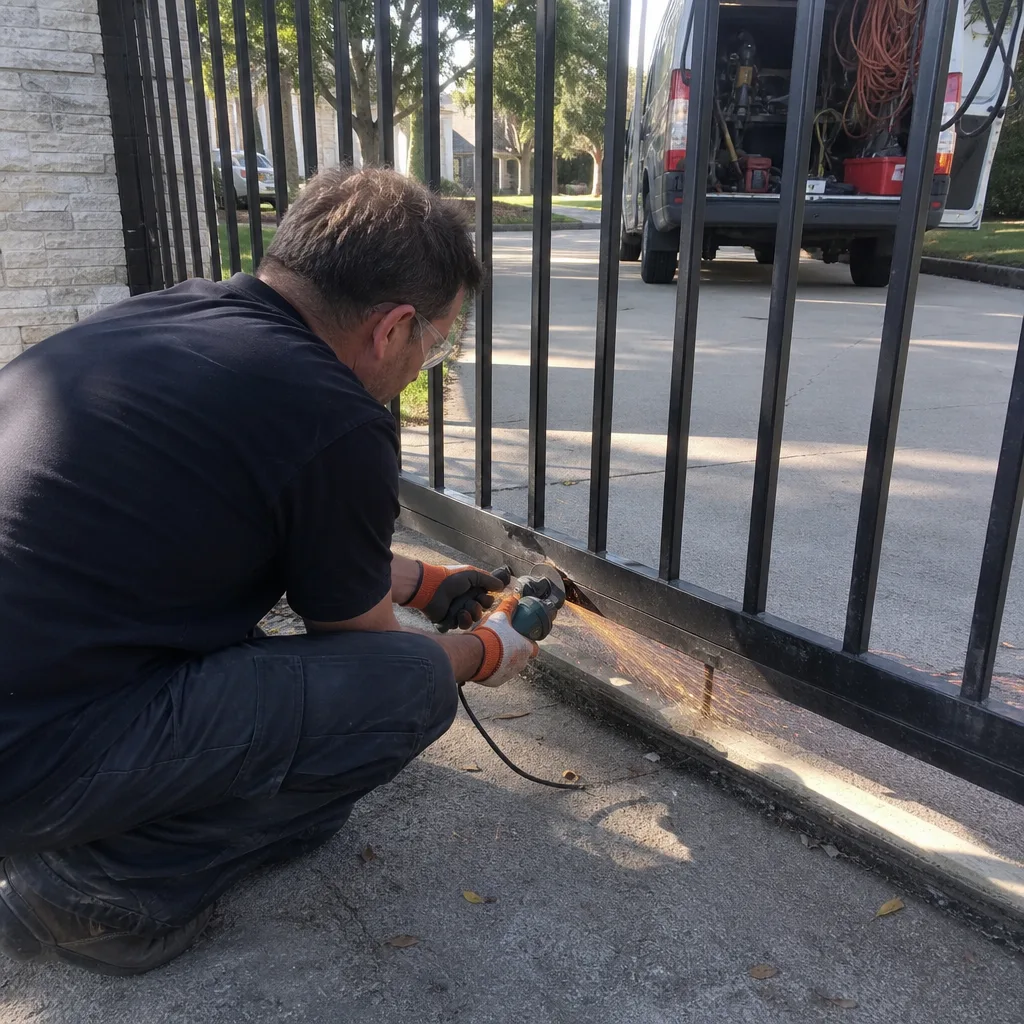
This is the section most gate guides never mention, and it’s the one that matters most in Plano’s HOA-heavy landscape. Plano Fire-Rescue and the Collin County fire marshal both have the authority to enforce the International Fire Code (with local amendments) on gates that sit on fire department access roads. If your gate is the main entry point for apparatus to reach a group of homes, the compliance bar is higher.
A fire-access gate in Plano typically has to meet these requirements:
- Emergency release mechanism. The gate must have a written, visible protocol for manual operation during a power failure or fire alarm. In most HOA communities, this means a Knox key switch or a siren-activated release.
- Minimum clear opening width for fire apparatus, usually 20 feet for aerial ladder access or 12 feet for single-lane apparatus access, depending on the fire department’s access plan for the site.
- No locking mechanism that cannot be overridden. A padlocked chain, even a nice one, fails inspection. The gate must open for the fire department without a key holder present.
- Annual or biennial testing. Some Plano HOAs are required to have their fire-access gates tested and documented on a schedule. If the gate fails, the repair itself then triggers a permit.
What we’ve seen in Plano communities like Deerfield and Forest Creek is that a gate operator failure on a fire-access gate becomes a compliance emergency, not just a convenience problem. If the gate won’t open for the fire department, the HOA has a liability problem. Those repairs usually require a permit and a follow-up fire inspection, even if the mechanical scope would be permit-free on a private driveway gate. If your gate serves more than one home and the fire department has ever tested it, assume that any operator modification is a permit-and-inspection job.
Pulling a Permit Yourself vs. Hiring a Licensed Contractor
Texas law allows a homeowner to pull an electrical permit for work on their own primary residence. Plano honors that state rule. But there’s a real-world difference between being allowed to do it and it being a good idea. Here’s the step-by-step reality of the homeowner-permit path for gate work in Plano:
- You determine the scope falls into a permit-required category (new low-voltage run, new post foundation, fire-access modification).
- You apply through the Plano Building Inspections department, either in person or through the city’s online permitting portal.
- You pay the permit fee. For most gate-electrical scopes, this runs between $50 and $150 in Plano, depending on the valuation you declare.
- You perform the work yourself, following the current National Electrical Code and Plano’s local amendments.
- You schedule an inspection. The inspector comes out, verifies the wiring method, grounding, and equipment, and signs off or fails it.
- If it fails, you correct the deficiencies and schedule a reinspection. Plano charges for reinspections.
The homeowner path is legal and can work. But when it fails, it usually fails on grounding or wiring-method details, and the homeowner pays for a reinspection and loses a week. Most of the time, it’s faster and cheaper to have a licensed low-voltage contractor handle the wiring and the permit at the same time. A contractor pulls the permit under their license, does the work to code, and stands in front of the inspector. The homeowner gets the signed-off permit card at the end. That’s how most Plano gate installation jobs with new wiring are structured.
After-the-Fact Permits: What They Cost and How They Work
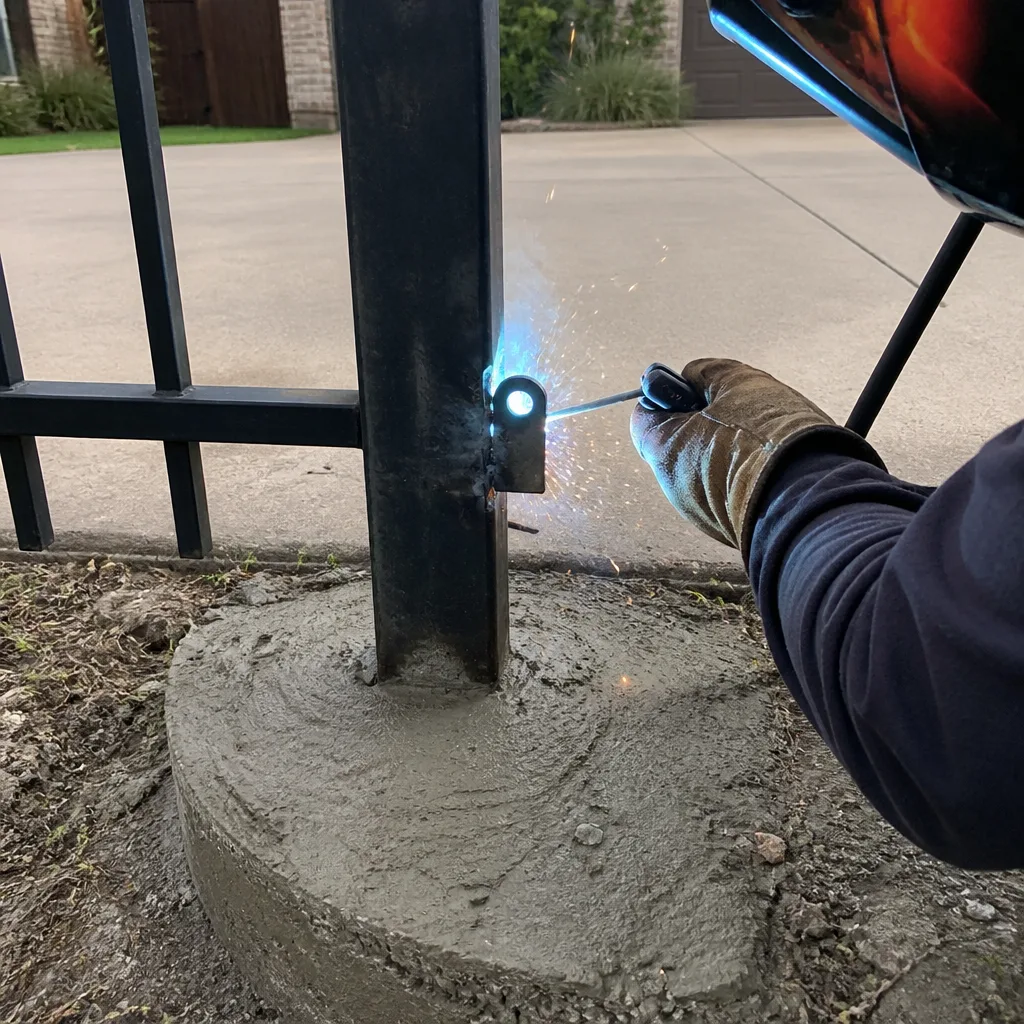
If you discover that previous gate work needed a permit and didn’t get one, you’re not stuck. Plano, like most Texas cities, has an after-the-fact permit process. It’s designed to bring noncompliant work into compliance, not to punish homeowners. But it costs more than doing it right the first time, and it takes longer.
Here’s how the after-the-fact path looks in Plano:
- You or a licensed contractor apply for the permit, disclosing that the work is already completed.
- Plano charges the standard permit fee plus an after-the-fact fee. For gate electrical work, the total is typically $150 to $300, versus roughly $75 to $150 for the original permit.
- The city drops the work into an inspection queue. The inspector comes out and reviews the completed installation, checking the same things they would have checked during construction.
- If the work passes, you get a closed permit, which is the document that satisfies a buyer’s inspector.
- If the work fails, the deficiencies have to be corrected, sometimes by opening walls or digging up conduit, and a reinspection fee applies.
We’ve had Plano homeowners bring us in specifically to take over an after-the-fact scenario. The most common failure point on older after-the-fact gate electrical is missing grounding on the metal operator enclosure. The fix is often quick, but the inspection delay can stretch to ten days or more during Plano’s busy building season. That’s the nine-day closing delay from the opening story. A $75 permit in year one beats a $300 after-the-fact permit plus a $100 reinspection plus a delayed closing in year three.
What the Plano Gate Inspection Actually Covers
If your gate work does go through the Plano permit process, here’s what the inspector is actually looking at. This is the same inspection scope whether the permit was pulled before the work or after the fact.
The typical Plano inspection for gate electrical and structural work covers:
- Wiring method and installation. Conduit type, burial depth for underground runs (typically 18 inches for low-voltage direct burial, 6 inches if in rigid metallic conduit), and proper transitions from underground to the operator enclosure.
- Grounding and bonding. Metal enclosures on gate operators must be bonded to a grounding conductor. Missing grounds are the single most common failure point.
- Transformer installation. The low-voltage transformer must be listed for the application and installed per the manufacturer’s instructions, with proper overcurrent protection on the line side.
- Safety device function. The photo-eye and edge sensors must be wired and positioned so the gate reverses on contact or beam break, tested live.
- Post foundation integrity. If a permit covered a new foundation, the inspector verifies depth and dimensions before concrete is poured (a pre-pour inspection) and the finished post after.
- Fire-access functionality. On fire-access gates, the manual emergency release must work without tools, and the locking system must not require a key holder on site.
None of this is exotic. It’s the same list a good gate technician checks on every install, which is why the permitting conversation at Vance Gate Repair Plano’s home base always starts with the same question: is this repair, or is this new work? Knowing the difference saves the customer time and keeps the work legal from day one.
What This Costs in Plano: Permit Fees and Labor Checkpoints
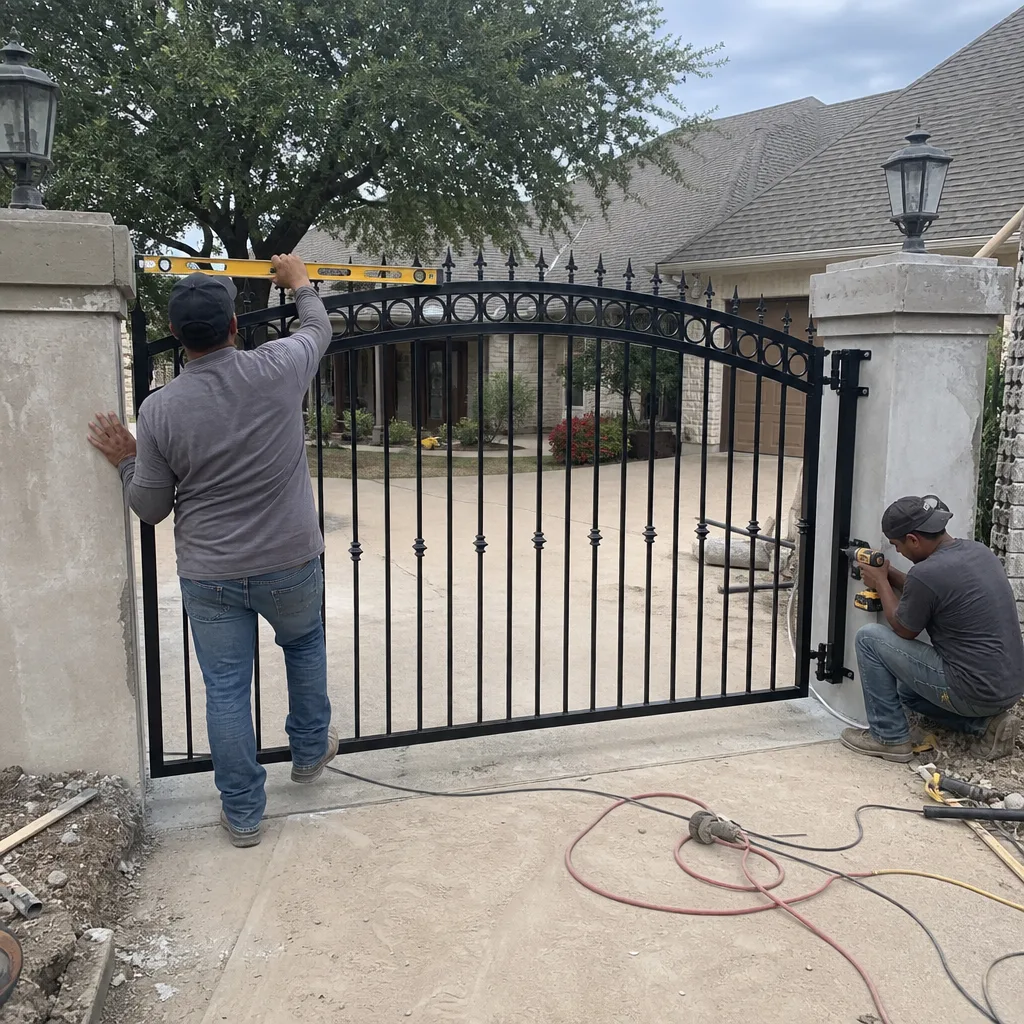
Since the permit question is ultimately a cost question, here’s a straight-line look at what the paperwork and inspection add to a typical Plano gate job.
| Item | Typical Plano Cost Range | Notes |
|---|---|---|
| Standard electrical permit (gate circuit) | $75 - $150 | Fee based on declared valuation |
| After-the-fact permit (same scope) | $150 - $300 | Includes after-the-fact surcharge |
| Reinspection fee | $50 - $100 | Charged if first inspection fails |
| Contractor permit pull service | $75 - $200 | Many gate and electrical contractors itemize this |
| Fire-access gate inspection (if required) | $100 - $250 | Set by Plano Fire-Rescue or third-party inspector |
These are the costs most Plano homeowners never see because their gate work stays on the repair side of the line. When we quote a gate repair in Plano that involves new wiring, the permit fee is a line item on the written price, not a surprise added at the end. That’s the way it should work.
Common Mistakes to Avoid
- Assuming all gate work is permit-free because it’s outdoors. An exterior gate operator with new wiring is treated the same by the Plano permit office as a new ceiling fan circuit. The location doesn’t matter; the circuit does.
- Letting a handyman with a truck replace a gate operator. If the person doing the wiring doesn’t hold a TDLR low-voltage license, the work is noncompliant in Texas, even if it works fine. Six months later, a home inspector can flag it.
- Ignoring the fire-access designation on the HOA gate. In many Plano HOAs, the front gate is a fire-access gate. Modifying the operator without the fire inspection attached is the fastest way to a violation notice from the fire marshal.
- Reusing old wire when the operator should get a new circuit. We see this all over Plano’s older neighborhoods. The new operator goes in on 30-year-old direct-burial wire, and the customer wonders why the gate faults on rainy days. If the wiring looks suspect, replacing it is the code-compliant move, and it changes the permit status of the job.
- Not keeping the permit closed out. An open permit on your property will absolutely come up at resale. Pulling the permit is step one; passing the final inspection and getting the closed permit card is the part that matters.
- Paying someone in cash for unpermitted new construction on gate posts. New footings in Plano’s clay soil need a pre-pour inspection. If that inspection didn’t happen, you may have to expose the footing for an after-the-fact review. That’s an expensive surprise.
When to Call a Professional
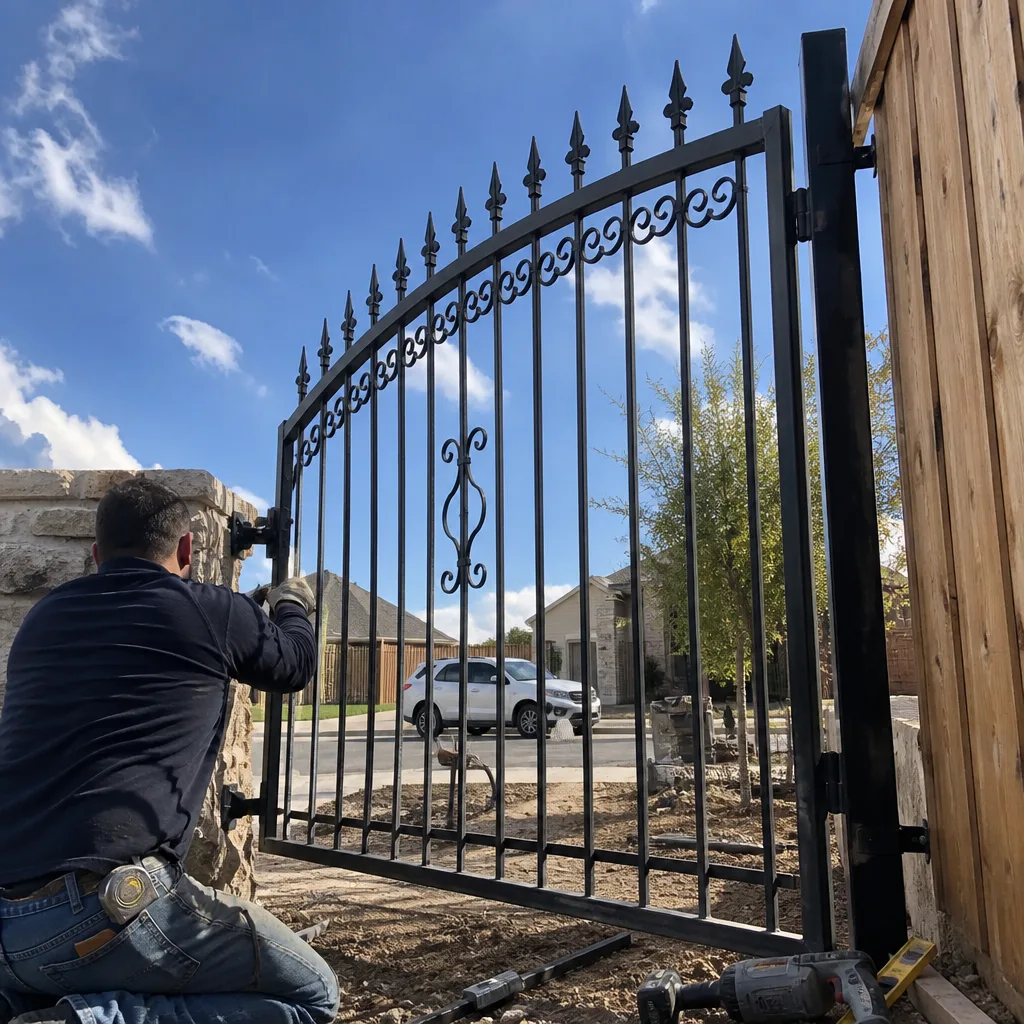
If your gate repair stays on the mechanical side (hinges, welds, track, like-for-like operator swap on good wiring), you may not need a permit, and you may not need a professional beyond the gate technician doing the work. But the moment the scope touches new wiring, a new foundation, or a fire-access gate, call someone licensed. The wiring license question is a state law question, not a preference question. And if you’re not sure whether your gate sits on the repair side or the permit side of the line, ask someone who does this daily in Plano. Vance Gate Repair Plano offers Gate Repair with free estimates in Plano, and the written price we hand you will flag any permitting requirement before work starts. Call (972) 236-7089 for a scope review.
Frequently Asked Questions
No permit is required in Plano if the replacement operator uses the existing mounting and the existing wiring, and the gate is not a designated fire-access gate. If new low-voltage wiring has to be run, the work falls under the state’s low-voltage electrical statute and typically requires a city electrical permit. When in doubt, a licensed technician can determine the scope in one visit and tell you whether a permit is required before any work starts. Call (972) 236-7089 for a free evaluation.
Yes. Texas allows a homeowner to pull an electrical permit for work on their own primary residence, and Plano honors that right. The homeowner assumes responsibility for the work meeting code and for passing the inspection. Most homeowners decide it’s faster to have a licensed contractor handle the permit and the work together. The permit fee is the same either way in Plano.
The buyer’s inspector can flag unpermitted electrical work, which delays closing until the work is brought into compliance through Plano’s after-the-fact permit process. That process includes an inspection, and if the work fails, corrections plus a reinspection fee. Total cost typically runs between $150 and $300 in Plano for gate electrical work, compared to about $75 for the original permit.
Yes. Gate operators, photo-eyes, keypads, card readers, and loop detectors are named devices under Chapter 1305 of the Texas Occupations Code. Any installation or alteration of the low-voltage wiring connected to those devices must be performed by a technician holding the appropriate TDLR license. A permit exemption in Plano does not remove the state licensing requirement.
Repair work restores the gate to its original function without changing the electrical circuit or structural footprint, and requires no permit. New work adds something that wasn’t there, like new wiring, a new post foundation, or a gate installed where none existed. Plano’s permit office draws the line at circuit and structural changes, not at the size of the bill.
Yes. If the gate serves as a fire department access point, any modification to the operator, emergency release, or locking mechanism requires a permit and typically a fire inspection. This is common in Plano HOA communities, and it’s a compliance requirement from Plano Fire-Rescue, not a city building-code convenience. If the fire department has ever tested your gate, treat the operator as permit-required. Call (972) 236-7089 if you need to determine whether your community gate falls into this category.
The Bottom Line
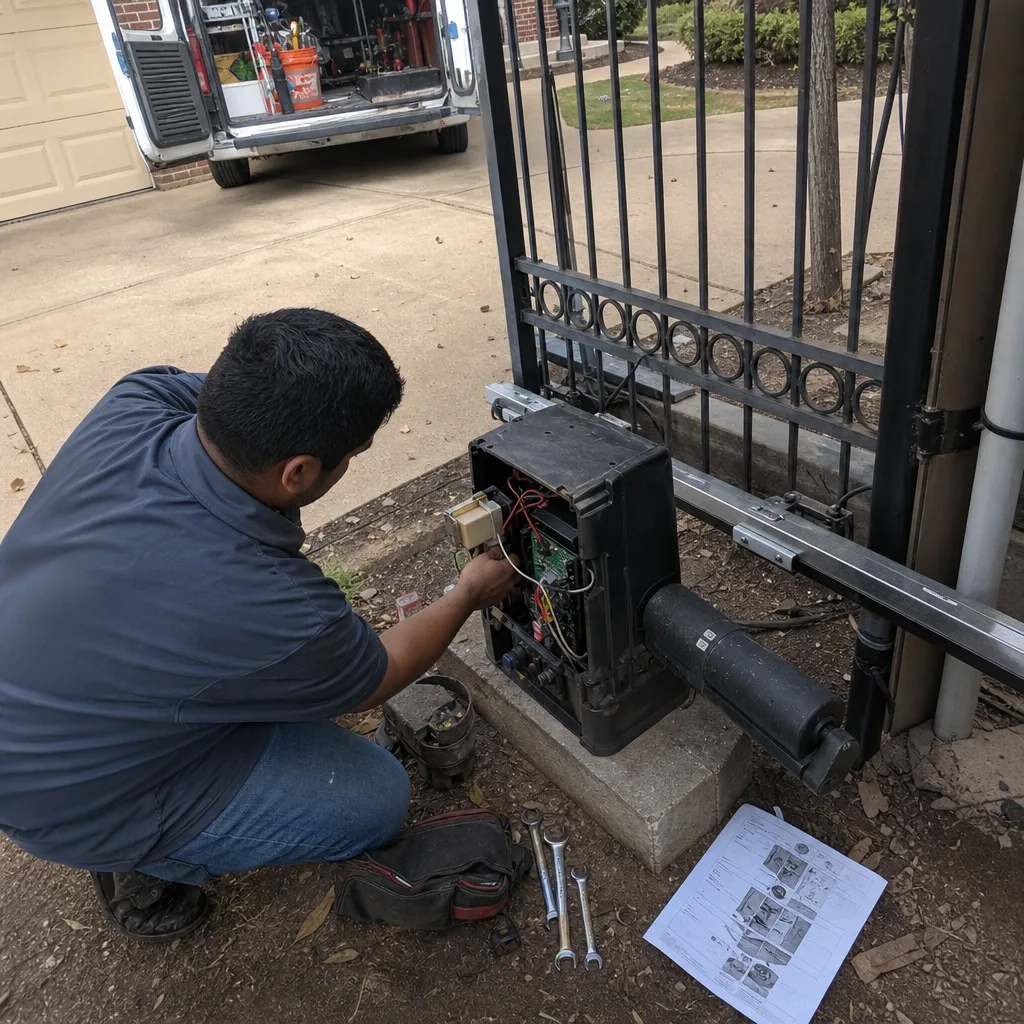
Most gate repairs in Plano never touch the permit system, and that’s appropriate. Where it goes wrong is when a homeowner or an unlicensed handyman treats new wiring, new footings, or a fire-access gate like a mechanical repair. Plano’s permit fees for gate work are modest, usually under $150 for the original permit, and trivial compared to the cost of an after-the-fact inspection during a home sale. The state’s low-voltage licensing law doesn’t care whether the city permit is required; it applies the moment anyone touches gate operator wiring. Know which side of the line your gate job sits on, and if you’re not certain, get a written scope from someone who is. For How to Hire a Gate Repair Contractor in Plano: A Step-by-Step Guide, see our detailed walkthrough.
Written by Adrian Vance, Owner at Vance Gate Repair Plano, serving Plano since 2014. Browse more guides & resources on gate repair and maintenance.