
Last updated September 20, 2026
Free on-site gate assessment - hinges, posts, and your LiftMaster or Nice gate operator checked before anything is quoted
The assessment is free and the quote is the invoice.

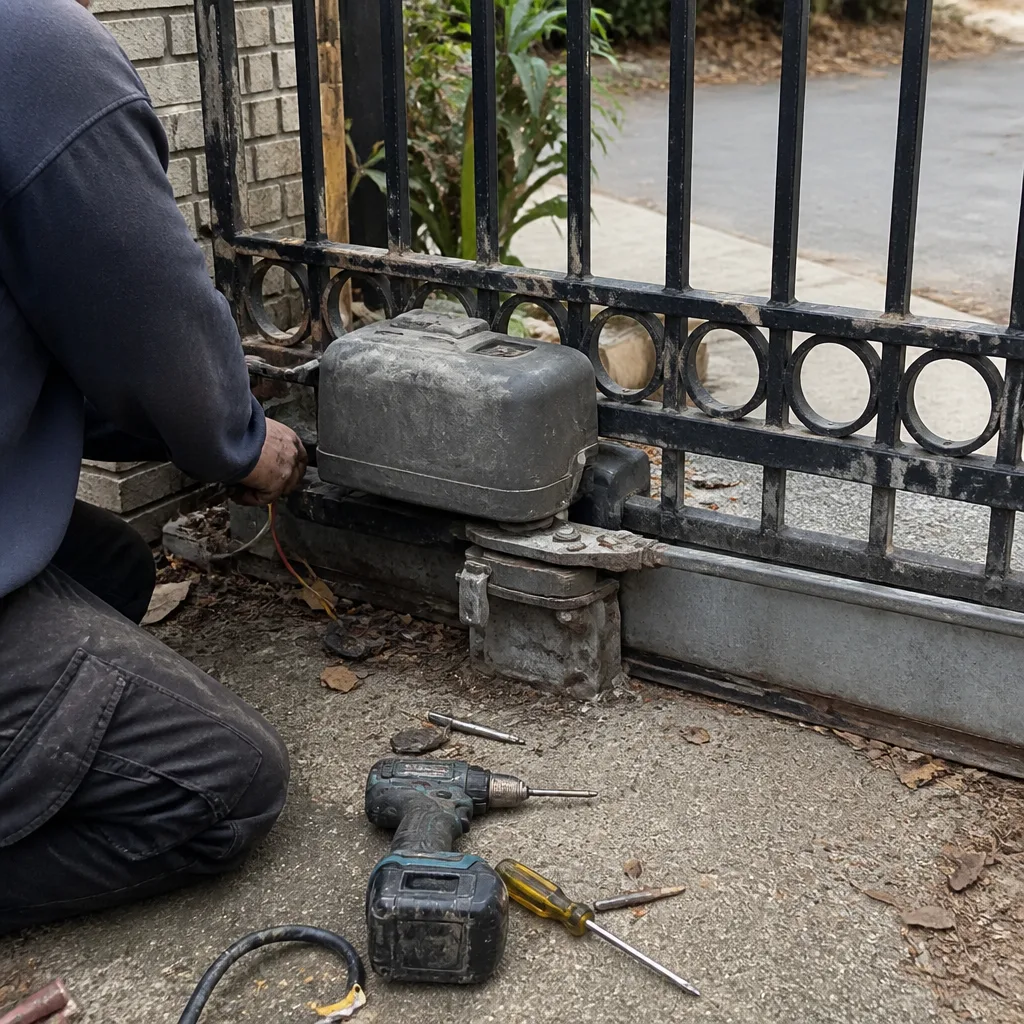 Before
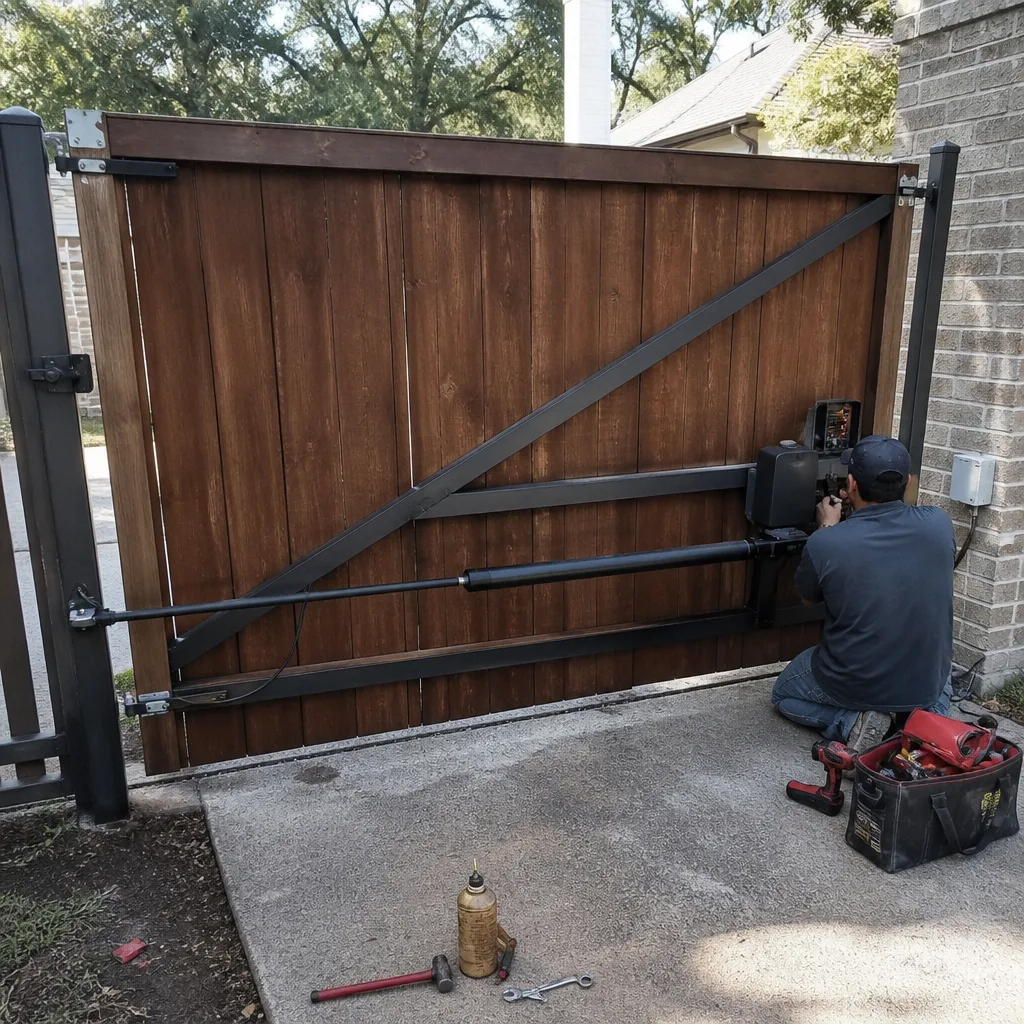 After
After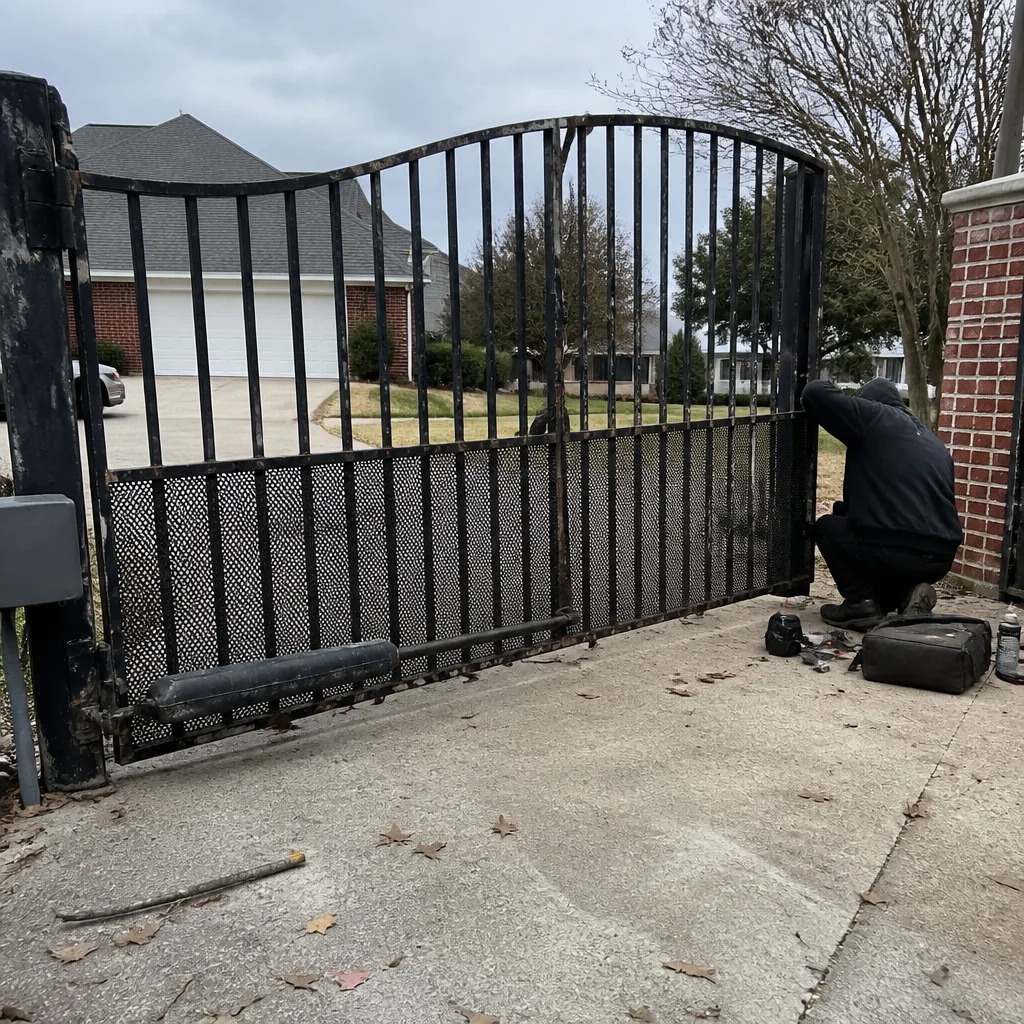 Before
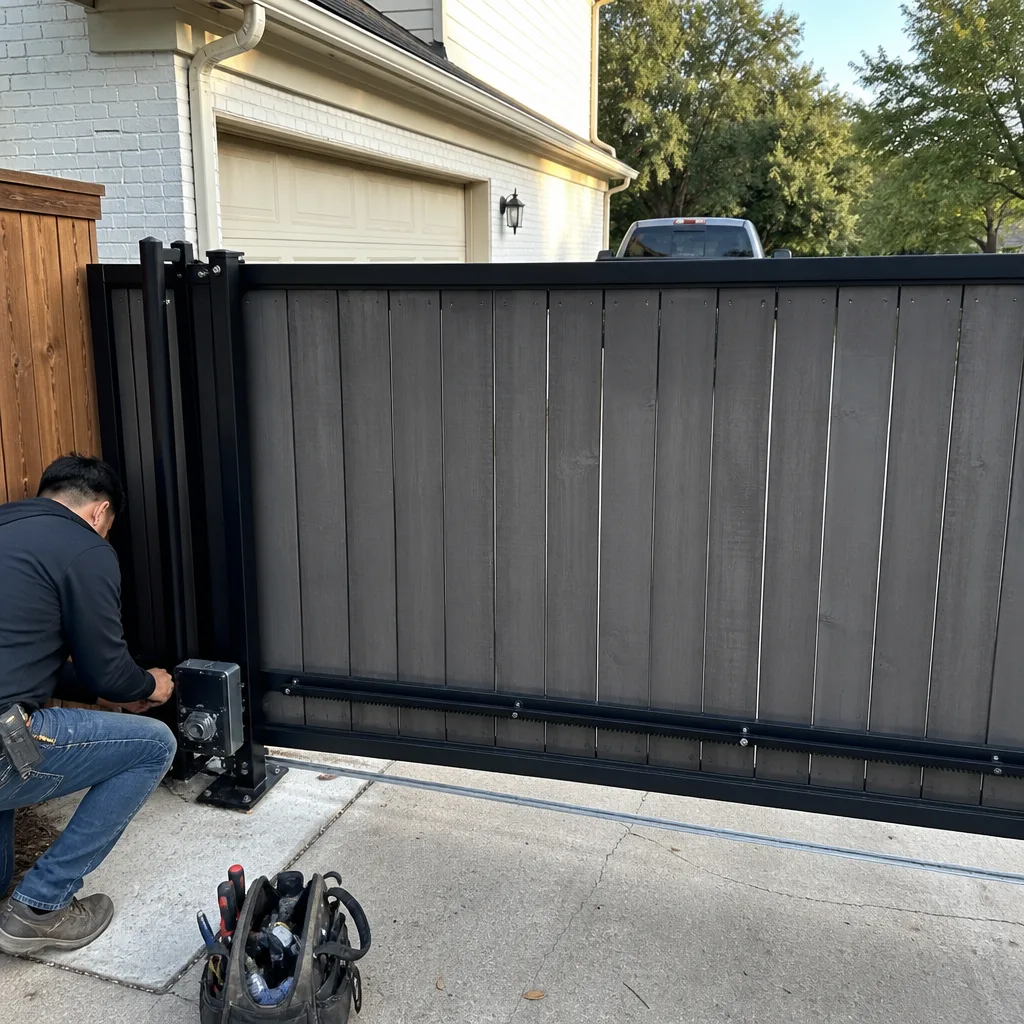 After
After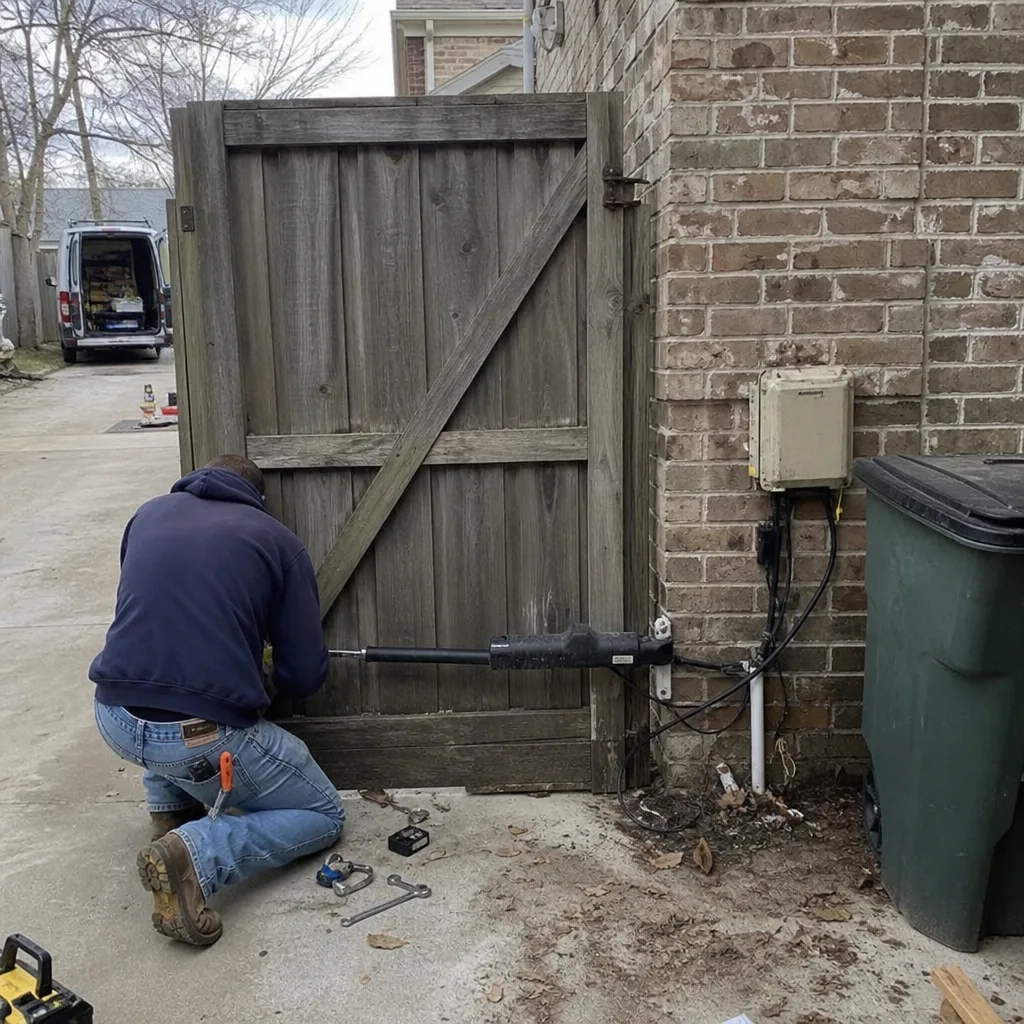 Before
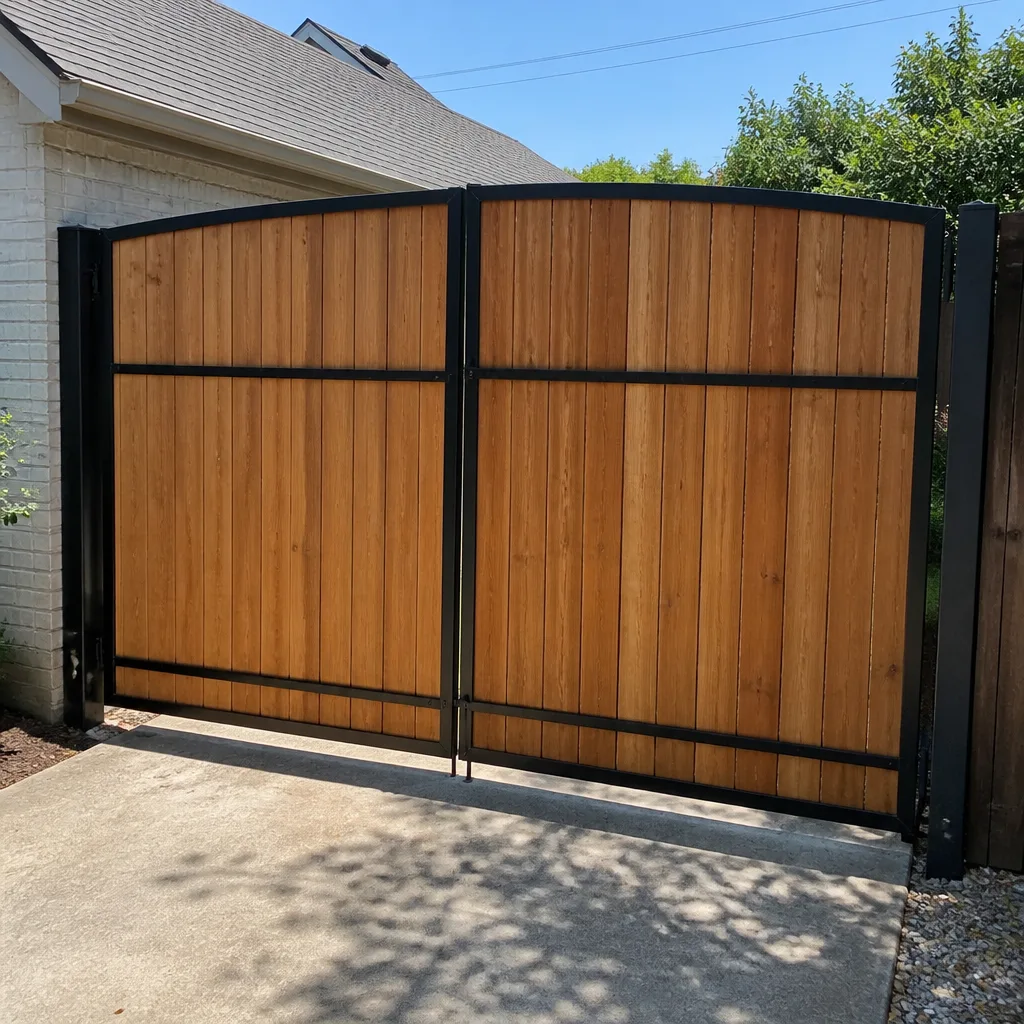 After
AfterGate Repair Warning Signs: A Plano Homeowner’s Reference Guide
Most Plano homeowners discover their gate is failing on the morning it refuses to open at all, which means they discover it at the worst possible moment: leaving for work, with the car already in the driveway. The actual failure started two to six weeks earlier, and the gate was announcing it the entire time. A capacitor doesn’t die silently. A limit switch doesn’t drift without evidence. A gear train doesn’t strip without leaving a trail of symptoms first. This gate repair guide ranks those symptoms by how urgently you need to act, because a gate that moves slowly and a gate that reverses mid-travel near a vehicle are not the same problem. One is an annoyance. The other is a safety event waiting for a victim. You’ll learn what each specific behavior means, which component it points to, and whether you should monitor it, schedule a repair within 30 days, or stop using the gate today.
Quick Answer
Gate repair warning signs in Plano fall into three severity tiers: monitor (slight noise, minor drift), schedule repair within 30 days (hesitation before movement, slowing travel, intermittent beeping), and stop using immediately (reversing on contact failure, loop detector errors, gate traveling past its limits). The most overlooked warning sign is hesitation before movement, which typically indicates a failing capacitor and precedes complete operator failure by two to four weeks. Any safety-related symptom means shut the gate off at the breaker and call for service before someone gets hurt.
Table of Contents
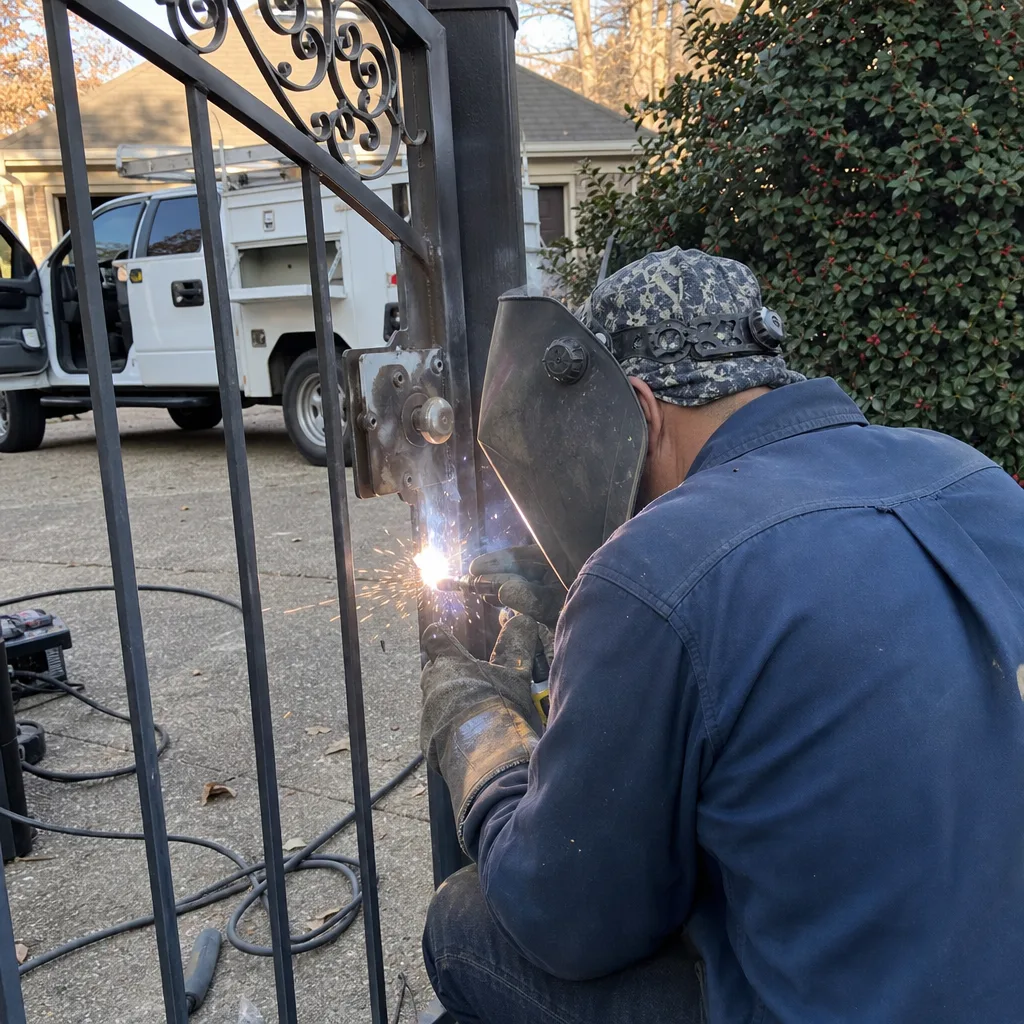
- The Three-Tier Severity System: Monitor, Schedule, Stop
- Symptom-to-Component Mapping: What Each Behavior Actually Means
- Safety-Critical Signs: When to Shut the Gate Off Today
- The Hesitation Trap: How a Failing Capacitor Announces Itself
- How to Document Warning Signs With Photos and Timestamps
- Warranty Coverage vs. Installation Errors: Who Pays for What
- Common Mistakes to Avoid
- When to Call a Professional
- Frequently Asked Questions
BeforeAfterThe Three-Tier Severity System: Monitor, Schedule, Stop
Not every gate symptom deserves the same response. We put each warning sign into one of three tiers based on what actually fails if the symptom is ignored, and how dangerous that failure is. The tier determines whether you watch it, book a repair in the next month, or kill power to the gate right now.
Tier 1: Monitor (No Immediate Action Required)
These symptoms are worth noting but rarely indicate an imminent failure. A light hum when the gate moves is normal for many motor types. A one-second delay between pressing the remote and gate movement, consistently the same length, is often just receiver latency. Slight track discoloration on a slide gate is cosmetic. What matters is change. A symptom that was present at installation and hasn’t changed in years is background noise. Document it once, write down what you observed, and check it again in a month.
- Consistent light hum during operation: Normal motor sound for most brands, including LiftMaster and FAAC models.
- Same-length remote delay every time: Receiver handshake, not a mechanical problem.
- Minor cosmetic wear: Paint chips, light surface rust on non-structural components, mild track polish.
- Slight wheel noise on a chain-drive opener: Chain tension settling, common within the first year.
Tier 2: Schedule Repair Within 30 Days
These symptoms mean a component is degrading. It hasn’t failed yet, but the failure curve is in motion. Waiting longer than 30 days in Plano’s summer heat accelerates the breakdown, because heat expansion and clay soil movement put additional stress on already-struggling parts. The repair cost at this stage is almost always lower than after the component fails completely, because a technician can adjust or replace a single part rather than dealing with the cascade of damage a full failure creates.
- Hesitation before movement (1-3 seconds): Capacitor degradation. Most common on LiftMaster and Linear operators. Two to four weeks from failure.
- Gradually slowing travel speed: Motor wear or voltage loss at the board. Can also indicate a failing battery in solar installations.
- Intermittent beeping with no visible cause: Usually a photo-eye alignment drift or a loop detector picking up interference.
- Visible gear wear or metal shavings under the operator cover: Gear train is consuming itself. Replacement before catastrophic failure is significantly cheaper.
- Rust at weld joints: On steel gates in Plano’s humidity cycles, this progresses from cosmetic to structural within 12 to 18 months.
Tier 3: Stop Using the Gate Now
These symptoms mean a safety system has failed or a structural component is near failure. Every one of these creates a scenario where the gate can injure someone or damage a vehicle. Kill power at the breaker, secure the gate in the open or closed position manually, and call a professional before anyone uses the driveway again. For urgent situations, see our How to Hire a Gate Repair Contractor in Plano: A Step-by-Step Guide to choose qualified help quickly.
- Gate reverses on contact when it should stop: The reverse-on-contact safety feature has failed. The gate will keep pushing against whatever it hits.
- Photo-eye system not stopping the gate: The infrared beam is either misaligned or dead. The gate cannot see obstacles.
- Gate travels past its limit points: The limit switches have failed or drifted. The gate will slam into end posts or run off the track.
- Loop detector failure with vehicles present: The gate cannot detect a car in the path and will close on it.
- Visible cracking at hinge welds or post connections: The gate leaf is no longer structurally sound. A 400-pound gate swinging free is lethal.
- Any electrical burning smell or scorch marks on the operator board: Short circuit in progress. Fire risk, not just gate failure.
Symptom-to-Component Mapping: What Each Behavior Actually Means
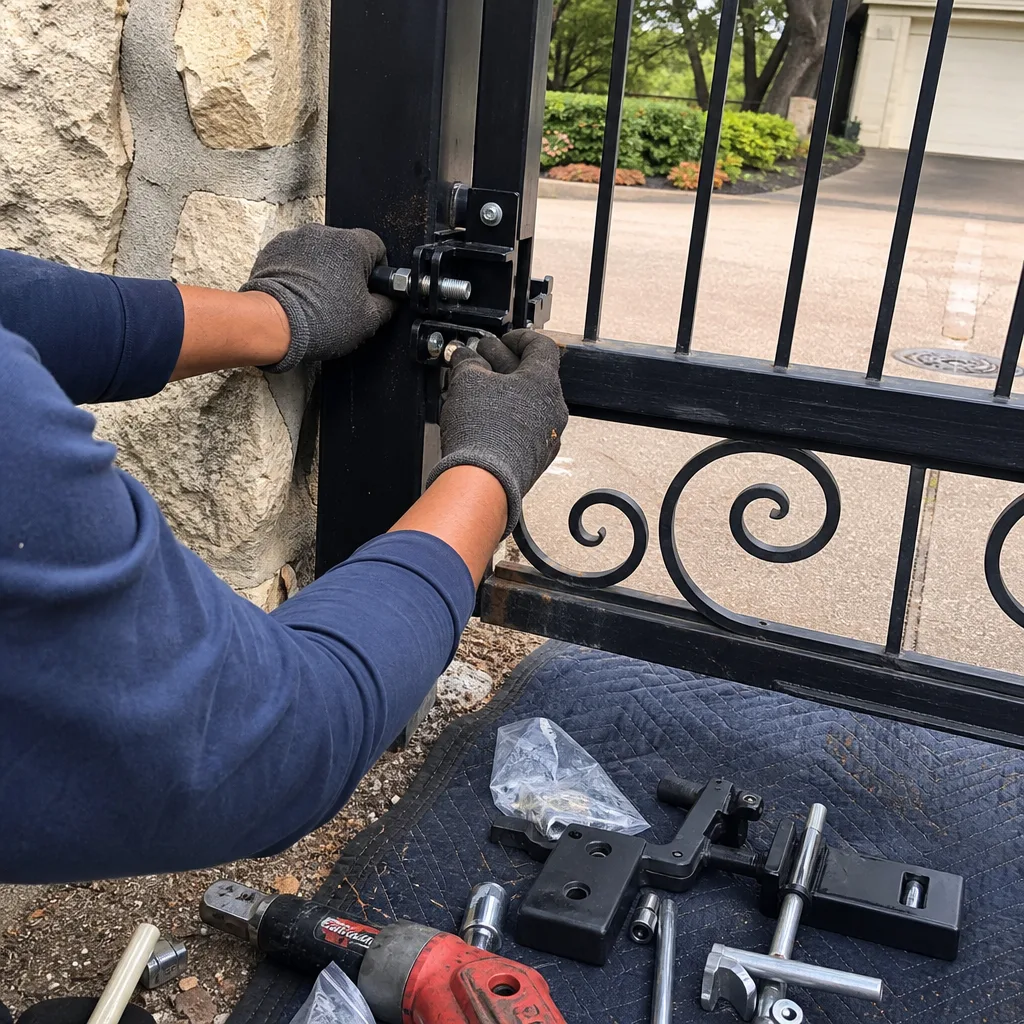
Here’s the part most gate guides skip. A symptom is only useful if you know which component is responsible, because that determines the repair cost and whether you’re dealing with a mechanical issue or an electrical one. We’ve organized the most common Plano gate symptoms by the component they point to.
Grinding or metal-on-metal noise
Indicates: Gear train wear, chain tension failure, or insufficient lubrication on the drive mechanism. On swing gates, it can also indicate a failing ball bearing in the hinge. Grinding on BFT and Viking operators often traces to the gearbox, which isn’t a field-serviceable part on most models. The fix is replacement of the worn component, not adding grease and hoping.
Gate reverses mid-travel when nothing is in the way
Indicates: Current-sensing obstruction detection being triggered by mechanical drag, not an actual obstruction. The motor draws more current to overcome resistance, and the board interprets that as an obstacle. Causes include track obstruction, wheel bearing failure, hinge fatigue, or power low-voltage conditions. A photo-eye (the infrared beam that stops the gate if something crosses the path) misaligned by roughly two inches produces the same result.
Beeping with no visible obstruction
Indicates: A diagnostic code from the operator board. On LiftMaster units, beeping typically means a failed or misaligned photo-eye. On FAAC boards, it indicates a limit-switch timing error. On Linear, it’s frequently a battery warning or charger failure. The number and pattern of beeps matter. Photograph or video the beeps before calling a technician.
Gate opens but won’t close (or closes but won’t open)
Indicates: On a swing gate, usually a failed limit switch in one direction. On a slide gate, commonly a damaged track section or failed wheel. On any system, it can also indicate a burned relay on the control board. One-direction failure almost never means the operator is fine and the gate just “got stuck.” Something mechanical or electrical gave out on that travel path.
Slow travel speed across the full cycle
Indicates: Motor capacitor degradation if the slowdown happened gradually over weeks. If it changed suddenly, suspect low-voltage conditions, a failing transformer, or a battery reaching end of life on solar-powered gates. On hydraulic operators, slow speed often means low fluid level or pump wear.
Safety-Critical Signs: When to Shut the Gate Off Today
Every residential gate operator sold in the United States since the UL 325 standard took effect is required to have an obstruction detection system. That system exists for one reason: to stop the gate from crushing someone. When any part of it fails, the gate doesn’t just become inconvenient. It becomes dangerous, and you need to treat it that way.
Reverse-on-contact failure
The gate should stop and reverse direction within two seconds of contacting an obstruction. If the gate continues pushing, or if it stops but doesn’t reverse, the current-sensing circuit has failed. On every operator we service in Plano, this failure makes the gate unsafe to operate by anyone, including adults who think they can outrun it. A moving gate leaf weighs between 300 and 800 pounds depending on material and length. No one wins that matchup.
Loop detector errors
A loop detector is the buried wire sensor that tells your gate a vehicle is present in the path. When it fails, one of two things happens: the gate no longer recognizes parked cars and will close on them, or the gate refuses to close at all because it detects phantom vehicles. Both are dangerous for different reasons. The closing-on-cars scenario is the urgent one. If your gate has ever closed on a car in the last month, shut it off and leave it off until a technician verifies the loop detector.
Open-limit failures near traffic
An open limit switch tells the gate where to stop on the open travel path. When it fails, the gate over-travels. On a swing gate facing a residential street in Plano, that means the gate leaf swings into the roadway or sidewalk. On a slide gate, it means the gate runs off the track end. Both scenarios create immediate hazards not just for your property but for pedestrians and drivers who have no idea your gate is about to occupy their space. This is the safety-critical failure most Plano homeowners don’t connect to a repair need, because the gate “still opens.” It opens too far. That’s the problem.
These three failure modes are why every safety-critical symptom gets the same instruction from us: cut power at the breaker, pin or lock the gate in a safe position if you can, and call before anyone uses the driveway. A service call is always cheaper than the alternative.
The Hesitation Trap: How a Failing Capacitor Announces Itself
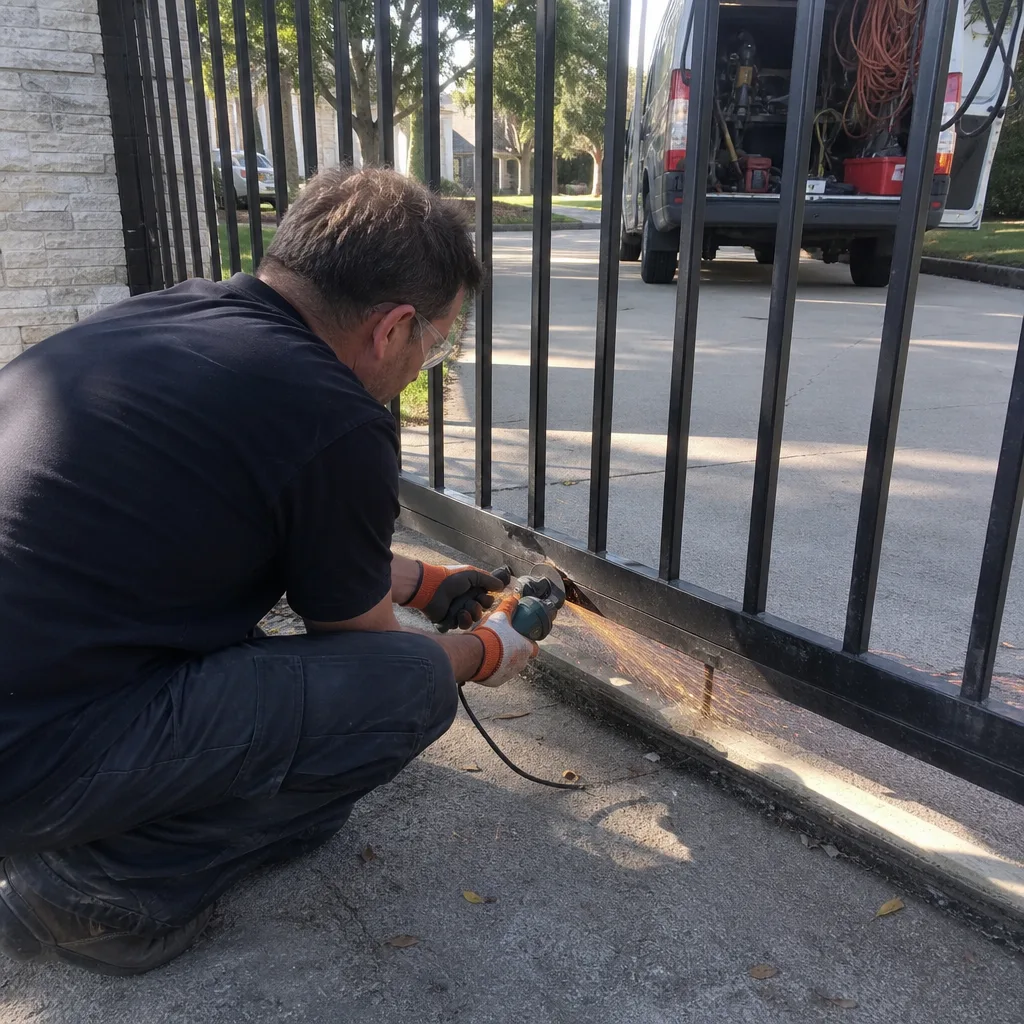
A gate that hesitates before moving is usually two to four weeks from a complete operator failure. Yet most homeowners log it as a minor issue and schedule nothing, because no one told them that hesitation is how a failing capacitor announces itself. A capacitor is the electrical component that stores and releases the burst of energy needed to start a motor from a dead stop. When it degrades, the motor doesn’t get full starting torque immediately. It stumbles. Then it catches and runs normally until the next cycle starts the process again.
The capacitor doesn’t degrade linearly. It performs acceptably while losing capacity, right up until the moment it can no longer generate enough starting torque, and then it fails outright. In Plano’s summer heat, that degradation accelerates. Capacitor lifespan drops with each sustained stretch above 95 degrees, and Plano regularly runs weeks in that range from June through September. See our Seasonal Gate Repair Care for Plano: Year-Round Homeowner’s Guide for heat-specific maintenance steps. A gate operator sitting in direct sun on a west-facing installation is running its capacitor at temperatures far above the rated condition.
The fix is straightforward and inexpensive when caught early. A replacement capacitor on most residential operators costs between $25 and $80 in parts. The repair typically runs $150 to $300 including the service visit, depending on the operator brand and accessibility. Compare that to a full operator replacement at $1,800 to $3,800 on a typical Plano residential swing gate. The capacitor is the single best example of why monitoring Tier 2 symptoms saves real money: the repair is a fraction of the replacement cost, but only if you act before the motor burns itself out trying to start on a dead capacitor.
How to Document Warning Signs With Photos and Timestamps
The quality of information you bring to a repair call directly affects the speed and accuracy of the fix. A technician who arrives with photos and a symptom timeline starts the diagnostic process ahead of someone who says “it’s been acting weird.” Here’s the system we recommend for Plano homeowners who want to hand their technician useful evidence rather than vague impressions, with more guides & resources available on our blog.
- Photograph the operator cover before opening anything. The model number and brand are printed on the cover or the rating plate. This single photo tells a technician which schematics to pull before arriving.
- Video the symptom, not just the gate. A 10-second video of the gate hesitating, grinding, or reversing captures frequency and duration data a written description can’t. Hold the phone still and let the full cycle play out.
- Log the time and date of each occurrence. A symptom that happens at 7 AM when the gate is cold is a different diagnostic problem than one that happens at 3 PM in full sun. Thermal expansion and cold-start behavior are real variables in Plano’s temperature swings.
- Photograph the photo-eye alignment if beeping is present. A slow shutter photo from the side shows whether the transmitter and receiver are aimed at each other or drifted apart. Don’t adjust it, just document it.
- Check the breaker position and photograph the panel if power issues are occurring. A tripped breaker is diagnostic evidence. A breaker that trips repeatedly is a red flag for a short in the operator wiring, not a random event.
- Write down what you were doing when the gate misbehaved. Remote press? Keypad entry? Vehicle exiting the loop? Each scenario uses a different trigger circuit and narrows the diagnostic path.
On every visit we make in Plano, we follow the same documentation habit in reverse: we photograph what we found, what we adjusted, and what we replaced. The photo log is left with the homeowner and filed in the job record. If a future problem develops, the next technician starts from documented evidence instead of rediscovering history.
Warranty Coverage vs. Installation Errors: Who Pays for What
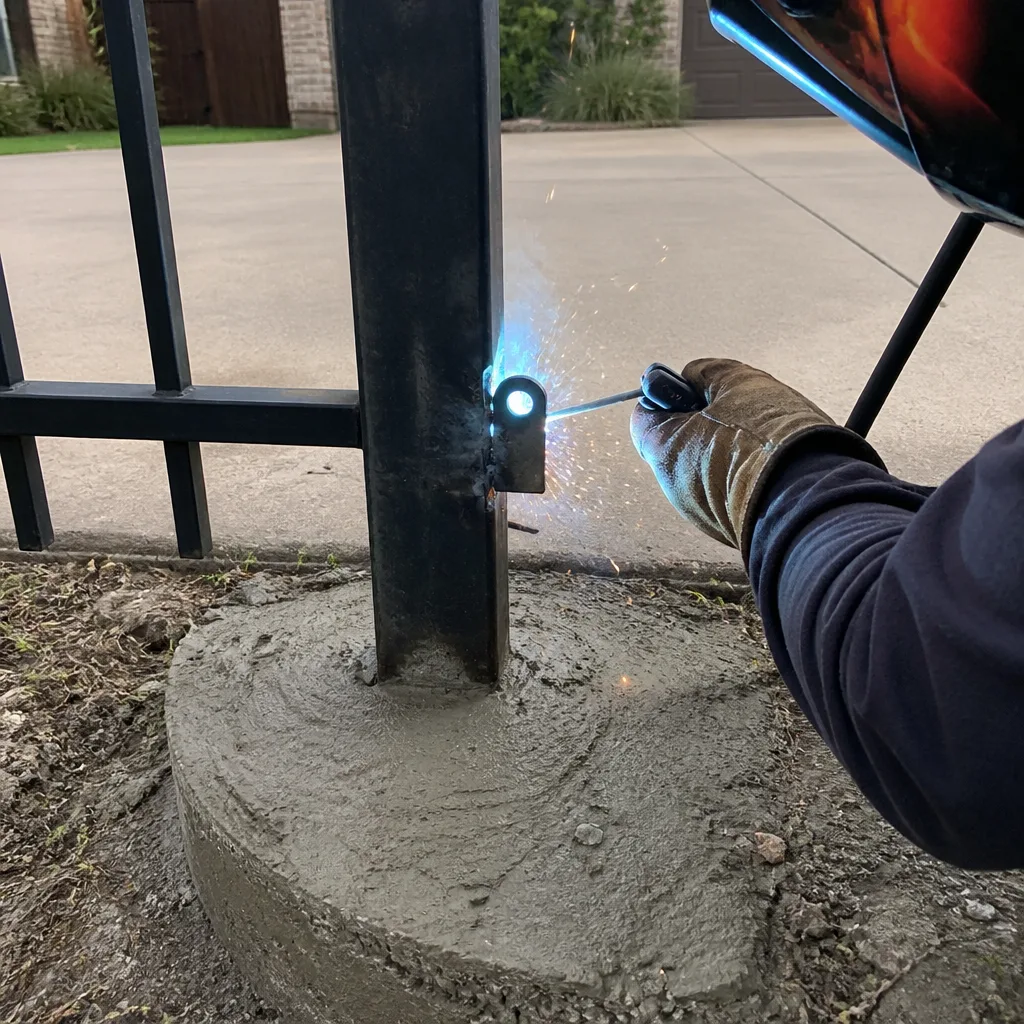
Not every gate symptom is a warranty claim. Understanding which warning signs trace to manufacturing defects versus installation errors versus site conditions in Plano saves you from paying for repairs a warranty should cover and from fighting a warranty company for claims they’ll never approve.
Typically covered under manufacturer warranty
- Control board failures within the warranty period: Most manufacturers cover board defects for 12 to 24 months, and some extend coverage on the board specifically.
- Capacitor failures on newer operators: A capacitor that fails within the first year is usually a defect, not wear. LiftMaster and FAAC both warranty capacitors on residential units.
- Motor failures with no external cause: If the motor windings fail and there’s no evidence of water intrusion or power surge, most brands cover it.
- Receiver failures with no lightning strike evidence: RF receivers that stop responding within the warranty window are covered more often than not.
Typically NOT covered (installation errors and site conditions)
- Photo-eye misalignment from settling: Plano’s clay soil shifts seasonally, and a photo-eye post that moved is a site condition, not a manufacturing defect.
- Hinge fatigue from an under-sized gate post: If the post wasn’t engineered for the gate weight, the resulting hinge wear is an installation error.
- Water intrusion from improper conduit sealing: North Texas thunderstorms plus unsealed conduit equals board damage the manufacturer will not pay for.
- Gear wear from gates that were never balanced properly: An unbalanced gate loads the gear train constantly. The gear strips, the manufacturer points at the installer, the installer is gone.
- Lightning damage: Surge events are considered site conditions by every manufacturer we work with. Surge protection is the homeowner’s responsibility.
One thing about BFT and Viking specifically: their warranty documentation is thorough, but both brands require proof of professional installation for residential warranty claims in most cases. Self-installed operators often carry a reduced warranty or none at all. If you bought a house with a gate already installed, the original installation records matter for any future warranty work.
Common Mistakes to Avoid
- Ignoring hesitation because “it still works.” We covered this above, but it bears repeating: hesitation is capacitor failure in motion, and the repair window closes permanently once the motor burns out attempting to start.
- Lubricating a grinding gear train. Grease on a stripped gear doesn’t restore the teeth. It masks the sound briefly while the wear continues underneath. The gear still needs replacement, and now the diagnostic is confused by recent lubrication.
- Adjusting the photo-eye without knowing the alignment procedure. Most Plano homeowners who try this make the misalignment worse. The beam alignment on some LiftMaster units has a tolerance of half an inch across twenty feet. Hand-adjusting without a target tool creates new problems.
- Disabling the reverse-on-contact sensor to “fix” a gate that keeps reversing. If the gate reverses mid-travel, the sensor is doing its job by responding to increased current draw. Disabling it doesn’t fix the underlying drag. It removes the safety response to a problem that’s still there.
- Waiting until the gate fails completely before calling. The repair cost curve bends sharply upward once a minor component failure cascades into a motor replacement or gear train rebuild. A $175 capacitor job in week two becomes a $2,400 operator replacement by week six.
- Assuming the original installer is the only one who can service the gate. We service nine major automation brands, including LiftMaster, FAAC, BFT, and Linear. You don’t need the original installer to get a correct diagnosis and repair, and you don’t need to replace a motor just because a different brand would require a full operator swap.
When to Call a Professional
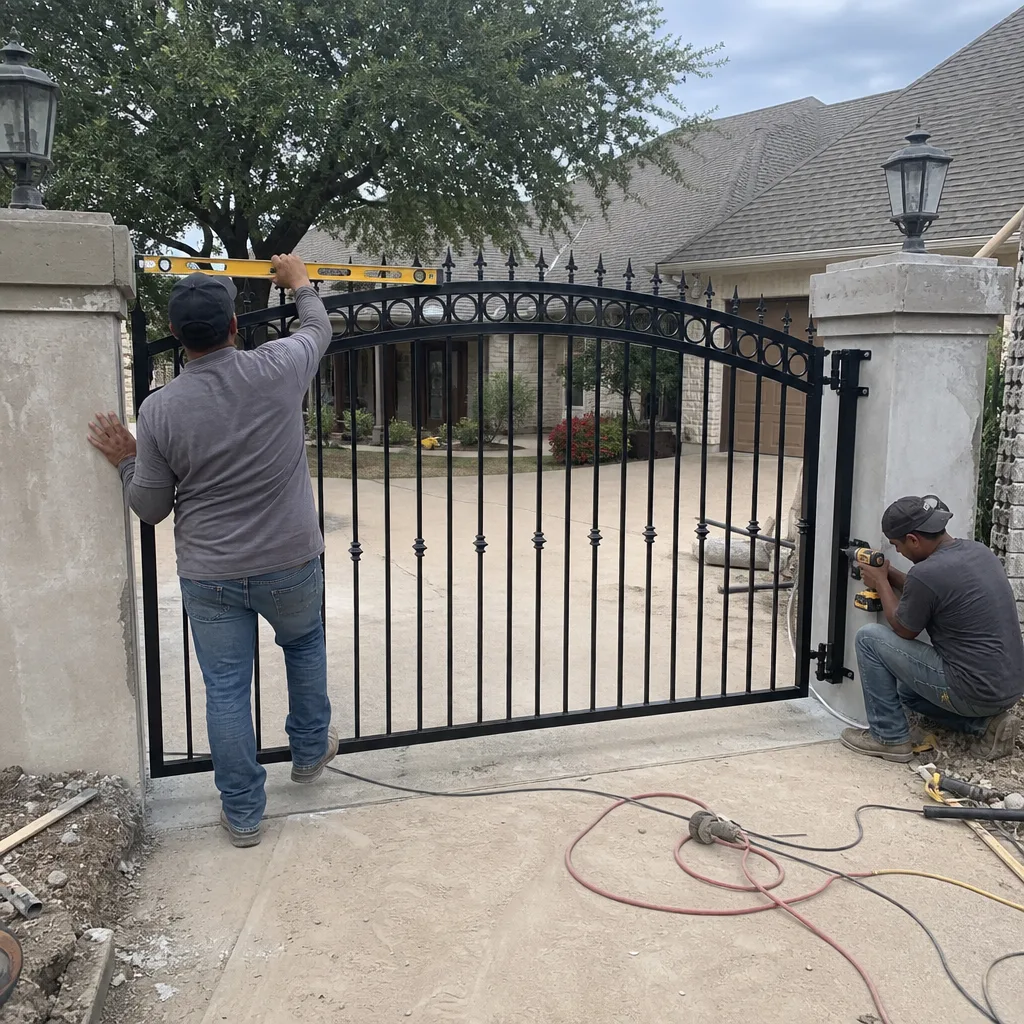
Call when a symptom lands in Tier 2 and schedule the visit. Call immediately when it lands in Tier 3 and shut the gate down first. Call even if you’re not sure which tier applies, because a technician who arrives and finds nothing wrong is doing useful diagnostic work: they’re recording baselines, checking the components most likely to produce your symptom, and documenting the gate’s current condition for future comparison. We offer a gate repair in Plano service that includes written pricing before any work begins, and a documented photo record on every visit, because a repair without evidence is just an opinion. If you’re seeing any of the warning signs in this guide, call (972) 236-7089 for a free estimate. We serve the entire Plano area and will have a named technician with background and photo information on the way to you.
Frequently Asked Questions
Gate repair costs in Plano typically run $150 to $300 for common fixes like capacitor replacement, photo-eye realignment, and limit switch adjustment, while larger jobs like gear train replacement run $400 to $900, and full operator replacement runs $1,800 to $3,800 depending on brand and site conditions. Every repair we quote includes the written price before work starts, so there’s no surprise invoice at the end. Call Vance Gate Repair Plano at (972) 236-7089 for an exact quote on your gate.
Hesitation before movement typically indicates a failing start capacitor, which can no longer provide enough starting torque to move the gate immediately. This is a Tier 2 symptom that progresses to complete operator failure within two to four weeks in most cases. The repair is inexpensive when caught early, so schedule service rather than waiting to see if it gets worse.
Yes, our Plano gate repair service dispatches technicians to all Plano neighborhoods, and we offer same-day availability for urgent Tier 3 problems like reverse-on-contact failures and limit switch over-travel. A live person answers the phone 24/7 at (972) 236-7089, and you’ll get a named technician with a photo before arrival.
Shut the gate off at the breaker immediately and leave it off until a professional can diagnose the loop detector or obstruction sensing system. A gate that closes on a vehicle has a failed safety component, and continuing to use it risks damage to the vehicle and injury to anyone in the path. Call gate installation or repair services for urgent help.
Warranty coverage depends on the failed component, the age of the operator, and whether the failure traces to a manufacturing defect or an installation or site issue. Control board and capacitor failures within the warranty period are often covered, while water intrusion, lightning damage, and gear wear from an unbalanced gate typically are not. Bring your original paperwork to any repair visit so the technician can verify coverage before work begins.
A residential gate operator in Plano typically lasts 8 to 12 years with regular maintenance, but the capacitor, gear train, and control board wear faster in our sustained summer heat, especially on installations with direct western sun exposure. The best way to extend motor life is to address Tier 2 symptoms early rather than running the motor until a component fails completely. For motor-specific concerns, see gate motor and opener service in Plano.
The Bottom Line
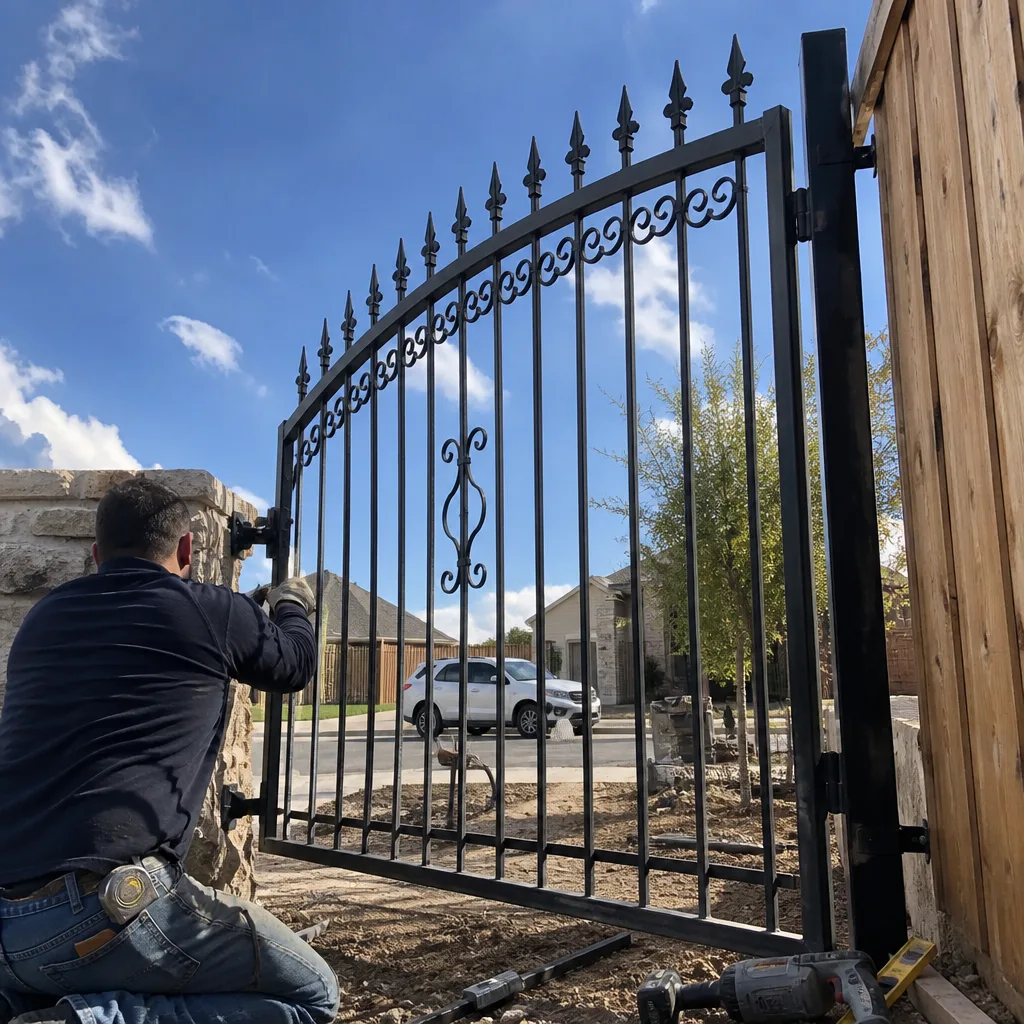
Gate warning signs are only useful if you act on them at the right urgency level. A slow gate deserves a scheduled repair. A gate that hesitates deserves a repair this month. A gate that reverses on contact, closes on vehicles, or travels past its limits deserves a power shutoff and a call today. The difference between a $175 capacitor replacement and a $2,400 operator replacement is usually just timing, and the difference between a safe gate and a dangerous one is whether you recognize the Tier 3 symptoms when they appear. We built Vance Gate Repair Plano around the idea that documentation and written pricing protect homeowners from exactly this kind of uncertainty. If you’re seeing any of these warning signs, you know which tier you’re in now, and you know what to do next.
Written by Adrian Vance, Owner at Vance Gate Repair Plano, serving Plano since 2014.